


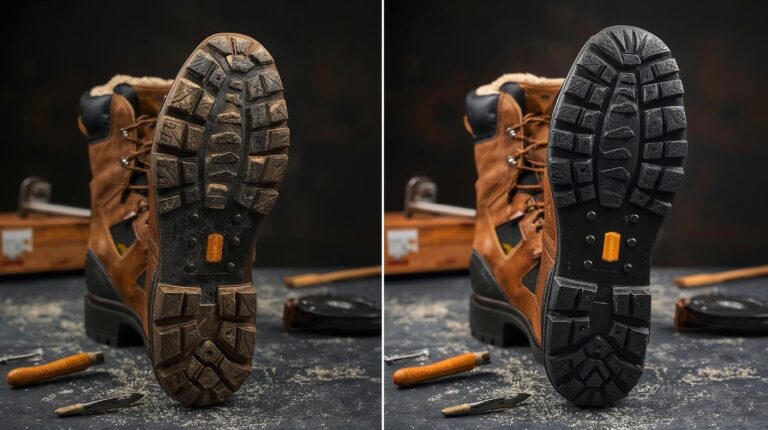
Every avid mountaineer in Bansko knows this feeling: after years of faithful service on the trails of Pirin, your favorite shoes have become like a „second skin“. They no longer cause calluses, the leather has softened perfectly to the shape of your ankle, and every scratch on them brings back memories of peaks like Vihren, Kutelo or Kamenitsa. But one day you look down and reality hits you – the gripper is gone, erased by the merciless Pirin granite.
Many people make the mistake of throwing away these shoes and investing hundreds of dollars in new ones, starting the painful process of breaking them in all over again. The truth is, if the upper is in good condition, you are holding a treasure in your hands that just needs a “service.” Professional changing soles (known in circles as “re-shoeing”) is a process that not only restores a shoe, but often makes it better than the factory original.
Anatomy of Repair: Which Shoes Should Be Re-Laced?
Not every shoe can be saved. The possibility of changing soles It depends entirely on the construction used by the manufacturer. Understanding these differences will save you frustration in the shoemaker's shop.
1. Cemented Construction – The Ideal Candidate
This is the standard for serious brands like La Sportiva, Scarpa, Lowa, Meindl, Garmont. In this method, the sole is glued to the upper through a complex process, but is not integrated into it. This allows the craftsman to “unstick” the old package and install a brand new one without disturbing the integrity of the leather or membrane (Gore-Tex).
2. Injection Molded – The Hard Case
In mass-produced lightweight hiking sneakers and cheaper models (commonly found in sports chains), the sole is poured directly onto the fabric in a liquid state. When it wears out, repair is almost impossible or economically unprofitable, as there is no clear boundary where to separate the old rubber.
The Silent Shoe Killer: What is “Hydrolysis”?
Customers often say: “But I hardly wore them! They were in the closet for 5 years and today the sole just fell off.”
This phenomenon is called Hydrolysis. Most modern hiking boots use a polyurethane (PU) midsole that provides cushioning. However, polyurethane is an organic material that the weather absorbs moisture from the air and breaks down chemically. The process is accelerated if the shoes are NOT worn, as movement “pumps” moisture out of the pores of the material. If your sole crumbles like an old biscuit or peels off completely, that’s not a defect—it’s hydrolysis. The good news? This is treatable with a full changing soles.
The step-by-step process
Re-inking isn't just gluing together some "Helmetex" in the garage. It's a high-tech craft that requires specialized machines and materials. Here's how the magic happens:
- Dismantling and grinding: The old rubber, intermediate foam and protective rubber board are completely removed down to the “base”. The leather is cleaned and sanded precisely.
- New safety board (Randing): This is the rubber band that surrounds the shoe above the sole. It is the shield against sharp stones. It must be replaced when it is severely worn.
- Priming and bonding: Several layers of special polyurethane adhesives are applied, which are thermally activated.
- Pressing: The shoe is placed in a hydraulic press that applies enormous pressure for a certain amount of time, ensuring a molecular bond between the new Vibram sole and the shoe.
- Finish: The excess rubber is cut and sanded for a perfect aesthetic appearance.
Economic Logic: Is it Worth It?
Let's do a simple calculation. The prices of quality new shoes are rising every year. Is the repair justified?
| Indicator | Buying NEW (high-end) | Resole |
|---|---|---|
| Price | 450 – 800 BGN. | 120 – 180 BGN. |
| Comfort | They require 2-4 weeks of “breaking in” (risk of calluses) | Instant comfort (the shape is yours) |
| Grapple selection | Limited to factory model | Upgradeability (e.g. softer or harder compound) |
| Ecology | High footprint (production, transportation) | Zero Waste (Recycle / Upcycle) |
Possibility of “Tuning” the shoes
One of the hidden benefits of a repair is the ability to change the purpose of the shoe. If the factory sole was too slippery, you can order a model from the series to be installed during the repair. Vibram MegaGrip. If you want to use the shoes for more technical climbs, you can choose a sole with a “Climbing Zone” (a smooth area at the toe for climbing). You’re not just fixing the shoe – you’re improving it.
Don't trust your expensive gear to your neighborhood shoemaker who mainly deals with women's heels and zips. The technology for mountain shoes is specific. Look for repair shops that are official Vibram partners or have a proven portfolio of alpine gear. There are several such craftsmen in Bulgaria who work with courier companies, so even if you are in Bansko, you can easily send your shoes to Sofia or Plovdiv for repair.
Conclusion
The mountain loves those who are prepared, and respect for equipment is part of the culture of every climber. Before the start of the next summer or winter season in Pirin, inspect your shoes. If the leather is healthy, but the “rubbers are bald” – do not rush to the store. A quality changing soles It will save you money, preserve your favorite comfort, and extend the life of your faithful companions by a few more years and dozens of peaks.




 English (UK)