


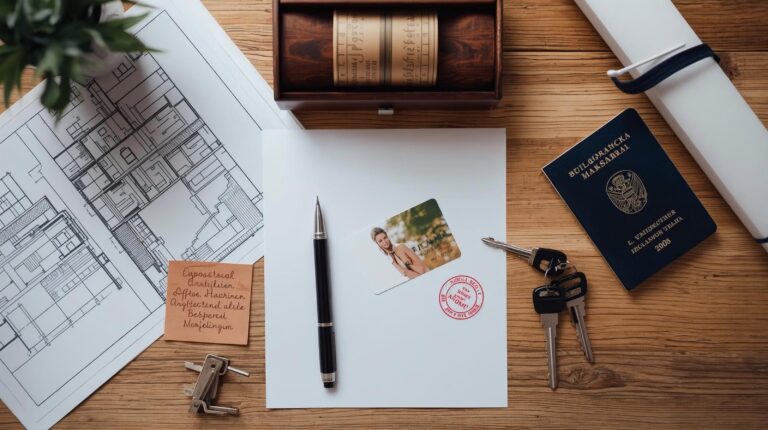
Imagine this nightmare scenario: You are the broker (or seller). The buyer has already transferred the money into an escrow account, the seller has flown in from London for the day, the notary’s appointment is set for 10:00 AM. You walk into the office, the documents are on the table… and the notary asks a single question: “And where is the wife's marital status certificate?”.
Silence. The deal stalls. The seller misses his return flight. The buyer begins to doubt the legitimacy of the property. All of this could have been avoided with the right preparation.
В Bansko transactions are significantly more complex than those in Sofia or Plovdiv. Here we have remote sellers from all over the world, gated communities with unsettled maintenance fees and specific cadastral requirements. This period between the signing of the preliminary contract and the notary's confession is known as the “Valley of Death” for transactions. This article is your lifeline – the complete list of necessary documents for selling a property and the hidden pitfalls that no one warns you about.
The golden rule: Get your documents out TODAY!
Don't wait until you find a buyer to start pulling out documents. A wrong sketch from the cadastre can take a month to fix. The lack of a ready-made package of documents is the #1 reason buyers give up and choose another, “cleaner” property that can be purchased immediately.
The Holy Trinity of Documents (The Mandatory Minimum)
Without these three documents, you can't even start a conversation about a preliminary contract, let alone get to a notary. They are the foundation of every deal.
1. Property document (Notarial deed)
It sounds obvious, but in Bansko there are often surprises. The seller may not have a notarial deed, but only:
- Purchase and sale contract from the municipality (for old panel houses).
- Order for assignment by the Enforcement Judge (P.E.A.).
- Bequest or donation.
Important: Check carefully whether the names in the document match the ID card. Foreigners often make mistakes in the transliteration of names into Cyrillic (e.g. John vs John/Johns). If there is a difference, you will also need a “Certificate of Identity of Names”.
2. Sketch from the Cadastre (AGKK)
This is the “passport” of the property. The sketch must be up-to-date (valid for 6 months or indefinitely if there are no changes, but notaries require re-certification).
The trap in Bansko: Many buildings in the areas around Gondola and Gramadeto are not correctly marked on the cadastral map or have the wrong area. If the sketch shows 50 sq.m., and the notarial deed says 55 sq.m., you will face a procedure for eliminating incompleteness and errors, which takes between 14 days and 3 months. Check the sketch when accepting the property for sale!
3. Tax assessment (From the Municipality)
Issued by Bansko Municipality. It must explicitly state that the owner has no obligations for building tax and garbage fees.
Critical: If the property has several co-owners, the tax assessment must be issued in the name of ALL of them. If the seller has only paid his share of the tax, the notary will not acknowledge the transaction. All old debts must be cleared before the transaction.
Specific documents that “turn the car around”
These are the documents that most people think of at the last minute, and they are the ones that ruin deals.
| Document | Why is it critical and what to watch out for? |
|---|---|
| Marital status certificate | It is issued by ESGRAON. If the property was purchased during marriage, it is a SIO (Family Property Community), even if only one name is written in the notarial deed. The husband/wife must also sign! For foreigners, this is proven with documents from their country + Apostille. |
| Certificate under Art. 87 (NPA) | It shows whether the person has unpaid government receivables (healthcare, insurance, traffic police fines). If the seller has public debts, the state can cancel the deal or seize the amount. |
| Certificate of Encumbrances (CEO) | Issued by the Registry Agency. Shows the “history of illness” of the property – mortgages, foreclosures, lawsuits. Always get a current certificate in the day of the deal or a day earlier! |
The Nightmare “The Foreign Seller”
Bansko is a unique market with thousands of owners from the UK, Russia, Israel and Ireland. When they sell, the list of necessary documents for selling a property becomes drastically more complicated.
1. Power of Attorney with Apostille
If John from Manchester can't come, he sends a proxy. But be careful:
- For Hague Convention countries (UK, Israel, EU): The power of attorney must be notarized AND have a special Apostille stamp from the relevant foreign ministry. Without an Apostille, the document is just paper in Bulgaria.
- For Russia and Ukraine: Thanks to legal aid contracts, an Apostille is often not required, but check the current practice of the notary you are working with.
- Translation: All documents must be translated by a sworn translator in Bulgaria.
2. Declarations under Art. 264, para. 1 of the Code of Civil Procedure
These are two specific declarations in which the seller declares that he has no obligations to the state. Foreigners often forget them. They must also be notarized abroad and have an Apostille. Their absence stops the deal immediately.
⚠️ THE HIDDEN TRAP: Electricity and Water Bills
This is not a document for the notary, but it is critical for the buyer. In Bansko, many lots are still in the name of the investor (builder) or are industrial. Before the deal, be sure to request last invoice and TIN number. If the batch is not individual, the transfer may cost thousands of leva or be impossible.
Maintenance Fee: The “Invisible” Debt
The notary is not required to check whether the fees to the complex have been paid (except in the case of registered Condominium Ownership), but the buyer will definitely ask.
If you are selling an apartment in a gated community, be proactive. Demand “Certificate of absence of debts” from the Management Company (Hotel Management). If the seller owes 2000 euros for the last 3 years (common with so-called “zombie” properties), this debt can ruin the deal if it is not specified who will pay it.
Payment: Escrow account
In transactions with foreigners, trust is often low. The buyer is afraid to transfer the money before having a notarial deed, and the seller is afraid to sign the transfer before seeing the money.
The 2026 decision: Use a notary's escrow account.
- The buyer transfers the amount to the notary's special account.
- The notary confirms that the money is available.
- The parties sign the deed.
- After registering the transaction with the Registry Agency, the notary releases the money to the seller.
This is the safest and most civilized payment method.
Final Checklist for the Deal Day
To sleep peacefully before the big day, make sure you bring in your folder:
- ✅ ID cards of all countries (check the validity period!).
- ✅ Original notarial deed of the seller.
- ✅ Current sketch from the cadastre (original).
- ✅ Tax assessment with a stamp “No liabilities” (original).
- ✅ Marital status certificate (if applicable).
- ✅ Payment order for local tax (paid in advance or on site with a card).
- ✅ Declarations under Art. 264 and Art. 25 (to be completed at the notary).
- ✅ Powers of attorney and declarations with Apostille and translation (for foreigners).
Want a stress-free deal?
Forget the chaos. Download our “PDF Checklist for Confession of a Deal 2026”, print it out and check off each step. It also includes a special section for foreign sellers.
The preparation of necessary documents for selling a property is boring, tedious and bureaucratic work. But it is precisely this that distinguishes the professional broker, who is worth the commission, from the intermediary who simply “opens doors”. When you walk into the notary’s office with a perfectly organized folder, you are not just closing a deal – you are earning a reputation.




 English (UK)