


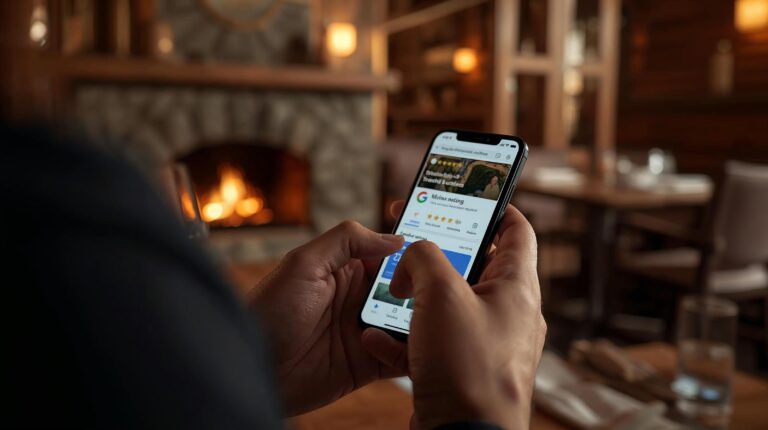
Imagine the following picture: It's February, Bansko is full of tourists, your kitchen is working at full speed. Suddenly your phone buzzes. A notification from Google My Business. You open it hoping for praise, but your heart stops: 1 star. The comment is short and devastating: “Terrible service, we waited 40 minutes for cold soup! The staff is rude. Never again!”.
Your first instinct is anger. You want to grab your phone and type: “"But you came at peak hour without a reservation and behaved arrogantly with the waitress!"”.
Stop. Take a deep breath. Leave the device for 10 minutes. This is a critical moment for your business.
Yours response to bad reviews is not intended for the person who wrote it (he is often already lost as a customer). Your response is a performance for the audience – for those thousands future customers who will read how you handle the crisis before deciding whether to book a table with you. In this detailed guide, we will look at the psychology of complaints, the types of “haters” and the exact formula to come out of the situation as winners.
1. Psychology of the “Keyboard Warrior”
Why do people write bad reviews? Understanding the motivation is half the answer. Studies show three main reasons:
- Seeking justice: The customer feels aggrieved (he paid for something he did not receive) and wants to “punish” the business or protect others.
- Needs attention (Ventilation): Sometimes the problem isn't just your soup. The hiker may have had a terrible day on the slopes, had an argument with their partner, or waited too long for the lift. You're just the lightning rod.
- Trolls and competition: Unfortunately, in saturated markets like Bansko, sometimes bad reviews are malicious attacks from competitors or people who are simply looking for conflict.
2. The Golden Rule: Never argue online!
This is the most important tip in this article. Even if the client is lying, even if they are exaggerating 10 times, if you go into explanatory mode, aggression or sarcasm, you lose.
⚠️ The emotional trap
To the outside observer, an owner who argues with his guests in public seems petty, insulting, and unprofessional. Remember: The Internet is forever. An angry response can go viral, be photographed, and shared on social media, ruining your business much faster than the cold soup itself.
3. The Formula for Success: The 3 Steps (Template)
Don't improvise every time. Use this proven structure for every negative response to bad reviews. It is brief, professional, and defuses tension.
Step 1: Empathy and Apology (The Acknowledge)
Even if you are not to blame for the facts, apologize for feelings to the client. This shows class.
“Hello! We are sincerely sorry to hear that your experience with us did not meet the high standards we strive for.”
Step 2: The Explanation
Give context, but very briefly. Admit the mistake, if any, or explain the situation neutrally.
“The weekends in February in Bansko are extremely busy. Despite our team's efforts to serve everyone quickly, delays sometimes occur, for which we apologize.”
Step 3: Invitation for a Second Chance Offline (The Offline Switch)
This is the most important part. Take the communication out of the public domain. Don't discuss details in the comments.
“We would like to rectify the impression. Please contact us personally at [email] or by phone to discuss the situation and offer you a compliment on your next visit.”
4. The Burial Strategy
What to do after you've already responded? The best cure for bad reviews is... lots of good reviews. Google and TripAdvisor's algorithms are set to show the newest and most relevant comments at the top.
If you get 1 star today, your goal should be to get five 5-star reviews in the next 48 hours. This way, the bad comment will “sink” to the bottom and not be the first thing people see.
How to stimulate positive reviews in Bansko?
- QR codes on the tables: Put up a small, stylish sign with a QR code leading directly to the Google Reviews form.
- Personal request: When you see a visibly satisfied group paying the bill and laughing, ask the waiter to say: “I'm so glad you liked it! It would be a huge help for us if you could share your impressions in a few words on Google.”
- Playing with staff: Give a bonus to a waiter whose name is mentioned in a positive review. This motivates them to ask for feedback from satisfied guests.
5. How to deal with fake reviews?
Sometimes the attack is unfair. If you receive a review from someone who has never been to your establishment (e.g. a former employee or competitor), you have the right to report it (Flag as inappropriate).
The procedure in Google Maps:
- Click the three dots next to the review.
- Select “Report review”.
- Indicate the reason (Conflict of interest, Spam, Fake content).
Note: This process is slow and does not always guarantee removal. Therefore, the strategy of “burying” with good reviews remains the most effective defense.
6. Reputation is real currency
Finally, let's talk about money. According to a large-scale study by Harvard Business School, an increase in Yelp/TripAdvisor rating by just one star (e.g. from 3.5 to 4.5) leads to a direct increase in revenue by 5 to 9%. The opposite is also true – a drop in rating leads to an outflow of customers.
In the digital age, your online presence is just as important as the quality of the food on your plate. Invest time in it. Respond not only to the bad comments, but also to the good ones – a simple “Thank you, we look forward to seeing you again!” shows algorithms and people that you are an active, vibrant business that values your guests.
Do you need a team to maintain the standard?
Dealing with reputation is one side of the coin. The other is having staff who don't make mistakes. The issue of staffing in Bansko is painful, but we have solutions.




 English (UK)