


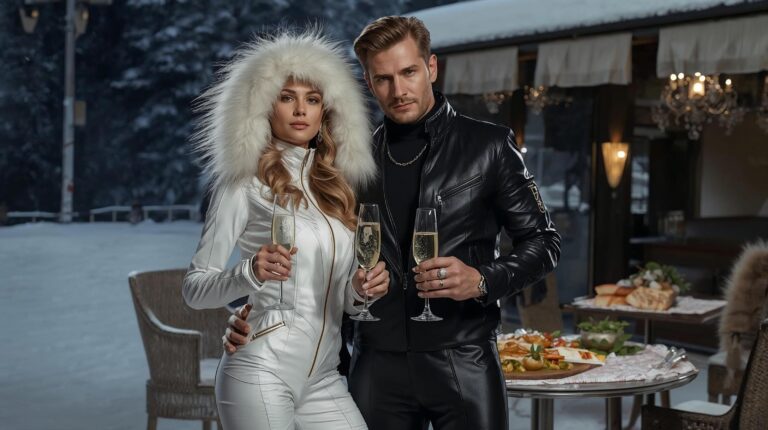
They were the first to bring the feeling of true, uncompromising luxury to Pirin. Although the geopolitical situation has changed their numbers, Russian tourists in Bansko (as well as the numerous Russian-speaking property owners) remain a benchmark for "heavyweight" guests.
There is no „casual“ style for them, no „just going for a ride“. Everything is a ritual, everything has to be branded and visible from afar. They don’t just visit the resort – they conquer it with style. The team of Vbansko presents you with the 9 classic signs of Russian chic in the mountains.
9 signs that you are facing Russian tourists (The Classic)
If you see a skier who rides aggressively, doesn't smile unnecessarily at strangers, and wears gear that costs the same as a small car, you're on the right track. Here's the detailed breakdown:
1. The uniform: Gold, Bogner and stones
For the Russian tourist (and especially for the Russian lady) the ski slope is the equivalent of a ballroom or a red carpet. You won't see ordinary, functional jackets from Decathlon. That would be an insult.
Look for the "holy trinity" of brands: Bogner, Sportalm or Moncler. But not the basic models. Look for limited editions with embroideries of flames, dragons, massive gold zippers or inlays with Swarovski crystals. The principle is „Dorogo-Bogato“ (Expensive and rich). They should literally shine in the sun.
2. The Skins on the Snow (Russian Chic)
This is the surest visual sign that distinguishes them from Western Europeans. While the world is talking about eco-leather, the Russian tourist demonstrates status through natural materials.
If you see a woman whose hood is edged with a huge fur (fox, sable or chinchilla), or wearing a fur vest over her ski gear while drinking champagne – that’s Russian style. Practicality here gives way to aesthetics and class.
3. The Poker Face
Unlike Americans, who smile at everyone they meet, or the British, who are boisterous and cheerful, Russian tourists are serious. They have a specific dignity in their gaze.
If someone looks at you intently, slightly sternly, and without emotion on the elevator – don't worry, they're not angry. They're just relaxing. For them, smiling too much at strangers is often interpreted as frivolity.
4. Tea with a „special addition“
Russians love to drink tea on the slopes to keep warm. But tea is often just the base.
Black tea with lemon is ordered. Then, with a discreet but confident movement, a silver or leather flask of quality is taken out of an inside pocket. cognac (or aged whiskey) and "improves" the drink. This is not alcoholism, it is a "medicine for tonic" and is consumed in moderation and with an appetizer (chocolate or lemon).
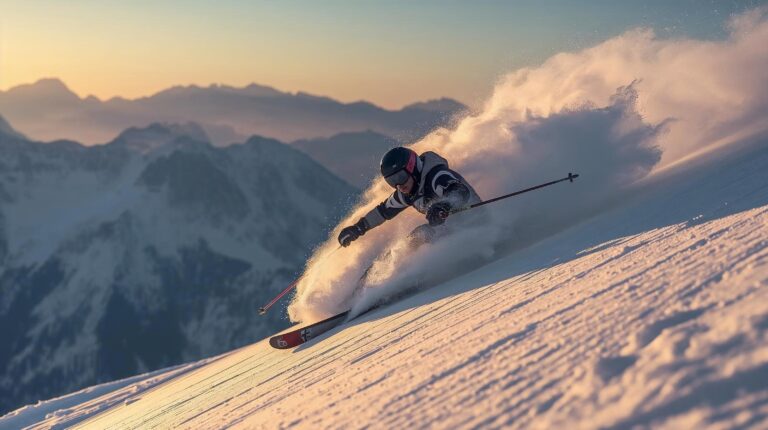
5. The aggressive riding style ("Torpedo")
Men usually ride very fast, technically and aggressively. They don't like to wait for beginners who get in their way, and often bypass them by inches at high speed. They descend the Tomba with the confidence and self-esteem of Olympians, even if their technique is not perfect - courage compensates for everything.
6. The Instructor as a „Personal Assistant“
The Russian customer is used to receiving full service. If you see a ski instructor who not only teaches a customer how to make turns, but also carries their skis to the lift, helps them lace up their boots, takes photos for Instagram, and saves them a seat at the restaurant – the customer is almost certainly Russian.
They pay generously for individual lessons (VIP), but require the instructor to be available for everything.
7. Après-ski with champagne and seafood
While other nations eat sausages with fries, Russian tourists they seek out the most expensive and exquisite on the menu, regardless of altitude.
They are the customers who order Moët & Chandon, oysters or seafood platters in the center of the mountain. If you see a table piled high with salmon, caviar and expensive bottles in the VIP area of Banderishka – that’s a Russian banquet.
8. Child prodigies
Little Russian tourists are often better equipped than professional racers. You'll see 5-year-olds with Poc helmets, Oakley goggles, and Atomic skis fearlessly riding behind their fathers.
Their discipline is ironclad – there is no grumbling, no „I’m cold.“ There is the word „Need“ (Must).
9. Property owners („Local“ foreigners)
Many Russians own apartments in complexes like Sveti Ivan Rilski or Pirin Golf. They behave differently than the average tourist.
They shop in large supermarkets with carts overflowing with delicacies, know restaurant managers by name, and act like hosts inviting guests. You will often hear them discussing „maintenance fees“ and the quality of cleaning.
Culture Clash: Russians vs. The Others
| Category | British | Russian |
|---|---|---|
| Clothing | Carnival costume / Superdry | Bogner with gold and furs |
| Drink | Beer (by quantity) | Tea with cognac / Champagne |
| Mood | Noisy, singing songs | Serious, heavy, dignified |
| At the restaurant | Dancing on the tables | They order the entire menu |
Frequently Asked Questions (FAQ)
Why don't Russians smile often?
This is a cultural characteristic, not rudeness. In Russian culture, smiling for no reason (“the American smile”) at a stranger is often considered a sign of insincerity or stupidity. Smiling is reserved only for friends and loved ones. If you make friends with them, they are extremely warm-hearted and generous.
Do they celebrate “Russian Christmas” in Bansko?
Yes, this is an important period. Russian Christmas is on January 7, and the “Old New Year” is on January 14. This period (from early January to mid-month) is the peak of Russian-speaking tourists, with restaurants often offering special menus with caviar, pelmeni, and vodka.
Conclusion: Russian tourists in Bansko bring glamour and a sense of high standards. They may seem strict from the outside, but they know how to enjoy life in a quality way – with good food, the best drinks and uncompromising equipment. Na Zdorovie!
🌍 Who's who in Bansko?
That was just one piece of the puzzle. Do you want to see the full, colorful picture of all the tourists in the resort?


 English (UK)