


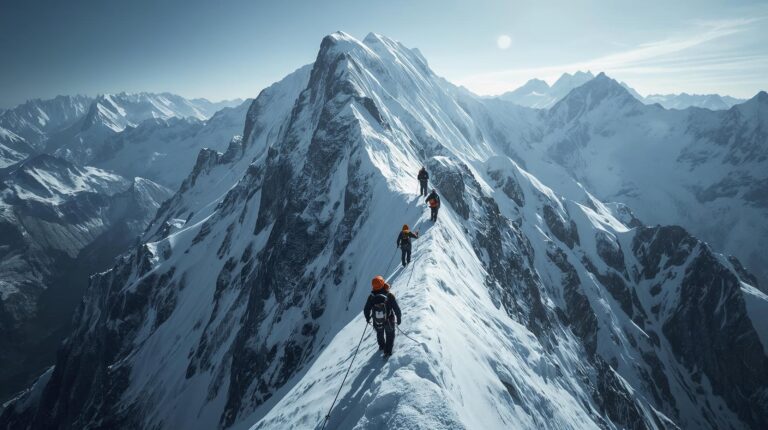
Regional context: The Marble Divide
Pirin Mountain is distinguished by its strongly pronounced alpine relief. The marble section above Bansko is known for its steep slopes, deep cirques and rapidly changing weather conditions, requiring excellent physical and mental preparation.
The Austrian precedent: When experience makes you a culprit
Until recently, mountaineering was believed to be governed entirely by unwritten ethical rules, according to which each participant was responsible for his or her own life. However, a recent court case in Austria has transformed the issue of responsibility from a purely moral one into a strictly legal one. This sends a warning signal to all of us in Bulgaria who like to take less experienced friends on hikes and climbs in the Northern Pirin Mountains.
Last year, a climb of Austria's highest peak, the Grossglockner (3,798 m), ended in tragedy. A young woman named Kerstin died of hypothermia after her partner, Thomas, left her behind and continued to the summit alone. Although Thomas was an amateur, an Austrian court found him guilty of manslaughter. The reason? As a much more experienced climber, he effectively took on the role of informal leader.
This case changes the paradigm for safety in Pirin and around the world: if you take a less experienced person into a harsh environment and ignore the danger signs, the law may hold you accountable.
“Peak Fever” and the Psychological Traps Over Bansko
Imagine a typical winter day on the road to Vihren. Weather breaks down, the wind picks up sharply (something typical for the Bansko region), and your friend starts to lag behind. This is where „summit fever“ – the psychological trap of ambition – sets in.
You traveled to Bansko, planned a vacation, woke up at 4:00 in the morning, and the peak is „just an hour away.“ The decision to continue may seem like an act of willpower, but it is often a fatal mistake. The real safety in Pirin It starts with the ability to say “no” to your ego.
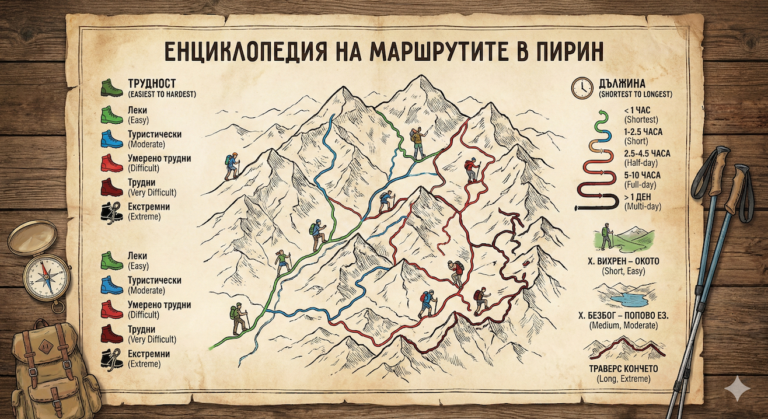
Analysis of the most dangerous routes in Pirin
To understand where the responsibility weighs the most, let's look at the three most technical lines above Bansko:
1. Jamji's Edge: A Test of Psyche and Technique
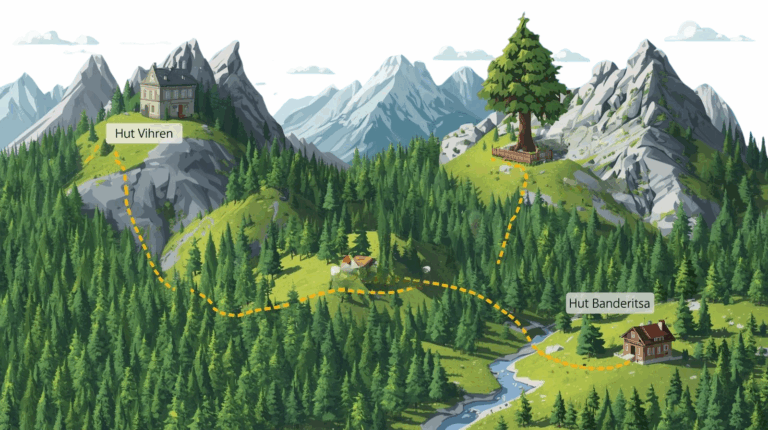
A classic alpine route, dividing The Kazanites from the Banderitsa Valley. Requires climbing skills (II-III category according to UIAA).
- Hidden risks: Exceptional airiness. In winter, the marble is covered with solid ice, making any slip fatal.
- Responsibility: The driver must use a rope belay, especially in the “Plochite” section.
2. The Edge of the Horse: The Marble Blade
The most famous karst edge in Bulgaria. Although it has a metal railing, it remains extremely dangerous under certain conditions.
- Winter conditions: The metal rope is often under snow caps. Stepping on a cap is one of the most common causes of accidents.
- Meteorology: The marble becomes slippery as glass when it rains. The lightning on the ridge is deadly.
3. The Edge of the Watchmen
Located between Polezhan and Gazey, this ridge is for advanced climbers. The lack of an “emergency exit” from the route makes it a trap in bad weather.
Technical training and equipment
To ensure maximum safety in Pirin, your backpack must contain specific inventory. See the comparison table below:
| Equipment | Summer season | Winter season |
|---|---|---|
| Shoes | Three-season with hard sole | Winter (D or C category) |
| Technical inventory | Helmet, seat (for the Horse) | Crampons, ice axe, rope 30m+ |
| Avalanche safety | Not necessary | Pips, probe, shovel |
Golden rules for group hikes
- Clarify leadership: Before you leave Bansko, determine who makes the decisions. The leader bears the burden of “turning back.”.
- The principle of the weakest: The speed of the group is the speed of the slowest participant.
- Checking the weather: Use applications like PSS and monitor the cameras of Todorka and Vihren Peak.
Do you need a professional?
If you are not confident in your skills to lead a group on Jamdzhievi Ridge or Koncheto, don't take unnecessary risks. Hire a licensed mountain guide in Bansko.
Important: The mountain is a dynamic environment. This article is for informational purposes only and is not a substitute for professional training in mountaineering or avalanche safety.
 English (UK)