

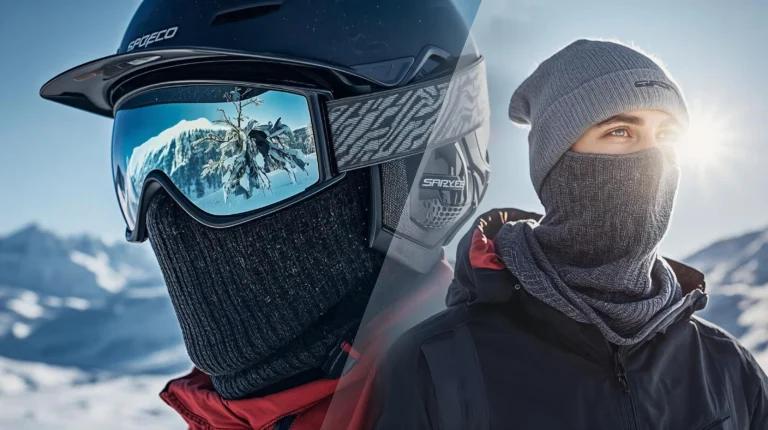
Imagine the following situation: you are riding the open-air chairlift “Banderitsa 2”, the wind is blowing snowflakes right in your face, and the bare skin between the collar of your jacket and your ski mask is literally freezing. At that moment you realize that the right choice of ski balaclava and hat is the detail that separates the perfect ski day from real torture.
Many novice skiers invest thousands of leva in jackets and pants, but leave their face and neck completely unprotected. In a mountain with an alpine character like Pirin, where temperature inversions and icy winds are a daily occurrence, head protection is an absolute priority. This expert guide will guide you through the latest technologies, materials and trends for the 2026 season to keep you warm where you need it most.
Never wear a thick knitted hat with a tassel UNDER your ski helmet! This is an extremely dangerous practice. A thick hat disrupts the fit of the helmet to your skull. In the event of an impact, the helmet will slip off or will not absorb energy properly. Only a specialized thin balaclava (bonnet) or multifunctional scarf (tube) is worn under the helmet. The hat remains in your pocket for the moments after riding.
1. Balaclava, Mask or Neck Gaiter?
Before you make your choice of ski balaclava and hat, you need to understand the differences between the main types of face protection layers:
- Balaclava (Ninja Mask / Bonnet): It covers the entire head, neck and lower face, leaving only an opening for the eyes. It is the best protection for harsh days in Bansko, as it does not allow the wind to penetrate anywhere. It sits smoothly under the helmet and completely eliminates cold air around the ears and neck.
- Ski tube (Neck Gaiter / Buff): A cylindrical piece of fabric that is worn around the neck and pulled over the nose when needed. This is the most versatile option. It is suitable for milder weather, as your head relies only on the insulation of the helmet itself.
- Half Face Mask: Often made of neoprene, it covers only the nose and mouth and fastens with Velcro at the back of the neck. It has an aggressive look, but often lets cold air in at the neck if not well combined with a high collar on the jacket.
2. The Materials: What touches your face?
The skin on your face is extremely sensitive, especially when exposed to cold and friction. The material your balaclava is made of is the most important factor in comfort.
Merino Wool (The Gold Standard)
Merino continues to be the king of mountain gear. It's incredibly soft, itchy, and has the magical ability to stay warm even when it gets wet from your breath. Its biggest advantage? Its natural antibacterial properties. You can breathe in a merino balaclava for three days straight and it won't smell bad.
Synthetics (Polyester / Lycra)
High-tech synthetics are super stretchy, quick-drying, and often cheaper. They are a great choice for active skiers (freeriders) who sweat a lot. The downside is that synthetics quickly retain odors from your breath and require daily washing.
Windstopper panels
The highest-end balaclavas combine materials. They have a thin, breathable Lycra on the top (which goes under the helmet) and a thick Windstopper or Fleece material at the bottom around the neck and chest to block the icy wind on the open lifts.
3. The biggest problem: Ski mask fogging (Goggles)
Every skier has faced this nightmare: you pull your balaclava over your nose to keep warm, you exhale warm air, it goes up under your ski goggles and the poster instantly fogs up.
To avoid fogging, look for balaclavas with laser-cut holes (Breathing holes) or a mesh panel (Mesh) right in front of the mouth and nose. The absolute hit on the market is MFI (Magnetic Facemask Integration) Anon brand technology (and their equivalents). The balaclava has built-in magnets that “click” directly onto the bottom of the ski mask frame. This creates a perfect seal without any overlap, and warm breath is directed downwards, eliminating the 100% from fogging up.
4. The hat: Why do you need one when you have a helmet?
If a helmet protects you on the slopes, why are we even discussing winter hats (Beanie)? Because your day in Bansko doesn't end with taking off your skis.
A ski hat is your best friend for Apres-ski culture. When you take off your helmet after a full day of riding, your hair is matted and damp with sweat. If you step out into the icy air in front of the hut or while walking down Pirin Street to the tavern, you risk catching a serious cold.
- About the hut and the town: Choose a classic knit hat with a fleece lining on the inside (at least around the ears). It will keep you warm and stylish while you sip on mulled wine. wine.
- For Ski Touring: If you are hiking to the summit, a helmet is too heavy and warm. For panting, a very thin, highly breathable sports cap is used that wicks away sweat until you reach the summit, where you put on your helmet for the descent.
5. Maintaining and washing your facial gear
Since the balaclava is in constant contact with your mouth, nose, and skin, it collects sweat, saliva, and cosmetics (sunscreen). Hygiene is critical here.
Wash synthetic multi-purpose scarves after each ride at 30°C. If you use a merino balaclava, you can wash it every 3-4 days, but Be sure to use wool detergent and never use fabric softener because it will destroy the fabric's ability to wick away moisture and dry quickly.
Conclusion
Don't let the cold steal the fun out of your vacation. The right choice of ski balaclava (for the weather under the helmet) and a stylish, warm hat (for the moments after riding) ensures that you will focus on the beauty of Pirin, not on your frozen nose. Invest in breathable materials and innovative solutions such as magnetic fastening for clear visibility and maximum comfort on the white slopes.


 English (UK)