


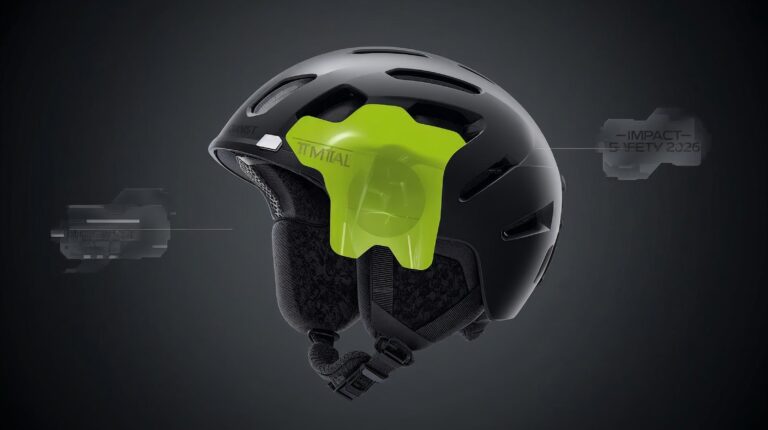
The times when riding with a hat was “cool” and a helmet was unnecessary are long gone. In the 2026 season, the right choosing a ski helmet is not just a matter of fashion, but the most important decision before you step on the runway. It is the element of your full ski equipment, whose job is to literally save your life.
Hybrid models, smart helmets with built-in communication, and those with photochromic visors dominate the market this year. But how do you navigate among the hundreds of options? In this detailed guide, we'll look at all the key criteria: from head size and shape, to the latest safety technologies, to the leading brands for 2026.
1. Safety Certifications: The Basis of Choice
Before looking at a color or brand, check the label inside the helmet. Any reliable ski helmet should meet at least one of the following international standards:
- CE EN1077 (Europe): Divided into Class A (covers and hard protection over the ears, mandatory for competitors) and Class B (softer ear pads, excellent for standard riding and freeride).
- ASTM F2040 (USA): A similar standard testing resistance to various types of impacts. If the helmet has both certificates – even better!
2. Size, shape and micro-adjustments
The most expensive helmet is useless if it's too big for you. If it's too small, it'll give you a headache in minutes.
How to measure the circumference?
- Take a sewing meter (or a string that you can then measure with a ruler).
- Go around your head about 2 cm above the eyebrows and just above the ears (the widest part).
- The result in centimeters determines the size (Usually: S = 51-55 cm, M = 55-59 cm, L = 59-62 cm).
Head shape
Touring isn't everything. Different brands make helmets for different shapes:
- Round Oval: Wider on the sides (common in Asian brands or specific “Asian Fit” models).
- Long Oval: Narrower on the sides, longer from front to back (common with Smith and Salomon).
BOA lacing systems
In 2026, almost every quality helmet comes with BOA® Fit System or a similar dial on the back of the head. It allows for micro-adjustment (in 1mm increments), which is invaluable if you're wearing a thin balaclava today and a thicker one tomorrow.
The Shake Test
Put on the helmet, tighten the BOA system, but do not fasten the strap under the chin. Shake your head vigorously.
- Correct: The helmet stays still, and the skin on your forehead moves with it.
- Wrong: The helmet slides loosely. This means it is too big or does not fit the shape of your head.
3. Construction: ABS, In-Mold or Hybrid?
The way the helmet is made determines its weight and strength:
- ABS (Hardshell): Thick outer plastic glued to the inner foam. Heavier (about 500-600 g), but extremely resistant to punctures (branches, stones) and more budget-friendly. Preferred by freestylers and for children.
- In-Mold: The outer polycarbonate shell is fused directly to the inner EPS foam. The result is an ultra-light helmet (around 350-400g) with excellent ventilation, ideal for all-day trail riding.
- Hybrid construction (Hybrid): It takes the best of both worlds. A hard ABS layer on top (for impact protection) and a lightweight In-Mold on the sides and back (to reduce weight). This is the gold standard for the high-end in 2026.
4. Protection technologies: Far beyond classic foam
Today, brain protection technologies are no longer an extra, but an absolute necessity. They fight the biggest enemy: rotational forces when falling at an angle.
- MIPS® (Multi-directional Impact Protection System): The most popular technology (recognizable by the yellow logo). A movable layer inside the helmet that allows the shell to slide slightly (10-15 mm) upon impact, absorbing rotational forces before they reach the brain.
- Koroyd® (common at Smith): Looking like green straws glued together, this structure crushes in a controlled manner upon impact and absorbs up to 30% more energy than traditional foam, while providing brutal ventilation.
- WaveCel® (common with Anon): A cellular structure that bends, crushes and slides upon impact. Extremely effective against concussions.
- SPIN / twICEme® (POC): Proprietary technologies of the Swedish brand POC, twICEme also includes an NFC chip in which you can record your medical data (blood type, allergies) to be read by rescuers in the event of an accident.
5. Top Brands on the Market: Who Offers What?
If you are looking for proven quality, look to the industry leaders:
- Smith: The kings of helmet-goggle integration (no fogging). Known for their Koroyd technology and excellent hybrid models like Vantage и Nexus.
- POC: The Swedish safety giant. Characterized by minimalist Scandinavian design, bright colors (for visibility) and top technology. The model Obex is an absolute bestseller.
- Salomon & Atomic: The two sister brands (under the Amer Sports umbrella) offer great value for money, lightweight In-Mold constructions (the series Husk) and a perfect fit for the average European.
- Giro: Innovators in design, offering some of the best MIPS integrations (Spherical Technology) that make the helmet feel more compact.
- Oakley: Known primarily for their goggles, but their helmets (the series MOD) integrate perfectly with them and offer a very aggressive, modern design.
6. Ventilation and Visors
Weather в Bansko is variable – in the morning it can be -15°C, and at noon +5°C. Therefore, ventilation is critical. Search Active (adjustable) ventilation with a slider to control the airflow.
The Trend: Visor Helmets
More and more skiers are choosing helmets with built-in visors. In 2026, they will be a hit photochromic visors, which themselves darken or lighten according to the sun.
| Type | Advantages | Disadvantages |
|---|---|---|
| Classic (Helmet + Goggles) | Better face seal; Easy replacement of the plates when the light changes; Sportier look. | Risk of incompatibility and forehead gap. |
| Helmet with Visor | TOP choice for people with prescription glasses! Huge field of view; No pressure on the face. | In heavy snowfall and wind, air sometimes enters from below; More expensive to replace if scratched. |
Conclusion
A ski helmet is not just an accessory, it is your life insurance. For the conditions in Bansko in 2026, we recommend a hybrid helmet with adjustable ventilation and technology such as MIPS, Koroyd or WaveCel. Do not compromise on size and always measure the helmet together with your goggles – it should “hug” you tightly to keep you protected and confident on the white slopes.

 English (UK)