


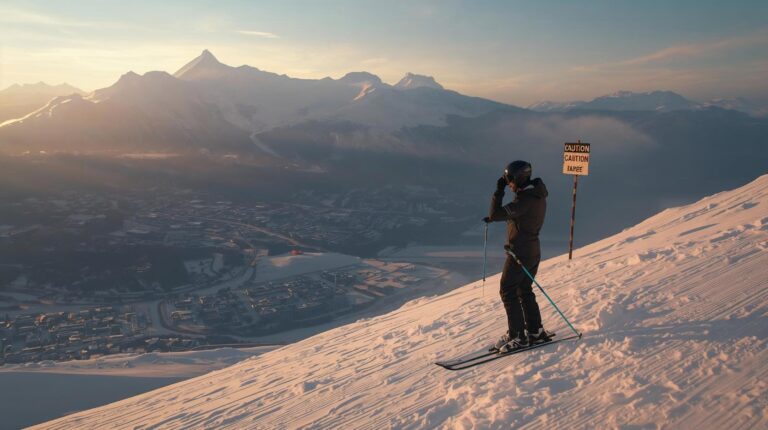
Skiing is perhaps the most beautiful way to feel freedom – sun, sparkling snow and adrenaline. But the mountain has two faces, and the statistics for ski accidents does not choose its victims according to fame or fortune. Snow is the "great equalizer" that does not forgive either world champions or tourists in Bansko.
Behind the most famous tragedies in the world of winter sports lie stories that need to be told in detail. In each of them there is a hidden lesson that could save your life on the steep slopes of Pirin.
Chronicle of Tragedies: What Really Happened?
1. Michael Schumacher: The Irony of Fate (Méribel, 2013)
Schumacher's story is the cruelest irony in sports. The man who survived burning cars at 300 km/h met his fate while driving at moderate speeds on a family vacation.
The lesson: The danger in serious skiing accidents is often not speed, but unfamiliar terrain. Going off-piste is Russian roulette.
2. Natasha Richardson: The Insidious “Bright Period”
Liam Neeson's wife died after a seemingly harmless fall on a training track in Canada. She fell lightly, got up, laughed, and refused medical attention. Three hours later, she fell into a coma.
She becomes a victim of “Light period syndrome” in an epidural hematoma. A blood vessel slowly fills the skull with blood while the patient feels fine, until the fatal end. This case changed the rules for wearing helmets forever.
3. Gaspard Houllier: The Clash on the Blue Track
French star Gaspard Houllier died under ideal conditions after colliding with another skier at an intersection between two runs. The lack of a helmet proved fatal in a body-to-body impact.
4. Gwyneth Paltrow: The Law of the Runway
There were no fatalities here, but there was an important lesson. A retired doctor sued the actress for a hit-and-run, but she won the case. The court reminded the whole world The FIS Golden Rule:
“The one who is further down the slope always has the advantage. The one who comes from above (from behind) is obliged to keep his distance and anticipate the movements of the one in front.”
Skiing accidents in Bulgaria: The reality in Bansko and Pirin
While we read about the Alps, we should look to our own backyard. Pirin is a mountain with character – beautiful, but harsh and rocky. Here are the specific risks leading to ski accidents in Bansko:
- 🛑 The “Ski the Road” phenomenon (after 3:30 p.m.): This is the riskiest area. It is where tired skiers (“spaghetti legs”), beginners, and those in a hurry to “Happy Ending. Fatigue and the narrow section create conditions for collisions.
- ❄️ The Icy “Tomba”: The slopes in Bansko are often hard in the morning. Falling on ice is like falling on concrete – without a back protector, injuries are serious.
- ⚠️ Avalanche danger: Pirin is not Vitosha. Freeride Riding under Todorka Peak and in the gullies is extremely dangerous without avalanche equipment (pips, probe, shovel).
Statistics and Safety: How to survive?
Despite the horror stories, skiing is a relatively safe sport. The probability of a fatal outcome is about 0.7 per 1 million ski days. Statistics show that over 851% of accidents are due to skier error (overestimation) rather than conditions.
Bansko safety checklist
- The helmet is mandatory: Reduces the risk of head injury with 60%.
- Mountain insurance: Mandatory for Pirin. A helicopter operation costs thousands of leva.
- Respect fatigue: Most injuries occur on the "last run" of the day.
- Don't underestimate the impact: If you fall badly on your head – seek medical attention immediately!
The mountain gives a lot, but it demands one thing in return – respect. Tragedies involving famous people are a sad lesson that we must remember in order to return from Bansko with a smile, and not in an ambulance.
 English (UK)