

What is a ski lift and how does it work?
A ski lift (also called a surface lift) is a mechanized facility for transporting skiers and snowboarders up a slope. Unlike chairlifts, where you sit in the air, a ski lift your skis or snowboard stay on the snow the whole time.
The principle of operation is simple: a powerful electric motor drives a long steel cable that moves in a closed circle between the lower and upper stations. To this main cable are attached various types of handles, seats, discs (pans) or anchors, which the skier grabs or leans on to be pulled to the top of the slope.
Types of ski lifts and trails in Bansko
Bansko's infrastructure is one of the most modern in Eastern Europe and offers absolutely all types of ground facilities, adapted to different levels of difficulty. Here are the four main types you will encounter:
1. Ski Trail (Magic Carpet)
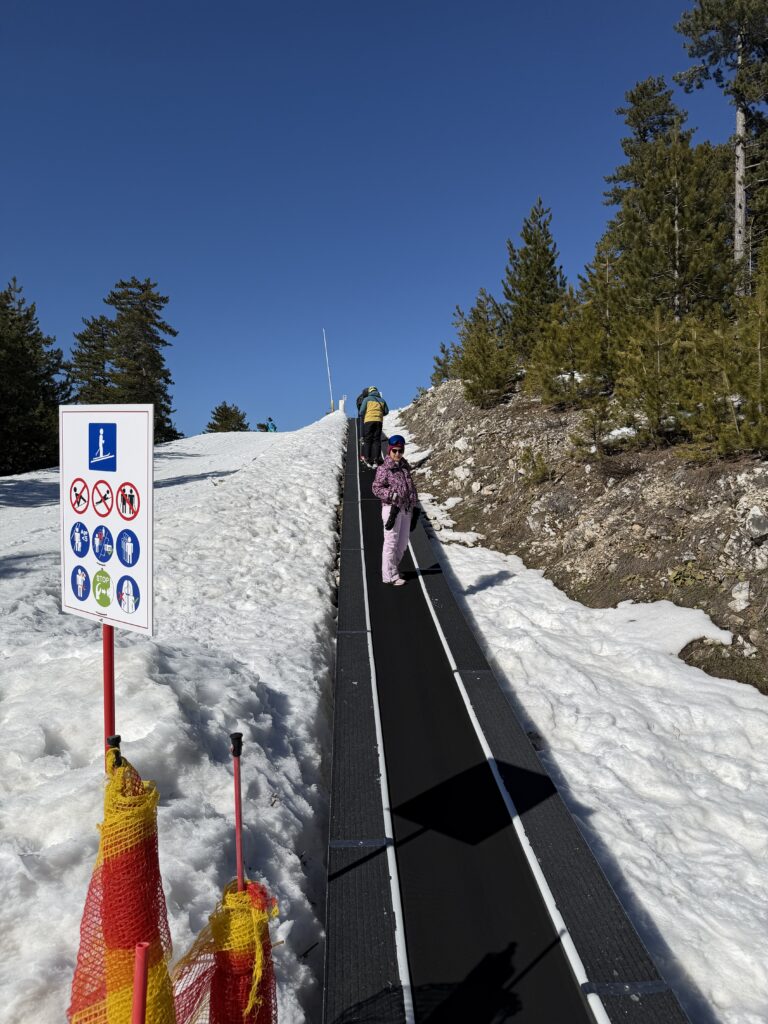
This is the most modern, easy and safe facility, created especially for absolute beginners and young children. It is a long, moving rubber band (similar to the escalators at airports), which is installed at the snow level. In Bansko you will find such trails at the training grounds of Banderishka Polyana.
- How to use: You simply slide your skis (or board) onto the strip and stand still. The strip slowly and smoothly lifts you to the top of the small hill. At the end, you simply slide forward to get off.
- Advantages: Zero stress. Does not require any technical skills for hanging or balancing.
2. Rope tow (Baby lift / Manual tow)
Very common on short training runs where ski schools conduct their first lessons, this tow is a thick, continuously moving rope (often plastic or rubberized) located at waist height.
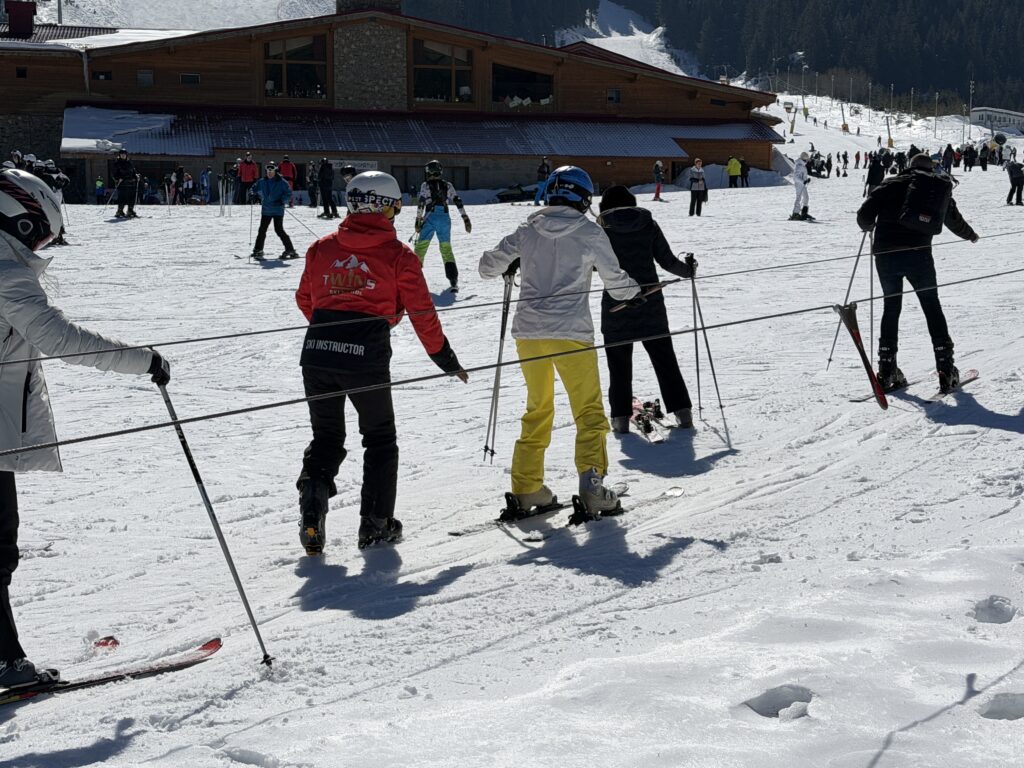
- How to use: You grab the rope with your hands (it often has small plastic handles or knots on it for a better grip) and let it pull you up.
- Advantages: Ideal for short distances. If you lose your balance, you simply let go of the rope and stop in place without disturbing others or falling hard.
3. Button lift / Platter pull
This is the classic ski lift used for medium-long runs. It consists of a metal rod or rope with a plastic disc (resembling an inverted bowl) at the end. In Bansko, such facilities connect various key sections of the ski area.
- How to use: You stand parallel to the line of withdrawal. When the “bowl” comes to you, you grab it with your hand, pull it towards you and place the plastic disc between your legs. The disc rests against the back of your thighs and pushes you up.
- For snowboarders: The plastic disc is placed behind the front leg or inner part of the front thigh while the board is pointing straight up.
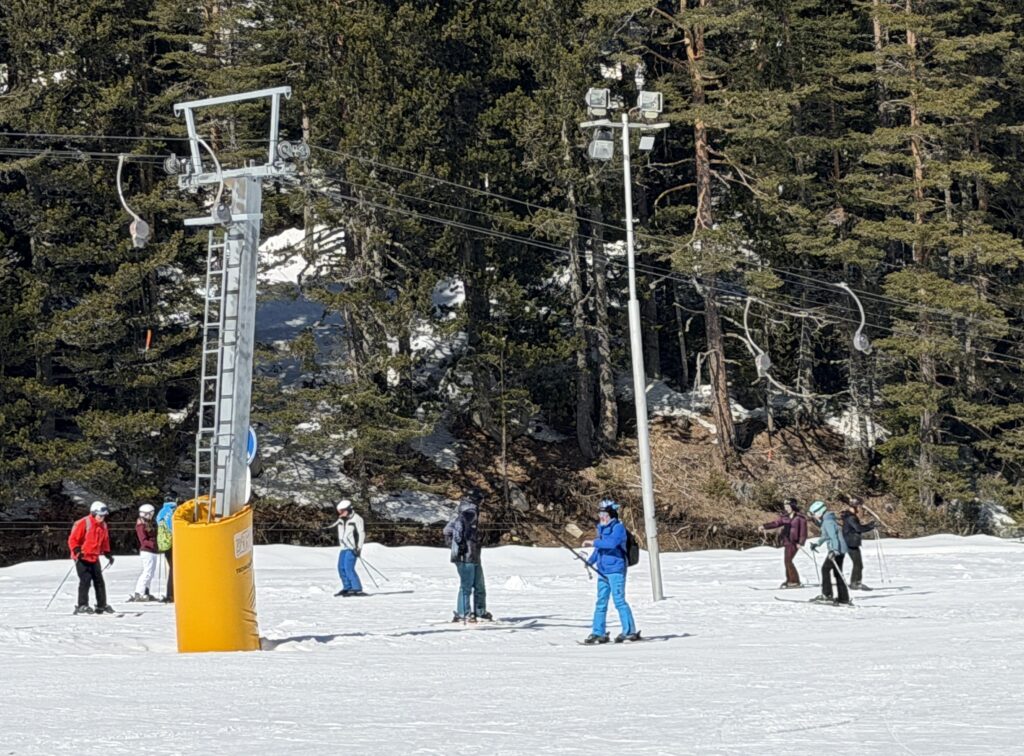
4. Anchor type tow (T-bar)
The anchor works on the same principle as the panichka, but is designed for two people at the same time. It ends with a crossbar in the shape of an inverted “T”. In the resort, this type of tow rope is often used on steeper sections such as Chalin Valog.
- How to use: Two skiers stand side by side. When the anchor arrives, the instructor or a more experienced skier grabs it and places it behind their backs (under their buttocks).
Golden tips for using ski lifts in Bansko
Tobogganing is a “rite of passage” for any winter athlete. However, following a few basic rules will make your experience much more enjoyable:
- Look ahead: When the tow is pulling you, don't look down at your skis or the ski pole. Look straight ahead to the top. This automatically improves your balance.
- Keep your skis parallel: Keep your skis in the track left by previous skiers. Don't try to "plow" while being pulled.
- Relaxation at the end: When you reach the top station, simply remove the plate/anchor from under your feet, release it smoothly, and slide quickly to the side of the line to make way for the person behind you. Don't throw the rig hard!
- If you fall – drop: If you lose your balance and fall while climbing, immediately release the tow! Do not try to hold on while being dragged through the snow. Crawl quickly to the side of the slope so that the next person does not hit you.
Summary
The variety of ski lifts in Bansko makes the resort extremely welcoming for beginners. Starting from the stress-free ski trail, passing through the children's rope tow and reaching the classic panichki and anchors, the infrastructure allows you to smoothly build your skills. Before you know it, you will leave the tows behind and will be climbing with a smile on the modern chairlifts to the highest peaks of Pirin.

 English (UK)