


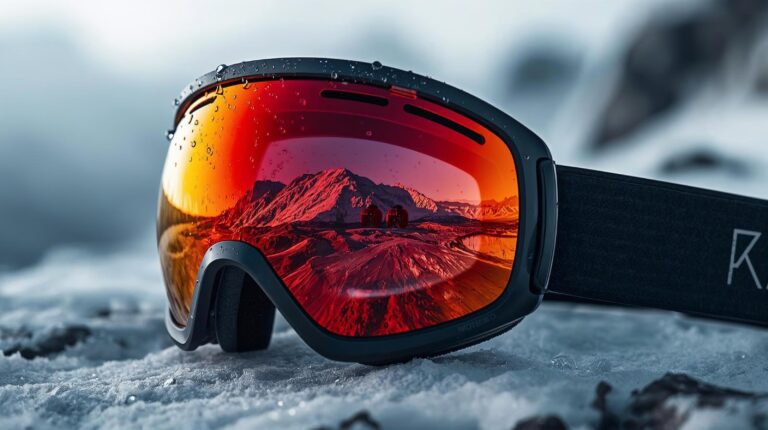
You can have the most expensive skis and the most comfortable boots, but if you can't see where you're skiing, your day is ruined. The right one choice of ski mask (often called ski goggles) is critical for safety, especially in a mountain like Pirin, where sun and fog change in minutes.
As part of your full ski equipment, the mask has two jobs: to protect your eyes from wind and snow, and to filter the light so you can see the terrain on the track. In the 2026 season, contrast technologies and “smart” lenses are more accessible than ever.
1. The shape of the plate: Spherical or Cylindrical?
The first thing you will notice when purchasing is the shape of the glass (plate).
- Cylindrical (Flat): It is curved horizontally (around the face), but straight vertically.
Pros: Cheaper and with a classic "retro" look.
Cons: Smaller field of view and possible glare.
- Spherical: It is curved both horizontally and vertically (like part of a balloon).
Pros: Huge peripheral vision, less image distortion and more air volume inside (less fogging).
Cons: Higher price.
- Toric: The hit of 2026. Combines the best of both – wide field and modern design.
2. VLT and Categories: What plaque for what time?
The most important technical characteristic is VLT (Visible Light Transmission) – the percentage of light that passes through the poster. For Bansko, where thick fog (“milk”) often falls, choice is key.
| Category | VLT % | Conditions |
|---|---|---|
| S0 / S1 (Night/Fog) | 40% – 90% | Night riding, heavy snowfall and thick fog. The plates are yellow, pink or transparent. |
| S2 (Universal) | 18% – 40% | Variable weather (clouds/sun). Standard for most days. The plates are orange or red. |
| S3 (Sun) | 8% – 18% | Bright sun in March/April. Mirror and dark plaques. |
Photochromic solar panels
If you do not want to change plates according to the weather, invest in a photosolar mask. It automatically darkens in the sun (becomes S3) and lightens in the shade or fog (becomes S1). This is the most universal solution for 2026.
3. Anti-Fog and ventilation
There's nothing worse than a foggy mask. To avoid this:
- Look for a mask with double plate (Double Lens). The air layer between the two panes acts as insulation (double glazing).
- Never wipe the inside of a wet mask with a glove! This will erase the Anti-Fog coating. Let it air dry.
4. Helmet and Goggle Compatibility (OTG)
Your mask and ski helmet they should fit together like a puzzle.
- Without “Gaper Gap”: The upper frame of the mask should follow the curve of the helmet, leaving no gap on the forehead.
- OTG (Over The Glasses): If you wear prescription glasses, look for models marked OTG. These have more volume and slots in the foam for your glasses' frames. An alternative is a helmet with a visor.
Conclusion
For the conditions in Bansko, where in the morning you are at the top in fog, and in the afternoon in the sun at the bottom, the best choice of ski mask is a model with two interchangeable plates (one for sun and one for fog) or a quality photosolar mask. Don't skimp on visibility - it gives you confidence and quick reactions.
 English (UK)