


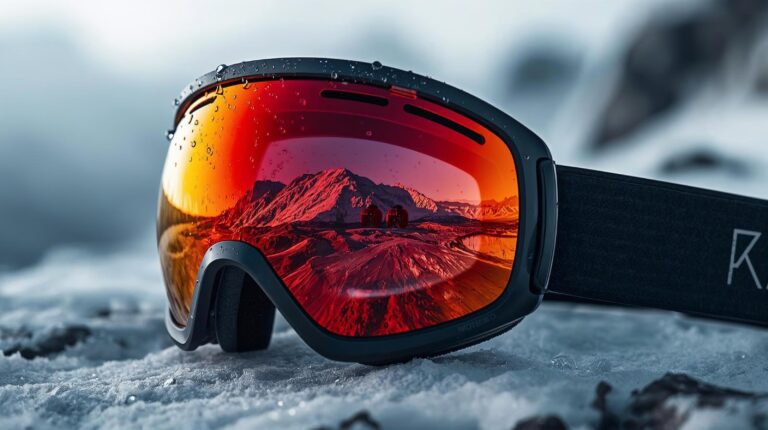
You can have the most expensive skis and the most comfortable boots, but if you can't see where you're going, your day is ruined. The right choice of ski mask (often called “ski goggles” in everyday life) is critical for safety, especially in a mountain like Pirin, where the sun and thick fog change in minutes.
As part of your full ski equipment, the mask has two main tasks: to protect your eyes from wind, ice and snow, and to filter light so that you can clearly see the terrain on the track. In the 2026 season, high-contrast technologies and “smart” lenses are more accessible than ever.
Although we often use them as synonyms, ski mask (goggles) is the large elasticated face shield that seals your face and is worn with a helmet. Ski goggles (sunglasses) are sports sunglasses with frames – they are great for relaxing in front of the hut or climbing, but they don't protect you from the wind when descending at 70 km/h.
1. The shape of the plate: Spherical, Cylindrical or Toric?
The first thing you will notice when purchasing is the shape of the glass (plate).
- Cylindrical (Flat): It is curved horizontally (around the face), but straight vertically.Pros: More budget-friendly and with a classic, aggressive “retro” look (very popular among snowboarders).
Cons: Smaller field of view and greater chance of glare.
- Spherical: It is curved both horizontally and vertically (like part of a balloon).Pros: Huge peripheral vision, minimal image distortion and more air volume inside, which drastically reduces fogging.
Cons: Higher price and more "alien" look.
- Toric: The hit of 2026. Combines the best of both – a wide field of view and excellent optics like the spherical one, but with a more compact and modern design like the cylindrical one.
2. VLT and Categories: What plaque for what time?
The most important technical characteristic is VLT (Visible Light Transmission) – the percentage of light that passes through the poster. For Bansko, where thick fog (“milk”) often falls, choice is key.
| Category | VLT % (Transmittance) | Conditions and Color |
|---|---|---|
| S0 / S1 (Night/Fog) | 40% – 90% | Night riding, heavy snowfall and dense fog. The plates are yellow, transparent or light pink. |
| S2 (Universal) | 18% – 40% | Variable weather (clouds and sun). Standard for most days. Plaques are often orange, red or blue. |
| S3 / S4 (Sun) | 8% – 18% | Bright sun (especially in March/April) and glaciers. Dark, highly reflective plates. |
3. Magnetic plates vs. Photochromic
To be ready for any weather, you have two modern options:
- Magnetic quick change systems: The masks come with two plates (e.g. S1 and S3) that are held on by strong neodymium magnets. You can swap the fog plate for the sun plate in literally 3 seconds, even with gloves on while on the lift.
- Photochromic solar panels: If you don't want to carry spare lenses, this is the solution. The plate automatically darkens in the sun (becomes S3) and brightens in fog (becomes S1). This is the most versatile investment.
4. Anti-fog and ventilation
There is nothing worse or more dangerous than a foggy mask. To avoid this:
- Look for a mask with double lens. The air layer between the two panes acts as insulation (like double glazing) and stops condensation.
- The golden rule: Never wipe the inside of a wet mask with your finger or glove! That's where the fine Anti-Fog coating is located. If snow gets in, shake it off and let the mask air dry or in the hut.
- Don't put the mask on your sweaty forehead or a wet hat while resting - this is a sure recipe for instant sweating.
5. Helmet and prescription glasses compatibility (OTG)
Your mask and ski helmet should work as a team:
- Without “Gaper Gap”: The top frame of the mask should follow the curve of the helmet perfectly. There should be no gap of bare skin on your forehead (except it's unaesthetic, you'll get cold). The safest way is to buy a mask and helmet from the same brand.
- OTG (Over The Glasses): If you wear prescription glasses, look for models specifically labeled as OTG. These have a deeper profile and special slots in the foam on the sides to keep the frames from pressing against your temples.
6. Top brands and technologies for 2026.
If you are looking for uncompromising quality and optics that literally "bring out" the relief of snow in fog, these are the market leaders:
- Oakley (PRIZM™ Technology): The absolute benchmark in sports optics. Their PRIZM technology filters light in a way that enhances contrast to the maximum. Bestsellers are the models Flight Deck (spherical) and Fall Line (cylindrical).
- Smith Optics (ChromaPop™ Technology): Oakley's biggest competitor. ChromaPop lenses offer incredibly vibrant colors. Smith is also known for having the best ventilation on the market. The series is a hit I/O MAG and the innovative 4D MAG, which has a curve at the bottom for better vision of the skis.
- Anon (from Burton): The leaders in magnetic systems. Their technology Magna-Tech® is the fastest and safest plate changing system. Their plates PERCEIVE are of the highest class, and most of their masks come with MFI (magnetic attachment of the bonnet directly to the mask).
- Julbo / Uvex / Alpina: European classics. The French brand Julbo offers some of the best photovoltaic panels on the market (the series Reactive), which adapt quickly. Uvex and Alpina offer great value for money and are extremely durable.
Conclusion
For the variable conditions in Bansko, where in the morning you are at the top in fog, and in the afternoon in the sun at the bottom, the best choice is a ski mask with a magnetic system and two replaceable plates, or a quality photo-solar mask. Don't skimp on visibility - it not only protects you from accidents, but also gives you confidence and pleasure from every descent.




 English (UK)