


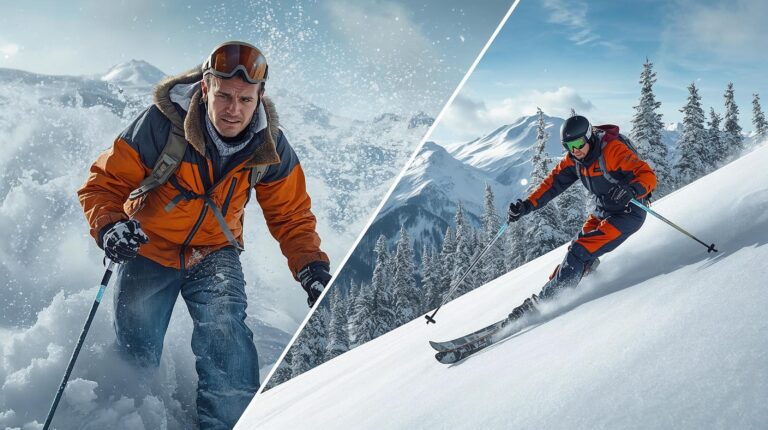
Skiing with jeans: A Burgas classic or a huge mistake?
Everyone who regularly visits Banderishka Polyana has heard this classic winter joke: “If you see someone skiing the slopes in Bansko in jeans, they are most likely from Burgas.” The joke is great and has that specific innate humor, but the truth is that jeans on the runway are a sight that evokes more sympathy for the freezing tourist than admiration for his street styling.
But let's answer the main question directly: Is it appropriate to ski or snowboard with jeans? Short and clear – firmly no. Denim should stay in the closet or be saved for the après-ski bars around the base station of the Gondola.
Why is cotton the number one enemy in the mountains?
- Absorbs moisture: The jeans are made of cotton, which acts like a sponge. It keeps sweat away from your body and absorbs every ounce of snow on the outside.
- They become heavy and freeze: Once wet, jeans become extremely heavy. In the temperatures on Todorka Peak, they can literally freeze on your legs, posing a serious risk of hypothermia.
- Zero wind protection: The icy mountain wind of The Shiligarnika it will pass through denim like a sieve.
- Restrict movement: Skiing requires constant flexibility in your knees and hips. Wet and cold jeans will stiffen your movements to the point where you lose control of your skis.
What are the best pants for skiing?
To make the most of a long day on the slopes of Pirin, you need specialized equipment that keeps you dry, retains heat, and gives you absolute freedom. Here are the right options and what to look for in a quality one ski pants:
1. Insulated Ski Pants
This is the most popular and practical choice for most tourists in Bansko. These pants have a waterproof outer layer and an inner layer of synthetic insulation that traps body heat. They are ideal for beginners who spend more time sitting in the snow while learning, as well as for people who tend to get cold quickly on the lift.
2. Shell Pants
These are high-tech pants without added insulation, featuring only a premium waterproof and windproof outer layer (the most well-known standard is Gore-Tex). They are perfect for more aggressive riding and freeride. Important: In sub-zero temperatures, it is imperative to wear quality thermal underwear underneath. Their advantage is that they are extremely light and allow perfect temperature regulation through layers.
3. Softshell pants (Softshell)
Made of soft, highly stretchy fabric. They breathe well and provide unparalleled freedom of movement. However, you should know that they are more suitable for dry weather, spring riding and sunny days, as they withstand light snow, but are not completely waterproof in heavy snowfall or sitting in wet snow. They are often preferred by ski touring enthusiasts.
Key features when choosing equipment
Whether you buy or rent equipment from the locker rooms around Naiden Gerov Street, pay attention to the following technical details:
- Waterproof and breathable: Look for metrics from at least 10,000 mm water resistance and 10,000g Breathability. This is the gold standard – snow from the outside won’t penetrate, but sweat from the inside will be able to evaporate. For more advanced skiers, membranes with 20,000 mm+ are recommended.
- Built-in snow gaiters: These are the inner elasticated leg warmers. They slip snugly over your ski boots and prevent snow from getting inside if you fall into a deep snowdrift.
- Ventilation zippers: They are usually located on the inner or outer side of the thighs. They are a lifesaver when the sun is blazing in the afternoon and you get too hot.
- Reinforced edges (Kick patches): The lower inner part of the legs should be made of a strong, abrasion-resistant material (such as Kevlar or Cordura) to prevent cuts from the sharp edges of the skis.
Local Tip: The Golden Rule of Layering
Forget about thick wool sweaters and cotton tracksuits under your gear. Proper mountain clothing consists of three layers:
- Base layer (Thermal underwear): Fits snugly against the skin. Choose merino wool or a quality synthetic that wicks away sweat. Never cotton!
- Middle layer: A fleece or light down jacket (mid-layer) that retains air and body heat.
- Outer layer: Your ski jacket and ski pants (the membrane) that protect you from wind, snow and water.
Rent or buy ski pants in Bansko?
If you are new to winter sports and are not sure if this is your hobby, you don't need to invest hundreds of leva right away. There are dozens of ski lockers in Bansko (especially around The Gondola and on Pirin Street), which offer for rent not only skis and boots, but also entire ski outfits - jackets and pants. They are washed and disinfected daily, and their rental will cost you a fraction of the price of a new pair of pants, providing you with the comfort that jeans will never give you.
So, next time you pack for Bansko, leave the Burgas street styling for the tavern in the evening. On the track, you need technical equipment to stay safe and have real fun.
 English (UK)