


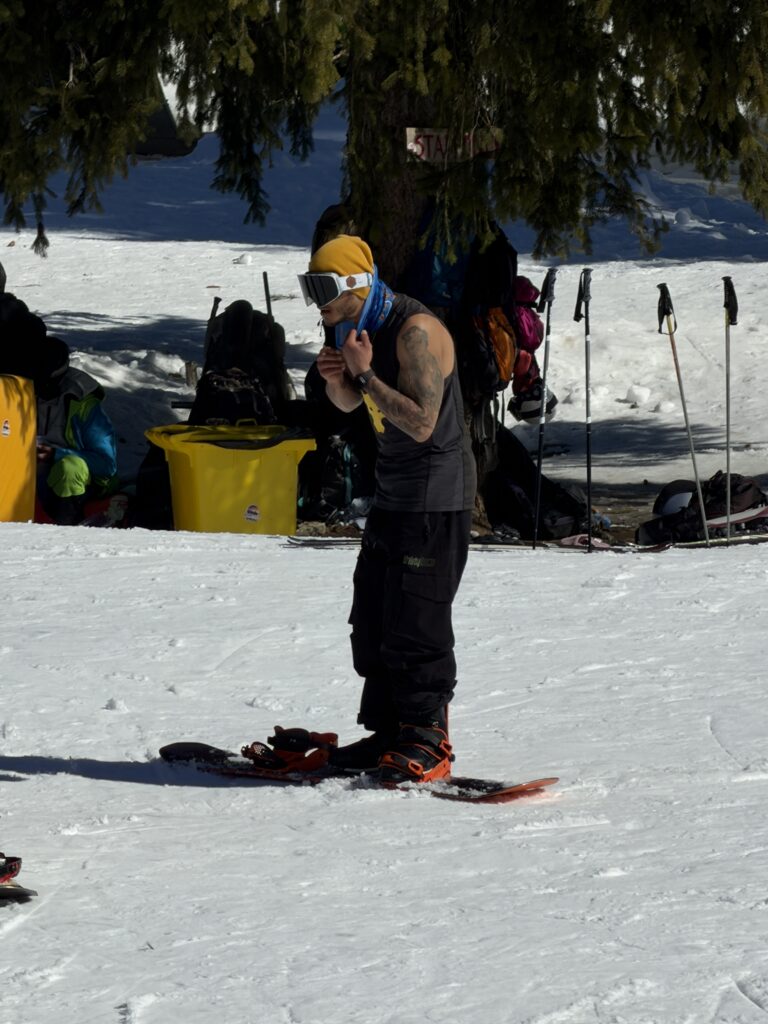
Why do we get so hot in the snowdrifts in Bansko?
There are several completely logical and scientifically proven reasons why the mountain microclimate on the slopes can turn into a veritable tropical paradise while skiing. When we combine the physics of nature with the physiology of the body, the result is a sharp increase in body temperature.
1. Intense physical exertion
Skiing and snowboarding are extremely intense sports that engage the muscles of the entire body – legs, abs, back and arms. Even if you are leisurely skiing down a blue slope and do not feel out of breath, you are using up serious energy. Your body works like an internal combustion engine, generating a huge amount of heat from muscle contractions.
2. The snow magnifying glass effect (Albedo)
Snow is one of nature’s most perfect reflectors. It reflects up to 80% of the sun’s rays (a phenomenon known as high albedo). When the sun shines over Todorka Peak, you get doubly warmed – once directly from the sun’s rays falling on you, and a second time from their merciless reflection from the white track beneath your feet.
3. The lack of wind and the greenhouse effect
On sunny, windless days, a kind of warm microclimate forms in the sheltered parts of the mountain. If on such a day you have put on your thickest winter jacket, designed for arctic cold of -20 degrees, but it is around zero outside, your body will quickly overheat and you will feel like you are in a sauna.
The secret to comfort: Layering for skiing and snowboarding
This is where the golden rule for any mountain gear comes in – the layering system. The right ski clothing for Bansko does not rely on one thick armor, but on an intelligent combination of several thinner layers. The goal of layering is to give you control through the "active undressing" method.
- Base layer (Thermal underwear): Its role is not to keep you warm, but to wick sweat away from your skin. When you're stuck in short sleeves, this layer is your savior. Choose merino wool or quality synthetics.
- Intermediate layer (Insulation): This is the layer that retains heat. Most often, it is a fleece or light down jacket that can easily be stowed in your backpack when you get hot.
- Outer layer (Membrane/Shell): A hardshell jacket that protects you from wind and snow but has no padding of its own. It blocks the elements but allows vapors to escape.
When you get hot mid-ride, you just take off your jacket and fleece and stay in a breathable top or even a t-shirt, just like experienced riders. The key is to make the bottom layer dry quickly so you don't end up a pool of sweat.
Warning: The risks of riding in short sleeves
Skiing in light clothing is super enjoyable and gives an incredible feeling of freedom, but it hides its serious risks, for which every skier should be prepared:
1. The chairlift trap: While you are going down, you are warm. But the moment you sit on the open lift (for example, the one to The plateau), your body stops generating heat, and the mountain wind will freeze you in seconds. A body damp with sweat cools down extremely quickly. Rule: The jacket should always be at hand.
2. Dangerous sunburns: The sun high in the Pirin Mountains is merciless due to the thinner atmosphere and double reflection from the snow. If you ride in short sleeves or a tank top, you risk brutal burns. Applying sunscreen with an SPF 50+ factor is absolutely mandatory every 2 hours!
Tips for the perfect day at the track
To enjoy the warm, sunny days in Bansko, always carry a small, comfortable backpack with you. You can store:
- Your outer jacket when you overheat.
- Sunglasses (for the moments when you take off your ski mask).
- Anti-burn cream and lip balm with UV protection.
- A spare dry T-shirt (thermal underwear) to wear at the end of the day for the après-ski party.
The next time you pack for your ski vacation and the forecast promises bright sunshine over Pirin, don’t be afraid to pack a lighter option under your thick jacket. The mountain loves those who are prepared, and the right Bansko ski clothing will ensure you focus on the pleasure of the ride, not on whether you’re too cold or too warm.
 English (UK)