

If you ask a casual visitor how much it costs to practice yoga, ski tourism in Bansko, he will probably first point out the price of the lift pass. This expense is the most visible and often becomes the subject of heated discussions. However, the economic logic behind the winter season works according to a mechanism that remains hidden from the general public. At the heart of the industry is a "golden rule", valid with full force for Bulgaria: The "1 to 5" effect.
💰 How does the equation work?
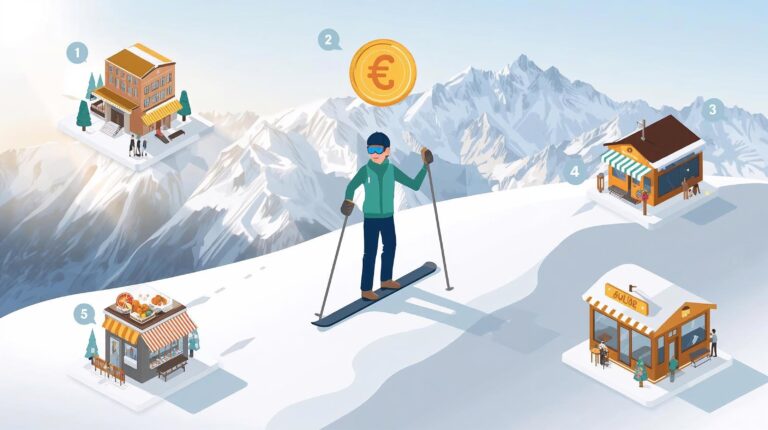
The calculation is simple, but its impact is spectacular: For every 1 euro paid for direct ski services (lift pass or school), the tourist leaves between 4 and 5 euros in local businesses – hotels, taverns, transportation and small shops.
This ratio transforms ski areas from mere sports facilities into powerful economic pumps. In the era of the Euro in our country, this interrelationship is critical for the survival of mountain municipalities.
Lift pass: Only the entrance ticket for ski tourism in Bansko
To understand the power of the formula, we need to change the way we look at facilities. Lifts and slopes are what economists call an "anchor" or "magnet.".
This „one euro“ given for a ticket is the hardest revenue to generate. It requires huge capital investments – machines worth millions, expensive maintenance, electricity for snowmaking and specialized staff. Without that initial euro, however, the other five simply won’t exist. If the lift stops, the entire flow of money to the region stops.
Where does the other 5 euros go? Cost analysis
Once the tourist has chosen his route for ski tourism in Bansko, the real untying of the wallet begins. Here's how the lion's share of the costs are distributed in the local community:
| Sector | Economic contribution | Who wins? |
|---|---|---|
| 🏨 Hoteliers | The biggest beneficiary. The euro per night pays salaries for maids, receptionists and local maintenance companies. | Family hotels, complexes, staff. |
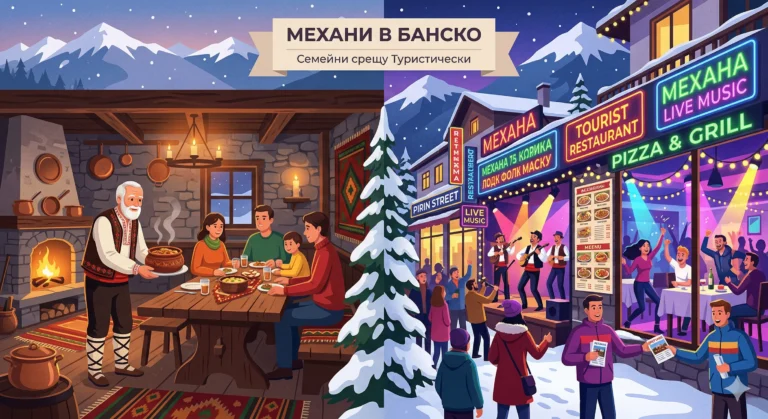
| 🍽️ Gastronomy | Skiers are looking for high-calorie food and quality wine. Taverns make their annual profit in the winter. | Restaurateurs, farmers, suppliers. |
| 🎁 Small business | Souvenirs, equipment, pharmacies, taxis. Payments in euros make these impulsive purchases easier. | Craftsmen, traders, drivers. |
The social effect of the equation
Beyond the dry numbers, the "1 to 5" ratio has enormous social significance. Mountain regions suffer from depopulation, and winter tourism keeps young people busy, offering them competitive incomes in euros.
“The waiter, the ski instructor, the hotel manager, and the driver – they all rely on the fact that someone paid that first euro for a lift pass.”
The risks of the formula in Bulgaria
This economic engine is not a perpetual motion machine. In order for the successful ski tourism in Bansko and the region, efforts are needed in two directions:
- ❄️
Guaranteeing the "Unit": Climate change requires investments in snow. Without a working ski area, the multiplier is zero.
- ⭐
Defense of the "Five": The tourist spends 5 euros only if he is satisfied. With prices in euros, the comparison with the Alps is inevitable – the quality must be impeccable.
Conclusion: An ecosystem, not just a runway
It's time to stop looking at the winter holiday in pieces. Every euro invested in infrastructure for ski tourism in Bansko, brings in another five euros for the community. Understanding this dependence is the key to the well-being of the people who live in the foothills of Pirin.
 English (UK)