

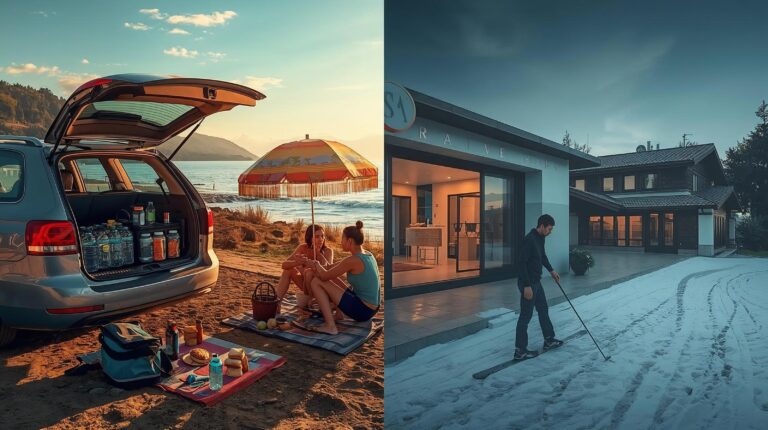
This sentence, although humorous, hides a profound economic truth about the modern world. ski tourism in Bansko. When we draw the line at the end of the year and count the success of the seasons, we often make the mistake of looking only at the dry statistics. For the National Statistical Institute (NSI), „2 million at sea“ and „200 thousand on skis“ are just numbers. But for local businesses, these two groups are completely different universes.
1. The Visitor Profile: The Jars vs. the VISA Card
The main difference starts with the preparation for the trip. It determines how much money will go into the destination and how much will remain in the hypermarkets in the big city.
The Black Sea "folk" model
For a large part of Bulgarians, the sea is a social right and a habit. The logistics of the "relocation" often include a car filled to the brim with water, beer, canned goods and even their own coffee maker. The tourist pays for an overnight stay (often in a budget accommodation or bungalow) and possibly for a snack on the beach. However, the main meals are organized "from home".
The ski tourist in Bansko: Technological and financial threshold
The winter ski tourism in Bansko There is a high threshold for entry. The mountain requires investments that you can't avoid:
- Technical preparation: Even if you have your own skis, their maintenance (waxing, sharpening of edges) is done on site.
- Inevitable services: The lift pass is a fixed expense that cannot be replaced with "home supplies.".
- Rentals: Ski wardrobes are a huge segment that powers dozens of small local businesses.
2. The Motivation: Passive Rest vs. Active Expedition
We go to the seaside for a passive vacation – the goal is to switch off. This predisposes us to laziness and consumption. In Bansko, however, we go on an „expedition“. This type of tourism is active and often repeated many times during the season (weekend tourism). People get up early, follow the forecast and chase the „first lift“.
This dynamic creates the so-called. après-ski culture. The skier, exhausted after 7 hours on the slopes in sub-zero temperatures, has no energy to cook in his apartment. He is the ideal customer for local taverns and restaurants, looking for coziness, warm food and an authentic atmosphere.
3. The Economic Multiplier: Where does the money actually go?
Let's take a look at the path of money through a detailed comparison of a 5-day stay. The data shows why ski tourism in Bansko is more effective for regional GDP.
| Expense category | Budget Black Sea Coast | Ski vacation in Bansko |
|---|---|---|
| Entrance fee for the resource | 0 BGN (The sea is free) | 550+ BGN (6-day lift pass) |
| Equipment | Low (flip-flops, towel) | High (Ski/board/helmet rental) |
| Training | Rare (Swimming) | Often (Ski School/Instructor) |
| Added services | Minimum | SPA, Massages, Transfers |
4. Demographics and Sustainability: Quality over Quantity
The winter tourist is naturally "filtered" by ability to pay. The sport itself is an expensive hobby that attracts the middle and upper classes - people aged 25-50, active professionals and families with means.
In addition, Bansko enjoys a huge share of foreign tourists. Britons, Israelis, Romanians and Greeks come specifically for a 7-day package. These guests do not carry provisions in the trunk. They buy everything on site – from sunscreen to premium wine in the taverns. This makes ski tourism in Bansko a much more predictable and sustainable business model.
Expert advice for business
If you own a hotel or restaurant in the area, your focus shouldn't be on the number of beds, but on the "after-piste experience." Skiers pay for convenience. Offer them a direct shuttle, online ski locker reservations, or local wine tastings, and you'll see the average check increase by over 30%.
5. The lesson for Bulgaria: Less is more
The Bulgarian Black Sea Coast often suffers from the pattern of „overtourism“ – huge crowds in a short time, leading to low quality and pressure on infrastructure. Bansko shows a different path: economic sustainability through specialization.
Being a ski instructor in Bansko is a profession that requires certification, language skills, and psychological skills. This creates jobs with higher pay and longer hours (the season often runs from December to mid-April). In comparison, many summer resorts rely on temporary employment for unqualified staff, which lowers the overall level of product.
Conclusion: From „stay“ to „experience“
Our country doesn't need more tourists simply in numbers. It needs more effective visitors. The model of ski tourism in Bansko proves that when you offer a specific and quality product, price ceases to be the main factor for choice.
After all, it is better for the economy to welcome 1,000 people who use the full range of services than 10,000 who generate traffic and waste but consume resources passively. And which one are you – those with a full trunk or those who value comfort and everything „for rent“?
 English (UK)