


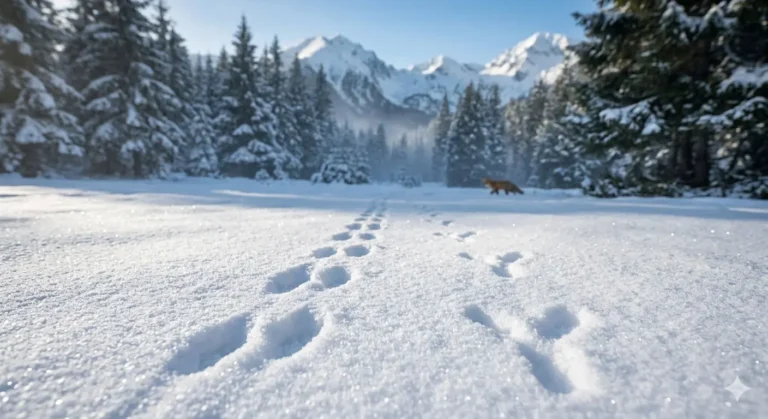
An illustrated practical guide to recognizing the tracks of the most common wild animals in Pirin.
Main types of animal tracks in Pirin National Park„
The forests above Bansko are home to an exceptionally rich biodiversity. Even if you don't see the animals themselves, their tracks will tell you who has passed along the path before you. Here's how to recognize the most common ones.
🦊 Fox (Vulpes vulpes): The elegant model of the forest
The tracks of the red fox are very often confused with those of a small or medium-sized dog, but if you look closely, you will find significant differences in the animal's "handwriting".
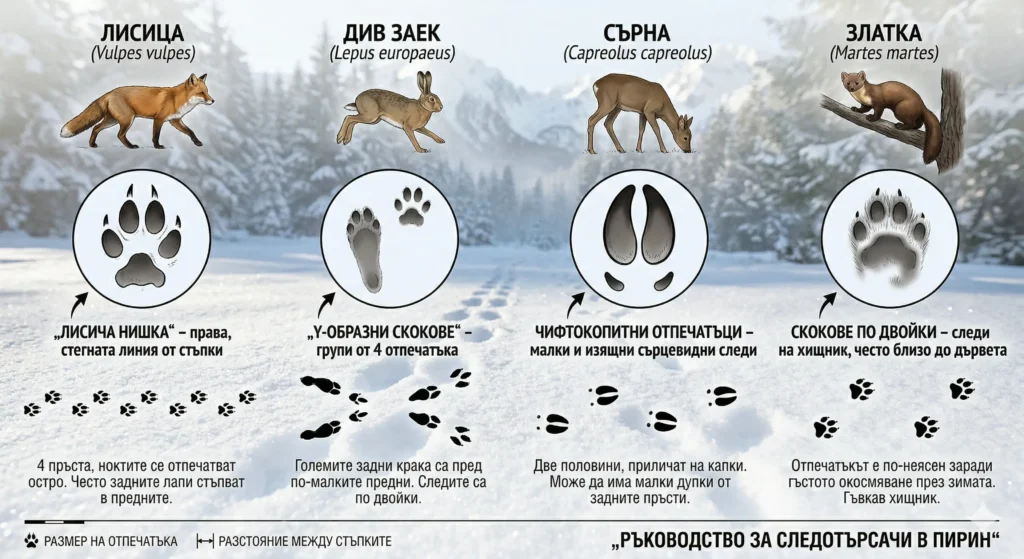
- The imprint: It is noticeably longer, narrower and oval than the dog's. The four toes are tightly packed together, and the nails are very clearly, thinly and sharply imprinted in the snow. The pads (feet) are smaller in relation to the overall size of the paw.
- The gait (Fox thread): This is the most telling and characteristic sign! When a fox is walking calmly or searching for prey, it steps with its hind paws exactly in the prints of its front paws. The result is a perfect, straight line of tracks in the snow, as if a graceful animal had walked a tightrope.
🐇 European Hare (Lepus europaeus): The Acrobat of the Snow
The rabbit trail is perhaps the easiest to recognize even by complete novice tourists, because its shape is absolutely unique and resembles the letter Y.
- Footprint and gait: The rabbit moves with characteristic jumps. Its anatomy is such that with each jump its long hind legs pass in front of the shorter front legs.
- What it looks like in the snow: In the direction of travel, you will see two large, long, parallel prints (these are actually the hind legs), and immediately behind them – two smaller ones, located one behind the other or slightly diagonally (the front legs). The distance between the individual sets of tracks indicates how fast the animal was running.
🦦 Martes: The agile arboreal predator
The golden eagle is an extremely fast, agile and secretive predator that adores the centuries-old coniferous forests of Pirin. Its tracks tell stories of nightly pursuits.
- The imprint: Although the ferret family has five toes, it is very common to only leave four prints in the snow. Since the ferret's paws are densely furred underneath in winter (to protect it from the harsh mountain cold), the print is often slightly blurry, without clearly defined pads, unlike that of a cat or fox.
- The gait: It moves almost exclusively by jumping, leaving tracks in pairs (two by two), usually slightly diagonally spaced. Very often, the goldenrod's tracks can lead you directly to the base of a large tree and suddenly disappear up the bark, as it is a magnificent and fearless climber.
🦌 Roe Deer (Capreolus capreolus): The gentle step in the deep snow
Pirin is home to beautiful and graceful deer, which during the harsh winter months descend to the lower parts of the mountain (including around the Bansko ski area) to search for food under the snow.
- The imprint: The roe deer is an ungulate. Its trail is very elegant and resembles an elongated heart or two inverted drops, tightly attached to each other.
- Size and details: The print is small (about 4-5 cm long). If the animal was walking calmly, the two halves of the hooves are together. However, if the deer was running in deep snow, frightened by a predator or a person, the two halves are widely separated (V-shaped) to provide better support. When jumping or running, two small holes from the stunted hind toes, called spurs, may also be imprinted on the back.
Other inhabitants whose traces you may encounter
Besides the "usual suspects", when you venture deeper into the mountain, you may come across other interesting footprints:
- Wild boar: It leaves large, deep tracks. The footprint resembles that of a deer, but is much wider, more massive, and rounded. The spurs (hind toes) are always clearly imprinted in the snow, even when the animal walks slowly, and are spaced wider than the step itself.
- Wolf: Its track resembles that of a very large dog (over 10 cm long), but is more elongated. In the wolf, the two middle toes are strongly extended forward. If you draw an imaginary horizontal line between them and the hind toes, it will not cross them - something that is impossible with a dog's paw. Like the fox, the wolf often "walks on a string", especially when the pack moves in an Indian thread in deep snow.
- Squirrel: Like the rabbit, it leaves jump marks (four prints in a group), but they are much smaller and usually begin and end at the base of a tree.
Equipment for winter tracking in Bansko
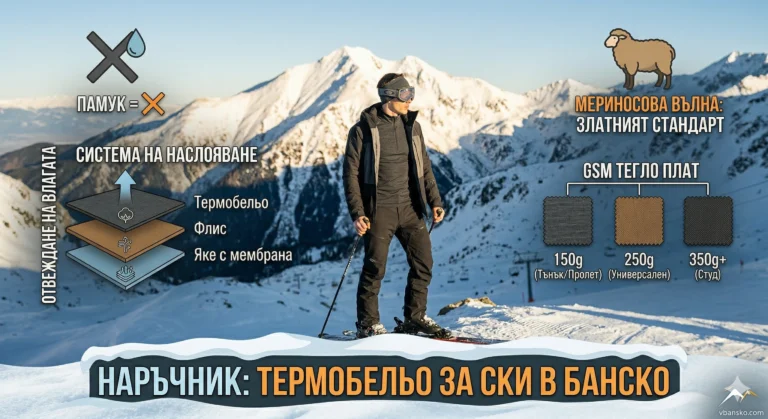
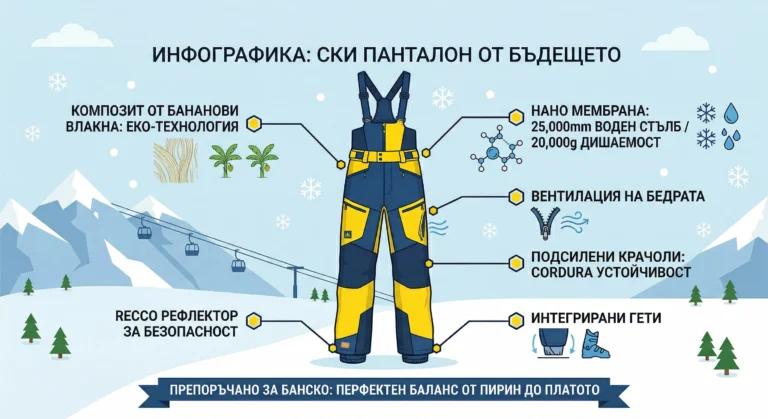
To fully and safely enjoy the search for tracks in the snow in Pirin, you need proper preparation. Make sure you dress in layers of breathable and waterproof fabrics. Tall winter boots and gaiters are a must to protect your feet from getting wet in the snowdrifts. If you plan to venture off the beaten tourist trail, a pair of snowshoes will make your journey much easier and allow you to explore pristine snowfields where the animal highways are clearest.
Don't forget to take a camera or a smartphone with a good camera. Take pictures of the tracks, enjoy the invisible presence of wildlife and leave the forest to its quiet inhabitants. Every photo of an animal track is a wonderful memory of your connection with the majestic nature of Pirin.
 English (UK)