


1. The Wild Goat: Lord of the Stones
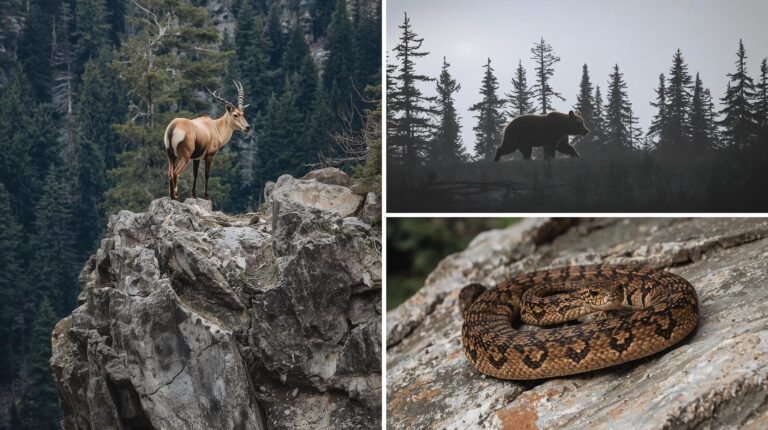
The Balkan chamois is the symbol of Pirin. You will see it running with incredible ease along the sheer walls of Vihren and The horse.
⚠️ Hidden danger: Rockfall!
Wild goats do not attack people, but they are curious and often stand on the rocks above the trail. As they move, they push stones that fly down at high speed.
Tip: If you hear rocks clattering above, don't look up with your mouth open! Hold on tight to the rock or put your hands/pack above your head. If you see goats above you, wait for them to pass before continuing.
2. The Bear: The Scary Phantom
Yes, there are brown bears in Pirin. They mainly inhabit the forest belt (under the huts), but sometimes they come down low or climb high for blueberries.
How to avoid the meeting?
The bear has an excellent sense of smell and hearing. It Does NOT want to see you. 99% of the encounters happen because the tourist moves too quietly and surprises the animal.
- Make noise: Talk to each other, tap the rocks with your sticks, carry a bell. If the bear hears you from a distance, it will retreat.
- The food: Never leave food around your tent or on the trail. This attracts them.
If you do meet her:
- Stay calm: Do not shout or make sudden movements.
- DON'T RUN: This is the most important thing. If you run away, you trigger her chase instinct. She is faster than you (even uphill).
- Back off slowly: Speak to her in a monotone, low human voice and back away, without letting her out of your sight, but without looking her in the eye (this is a challenge).
3. Cinderella: The Danger at the Feet
The Pirin rocks are heated strongly by the sun – an ideal place for reptiles. The most common venomous snake here is Cinderella (recognizable by the horn on the nose).
- Where is it: It likes dry, rocky paths and juniper.
- What to do: The snake only bites if it feels threatened (stepped on). Watch where you step and use poles – they often “feel” the terrain before your feet.
- If you get bitten: Do not suck the venom, do not cut the wound! Rinse with water, splint the limb (so that it does not move) and seek medical attention as quickly as possible. In Bulgaria, the venom of the viper is rarely fatal to an adult, but is dangerous for children and allergic people.
4. Sheepdogs: The Real Problem
In the area of Muratovo Lake, Spano Pole and Tevno Lake They graze herds. They are guarded by Karakachan dogs, who are trained to protect the herd from wolves and bears at the cost of their lives.
Rules for survival when meeting dogs:
- Don't go through the herd: If you see sheep or cows on the trail, walk around them from a distance. Don't chase them. Dogs perceive this as an attack.
- Stop and regroup: If dogs bark at you, stop immediately. Don't run or turn your back on them. Get back together with the rest of the group.
- Put up a barrier: Place your pack or poles between you and the dogs. Speak to them firmly but calmly. Usually once they see that you are not a threat to the sheep and stop moving towards them, they will calm down.
5. Ticks
Although small, they carry Lyme disease. In Pirin, they are found mainly in the lowlands (forests and ferns). Wear long pants and light-colored clothing (so you can see them), and check yourself every evening after a hike.
Conclusion
The wild animals in Pirin are not enemies. They are simply protecting their territory. With a little noise (for the bears), a little care in your feet (for the snakes), and respect for the herds (for the dogs), the mountain is safe for everyone. And don’t forget – the biggest threat to nature is us, the humans.






 English (UK)