

When you walk through the cobblestone streets of old Bansko, it is impossible not to feel the spirit of the past. The town is not just a ski resort, but the cradle of the Bulgarian Renaissance. Here, faith was the force that preserved Bulgarianness throughout the centuries.
In this article, we will take you on a tour of the most iconic temples in the city and give you ideas for one-day spiritual journeys to the largest monasteries in Bulgaria, which are within easy reach.
Churches in Bansko (Walking Tour)
These sites are located in the center and can be explored within a pleasant walk.
1. Holy Trinity Church – The Symbol of Bansko
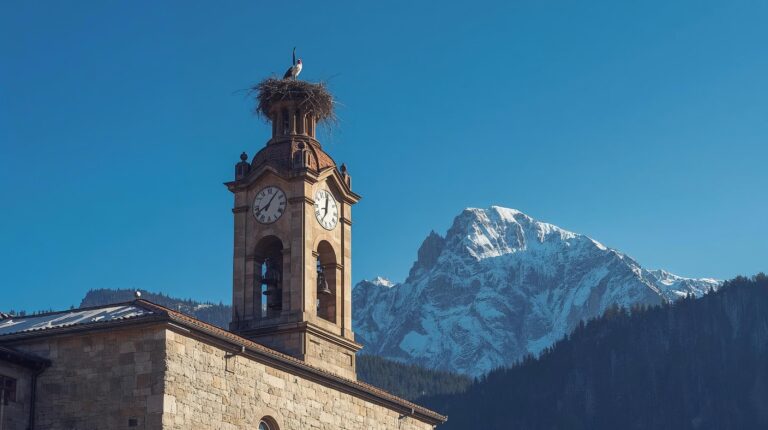
You can't miss it. With its 30-meter bell tower and clock, it is one of the symbols of the city and an integral part of the skyline. Bansko under Pirin.
- History: It was built at the end of the Ottoman rule (consecrated in 1835). Legends say that the people of Banska Bystrica used cunning and diplomacy – they buried an icon and a cross in the ground to convince the Turkish authorities that they were restoring an ancient temple, and thus received permission to build such a large-scale building.
- Architecture: This is one of the largest churches in Bulgaria from that era, built entirely with donations from local merchants. It impresses with its massive stone walls (over 1 meter thick) and heavy gates made of fir and iron.
- Interior: Don't miss the iconostasis and the frescoes, the work of the famous masters from the Bansko Art School – Velyan Ognev and Dimitar Molerov. The ceiling, painted like a starry sky, is unique for the weather you are.
- Curious: At the entrance, high above the main gate, you will see the symbols of a crescent moon and a cross carved into the stone, side by side. This is a sign of tolerance and part of the diplomatic approach of the people of Banska Bystrica to protect the temple from destruction.
2. The Church of the Assumption of the Virgin Mary„
Located in the cemetery park (near the center), this is one of the oldest preserved churches in the area and a cultural monument of national significance.
- Meaning: It was built in the 18th century, before the Holy Trinity. Since it is from an earlier period, it is dug into the ground and has a modest external architecture so as not to attract the attention of the Ottoman authorities.
- The treasure: The temple preserves a unique carved iconostasis, which is considered one of the masterpieces of Bulgarian woodcarving art. The icons are extremely valuable and well preserved.
- Atmosphere: The place is quiet, peaceful and carries a sense of ancient history and continuity.
3. Archaeological Complex "St. Nicholas"„
It is located about 4 km from the city (in the "St. Nikola" area), but is completely restored and accessible to tourists.
- Excavations: The foundations of an ancient fortress town and an early Christian basilica dating back to the 4th-5th centuries have been discovered here. The site proves that the area was a Christian center long before the founding of modern Bansko.
- View: The complex is located on a hill and offers a wonderful panoramic view of the entire Razlog valley and the peaks of Pirin and Rila.
The Great Monasteries: Spiritual Routes in the Region
If you have a day to spare, we highly recommend visiting these holy sites. They are not just tourist sites, but pillars of Bulgarian spirituality.
1. Rila Monastery (The Holy Monastery of Bulgaria)
Included in the UNESCO World Heritage List.
- Distance: About 95 km from Bansko (1 hour and 30 minutes by car through the Predel pass). The road is picturesque and well-maintained.
This is the largest, most famous and most impressive monastery in Bulgaria. It was founded in the 10th century by the heavenly patron of the Bulgarians – Saint Ivan of Rila.
What you must see:
- The main church of the Nativity of the Virgin Mary: Go inside to pay homage to the relics of Saint Ivan of Rila and see the tomb of Tsar Boris III. The frescoes inside and outside are the work of the greatest masters, including Zahari Zograf.
- Hrelja Tower: The oldest preserved building in the complex (from 1335). This is a medieval defensive tower that you can climb for a view of the monastery's inner courtyard.
- The Church History Museum: Here it is kept Raphael's Cross – a unique wood carving on which the monk Raphael worked for 12 years, using magnifying lenses and fine needles. The cross depicts 104 religious scenes and 650 miniature figures. Legend has it that the monk went blind while completing his work.
- The Cave of St. Ivan Rilski: It is located about 4 km after the monastery (there is a marked trail). This is the place where the hermit lived and prayed. There is a belief that whoever manages to pass through the narrow gap in the rock after the cave is righteous.
2. Rozhen Monastery "Nativity of the Virgin Mary"„
Medieval tranquility and views of the Melnik Pyramids.
- Distance: About 100 km south of Bansko (direction Greece, turnoff for Melnik). The journey takes about 1 hour and 20 minutes.
This is the largest monastery in the Pirin region and one of the few medieval monasteries preserved in its authentic form to this day.
Why is it special?
- The miraculous icon: The main church houses a copy of the miraculous icon "Holy Mother of God Portaitissa" (The Gatekeeper). It is believed that it helps with healing and protects the home. Every year on September 8, a large procession with the icon is held.
- Architecture and Atmosphere: Unlike the grandiose Rila Monastery, The Rozhenski is more intimate and cozy. The wooden verandas, the courtyards overgrown with vines and the silence create a feeling of timelessness.
- The murals: The church was painted in the 16th-18th centuries, and the frescoes are extremely bright and vibrant.
- The grave of Yane Sandanski: Just 200 meters from the monastery is the grave of the revolutionary Yane Sandanski – the Pirin Tsar. The place offers one of the most beautiful views of the sandy screes of the Melnik Pyramids.
Tip: Combine the visit with a walk in Melnik – the smallest town in Bulgaria, famous for its dense red wine and Renaissance houses.
3. The church in the village of Dobarsko (The Hidden Jewel)
- Distance: Only 20 km from Bansko.
If you don't have time for long trips, jump to the village of Dobarsko. The church of "St. Theodore Tyron and Theodore Stratilates" (1614) is unique with its frescoes, which have never been restored, but their colors are still bright. Here you will also hear the interesting theory about "Jesus in a space rocket", based on the specific depiction of the "Transfiguration" scene.
Practical tips for visitors
- Clothing: Entry into active temples and monasteries requires proper attire. Avoid shorts, tank tops, and short skirts. In Rila Monastery The security is strict and may turn you away or make you wear a cape (they are provided at the entrance). Women should wear a shawl over their shoulders.
- Shooting: In most old churches (especially inside the temple and in museums) photography is prohibited or a fee is charged to protect the old frescoes from lightning. In the courtyards, photography is usually free.
- Parking:
- Rila Monastery: There is paid parking right in front of the gate, but it fills up quickly on weekends.
- Rozhen Monastery: There is a small parking lot about 200-300 meters before the monastery, from where you walk on a slight slope.
- Souvenirs and food: In front of both large monasteries, local products are sold - honey, berry jam, buffalo yogurt and the famous mekitsi (especially at the Rila Monastery).
Conclusion
Visiting the churches and monasteries in the Bansko region is a journey back in time. It shows us the strength of spirit, the mastery of the icon painters, and the beauty that the local people have created and preserved amidst the harsh nature of Pirin and Rila.
 English (UK)