


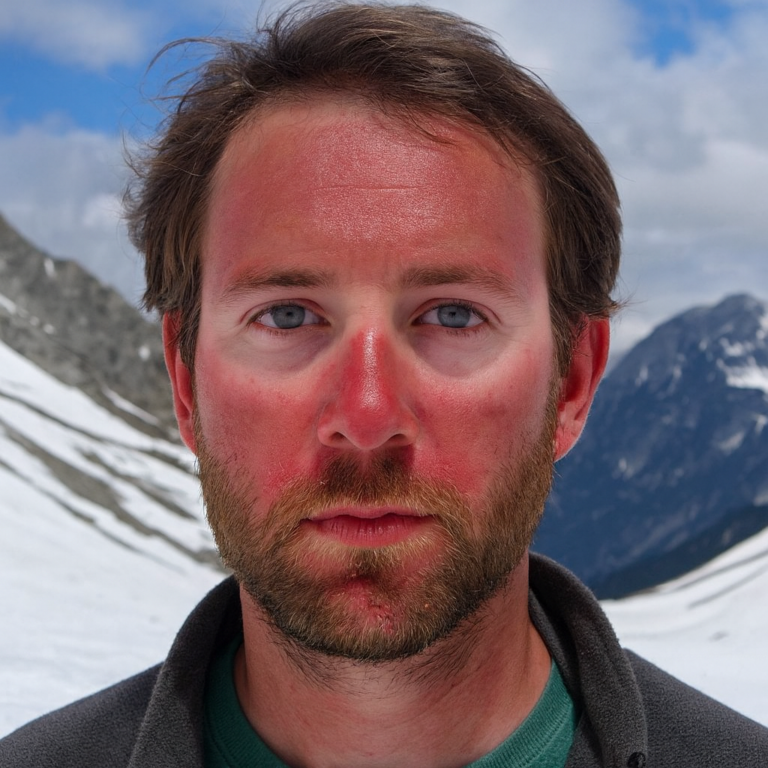
Why is sun protection in the mountains critically important?
The reason is not in temperature, but in physics. Burning in Pirin can occur even at -10°C. Two main factors make the mountain sun above 2000 m above sea level extremely intense:
1. The influence of altitude
With every 1000 meters of ascent, the level of UV radiation increases by about 10-12%. At Todorka Peak (2746 m) it is nearly 30% more intense than in Sofia or Varna, as the thinner atmosphere filters fewer harmful rays.
2. The „Mirror“ Effect (Snow Reflection)
This is the most dangerous element during the winter season in Bansko. The fresh snow acts as a giant reflector. See the comparison in the table below:
| Surface | Reflected UV radiation |
|---|---|
| Fresh snow | 80-90% |
| Sea foam | 25% |
| Sand on the beach | 15-20% |
| Grass / Soil | under 10% |
The result: In the mountains, your skin gets a double dose of radiation—once directly from the sun and a second time reflected from the terrain. This explains why burns often occur in atypical places, like the bottom of the nose and under the chin.
UV index in Bansko: When is it most dangerous?
The UV index is a scale from 0 to 11+. However, in the mountains, these values are often misleading because low temperatures dull the burning sensation.
- Winter: The index is low (1–3), but the reflection from the snow effectively doubles it.
- Spring (March – April): The most dangerous time! The day is long, the sun is high, and the snow is still there. The real feeling is about index 10+.
- Summer: The sun is “biting” even with a light breeze. Without adequate sun protection in the mountains, combustion occurs in less than 20 minutes.
Mandatory equipment and cosmetics
1. Goggles and ski masks (Cat 3 & 4)
„"Snow blindness" (photokeratitis) is an extremely painful condition - it is literally a burn of the cornea. City glasses (Category 2) are not enough. Search filters Category 3 or 4, which block over 85-95% from light.
2. Cream choice: SPF 50+ and Mountain Formula
Forget about water-based moisturizers. In sub-zero temperatures, the water in them can freeze in your pores. Use:
- Cold Cream: An oily base that creates a protective film against cold and wind.
- Lip stick: Lips have no melanin and burn the fastest. Use a stick with SPF 50.
Professional advice against “Raccoon Eyes”
If you don't want to return to the office with white circles around your eyes and a red face, apply a generous layer of cream 30 minutes before bedtime. before to go out on the track. Repeat the procedure every 2-3 hours, even if you don't feel the heat.
Frequently Asked Questions (FAQ)
Q: Do I need sunscreen on cloudy days?
A: Absolutely yes! Up to 80% of UV rays pass through clouds. In the mountains, the “milky” sky is the most deceptive environment.
Q: Why do my lips crack right away?
A: The combination of dry air, high altitude and lack of UV protection dehydrates them in hours. Use specialized mountain cosmetics.
Q: How do I recognize snow blindness?
A: If you feel "sand in your eyes" in the evening, have redness and severe tearing - you have probably developed it. Stay in the dark and seek medical attention.
Preparing for Pirin does not end with choosing skis or boots. The right sun protection in the mountains is what will allow you to enjoy nature instead of treating burns in the hotel. Be sensible and protect your skin!

 English (UK)