


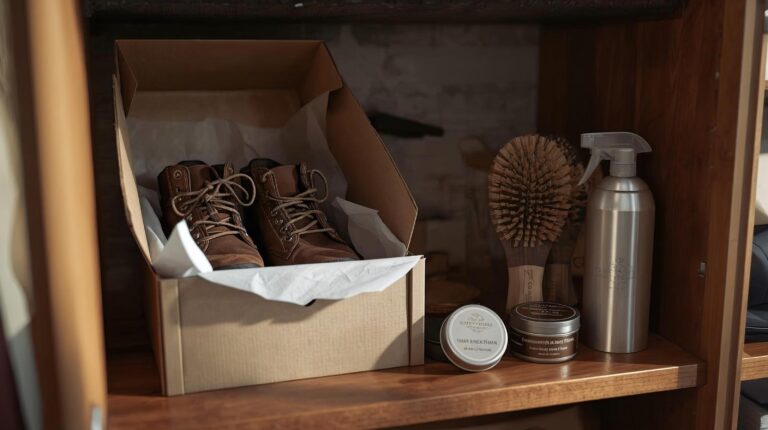
Quality mountain boots are a serious investment today – prices often range between 300 and 800 leva. They are your main safety tool on the steep trails of Pirin and around Bansko. But even the most robust model, built to withstand rocks and ice, can be destroyed in a matter of months if you don't take proper care of it at home.
Many people think that after a tough hike, it’s enough to simply put their shoes in the closet, or worse, toss them in the washing machine for a “quick refresh.” These are fatal mistakes. In this guide, we’ll debunk the myths (including the one about vacuum bags) and give you an exact recipe for extending the life of your gear.
Step 1: Cleaning (Never in a washing machine!)
The mountaineer's golden rule: Shoes are hand washed only. The washing machine is a “death sentence” for them – the centrifuge deforms the structure, and aggressive washing powders break down the adhesives and fine waterproof membranes (such as Gore-Tex).
- Remove the laces and insoles: They are washed separately so they don't retain dirt and odors.
- Rough cleaning: Knock the shoes together to get the dried mud off. Use a soft brush and lukewarm water for the rest.
- Specialized preparations: If they are very dirty, avoid using soap or hand soap (they dry out the skin). Use specialized cleaning gels (e.g. Nikwax or Grangers) that protect the membrane.
- Rinsing: Plenty of water until foam stops coming out.
Step 2: Drying (The Big Mistake)
The fastest way to kill your shoes is to put them next to a radiator, stove, fireplace, or in direct sunlight in the summer.
- The heat: It causes natural leather to shrink, harden, and crack.
- The adhesives: At high temperatures, the glue that holds the sole in place "burns", loses elasticity and becomes brittle. The result is "gaping" shoes in the middle of the mountain.
How to do it correctly: Dry them at room temperature, in a ventilated place (shaded balcony). Stuff them with newspapers – the paper draws moisture from inside. Change the newspapers when they get damp. The process is slow (24-48 hours), but safe.
Step 3: Nourishment and Impregnation
Once the shoes are clean and almost dry, it's time for "food." Leather is a natural material - if it is not hydrated, it loses its qualities.
- For smooth leather (Full Grain Leather): Use wax or a specialized cream. Wax keeps the leather elastic and waterproof.
- For suede and synthetics: Use impregnating sprays. Wax is not suitable here because it will clog the pores of the suede and ruin the breathability of the shoe.
The big question: Vacuum bags?
You may have seen advice to store seasonal clothes and bedding in vacuum bags to save space. SHOULD WE DO IT WITH SHOES?
Here's why vacuum bags are dangerous for your expensive shoes:
- Lack of ventilation: Shoes need to “breathe.” A vacuum seals any residual moisture inside, which is a perfect recipe for mold growth and rotting of the inner lining.
- Deformation: The pressure from the vacuum will crush the cushioning pads (the foam around the ankle and tongue) and can permanently deform the shape of the shoe itself.
- Accelerated hydrolysis: Enclosing in dense plastic creates a microclimate that can accelerate the breakdown of the polyurethane midsole.
Proper long-term storage
The season is over and you're putting away your winter shoes for summer (or vice versa). Here are the ideal conditions:
| Condition | Recommendation |
|---|---|
| Place | Dry, ventilated and dark place. UV rays from the sun age the rubber and fade the textiles. |
| Packaging | The original cardboard box is best because cardboard allows air circulation. Never in plastic bags! |
| Form | Stuff them lightly with newspapers or use wooden molds (shoe trees) so they don't shrink and deform while you're not using them. |
| Temperature | Constant temperature. Avoid unheated attics (large amplitudes) or damp basements. |
One last, expert tip
If you have expensive shoes, don't let them "rest" for 2-3 years without touching them. Walk them! Even if it's just for 30 minutes in the park every few months. The mechanical contraction of the sole when walking "pushes" moisture out of the pores of the material and prevents chemical breakdown (hydrolysis). Paradoxically, shoes "die" faster if they are not worn than if they are in motion.






 English (UK)