



Why does standard tying sometimes not work?
The standard “cross” lacing that most shoes come with from the store is designed for the “average” foot. But in real conditions – on the scree of Pirin or the steep paths above The Shiligarnika – the foot changes. It swells, moves forward when stepping down, and needs different support in different areas. This is where specialized shoe lacing techniques come to the rescue.
1. Heel Lock / Lock Lacing
This is the most critical technique for any mountaineer. If you feel your heel “lifting” or “slapping” when climbing, the friction will inevitably lead to calluses.
How to perform it (Variant “Skripets”):
- ✅ Do not cross the laces at the last two holes (eyelets).
- ✅ Pass the link vertically on the same side to create a small loop.
- ✅ Cross the free ends and pass them through the opposite loops.
- ✅ Pull down and back to secure the heel tightly at the back of the shoe.
2. Window Lacing Technique for High Arch
Many people in Bansko complain of tingling in the toes or burning sensation in the top of the foot. This is often due to excessive pressure on the nerves and blood vessels in people with high arches (Instep).
The technique “Window” allows you to keep the shoe tight at the ankle while relieving tension in the middle. Simply skip the crossing at the pain area and run the laces vertically to the next hole. This creates space that allows the foot to “breathe.”.
💡 Expert advice from Bansko
During long hikes in Pirin, your feet swell up to half a size. If you feel tightness after the 3rd hour, don't hesitate to stop and lace up your shoes using the technique of Toe Relief. Omitting the first row of holes at the toes gives vital space.
3. Two-Zone Lacing
One of the lesser-known techniques for lacing shoes is to create two independent zones of tightness. This is extremely useful for technical terrain. You can leave the bottom (toe) looser for comfort and tighten the top (ankle) for stability.
The trick: Use an overhand knot in the middle of the tying before you reach the metal hooks. This will “lock” the tension in the lower area and prevent the ties from loosening or tightening unevenly during movement.
4. Modern Systems vs. Classic Connections
In modern mountaineering and trail running around Bansko, mechanical systems are becoming the standard. But they themselves require knowledge.
| System | Advantages | Who is it for? |
|---|---|---|
| BOA® Fit | Micro-adjustment, easy operation with gloves. | Ski touring, snowboarding, winter hiking. |
| Salomon Quicklace™ | Speed, no risk of untying. | Trail runners, light summer trekking. |
| Classic connections | Maximum customization, easy repair. | Difficult mountaineering, multi-day treks. |
Common mistakes when tying
The most common mistake we see among hikers in Pirin is over-tightening the shin area. This limits ankle mobility and makes you tire faster. Use the technique of “"the surgical knot"”, to maintain stability without stopping blood circulation.
Conclusion
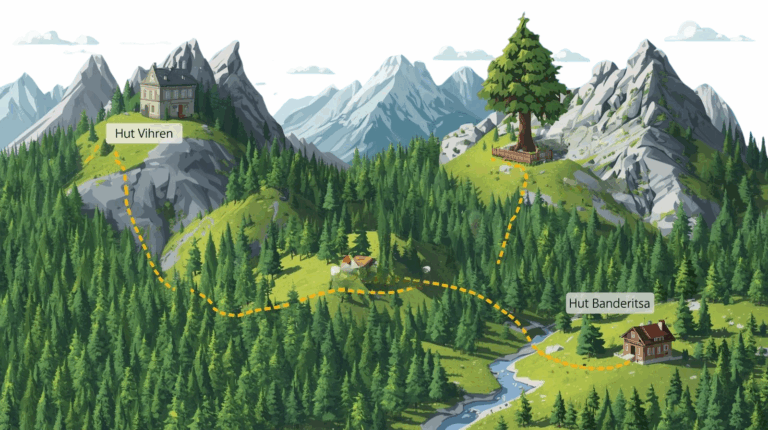
Your shoes are your most important tool in the mountains. Experiment with different shoelace tying techniques at home before you head out on your next adventure to Yavorov or Banderitsa huts. Sometimes the solution to a long-standing problem lies in a simple loop or missed hole.
This article was prepared by the team of mountain equipment and pedorthology specialists in Bansko. Enjoy the mountains without pain!

 English (UK)