

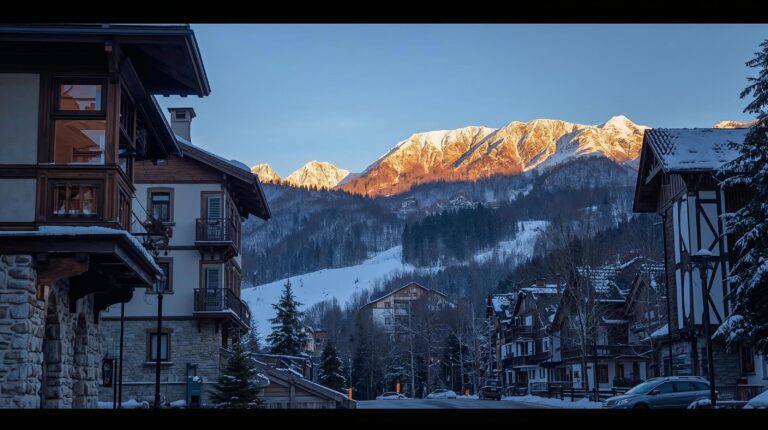
In 2014. Bansko has established itself as a leading center for winter tourism, sports and culture in Southeastern Europe, undergoing a period of significant market stabilization and infrastructure renewal. The year was marked by the completion of large-scale urban projects, the hosting of prestigious international sports events and the expansion of the luxury hospitality segment. This report examines in detail the dynamics of the real estate market, the development of infrastructure, sports achievements and the cultural calendar of the city, analyzing their mutual impact on the economic profile of the region.
Real Estate Market Dynamics: From Speculative Bubble to Investment Sustainability
The Bansko property market went through a complex transition phase in 2014, after the Bulgarian holiday property sector was severely affected by the previous global economic crisis. While major regional centers such as Sofia and Varna started to show signs of distinct growth, the Bansko market was characterized by a continuing price correction, the clearing of toxic assets and a profound change in the profile of the main investors. The analysis of the data shows that 2014 was the most successful for the Bulgarian property market since the beginning of the crisis in 2008, with Bansko playing a specific role in this recovery process.
Statistical indicators and market indices of the National Statistical Institute
According to official data from the National Statistical Institute (NSI), the market price of housing in Bulgaria in the first quarter of 2014 marked its first real annual increase of +1.79% after a long period of depression. However, this trend was not uniform across the country. While Sofia registered a growth in sales of +15% and inquiries by +30% year-on-year, the holiday market in the mountains remained under strong pressure from buyers for lower prices.
Market indices and prices (2014)
| Quarter 2014. | Index compared to previous | Index compared to 2013. | Average price for the country (BGN/sq m) |
|---|---|---|---|
| First Quarter (Q1) | 100.2% | 100.0% | 866.44 |
| Second quarter (Q2) | 100.3% | 100.3% | 869.29 |
| Third quarter (Q3) | 99.9% | 100.4% | 868.77 |
Data for Blagoevgrad district, which includes Bansko, show stability with an average price of 749.82 BGN/sq m in the second quarter of 2014, a slight decrease from 755.67 BGN/sq m in the first quarter. This macroeconomic framework suggests that the market has bottomed out and is starting to level off, preparing for a new growth cycle.
Analysis of price levels and supply segmentation
In March 2014, the average listed price for an apartment in Bansko was approximately 530 euros per square meter. This indicator is critical, as it demonstrates an overall decrease of over 58% compared to the peak values of 2008. The market in 2014 was defined as categorically „buyer’s“, providing an opportunity to acquire assets at price levels of ten years ago.
Average property prices in Bansko (2014)
| Property type and location | Price per sq m (EUR) | Total price of the object (EUR) |
|---|---|---|
| Budget studios (Center/Wide Center) | 350 – 370 | from 15,000 |
| Mid-range apartments (fully completed) | 450 – 550 | 22,500 – 35,000 |
| Premium sites (near the Gondola) | 800 – 1,100 | 50,000 – 80,000 |
| Houses in gated communities (e.g. Pirin Golf) | 1,100 – 1,300 | over 230,000 |
The low price levels in Bansko attracted a new type of interest – not only from speculators, but also from people looking for an alternative lifestyle. For comparison, properties in Sofia at the same time were trading for an average of 866 euros/sq m, and in Varna – for 967 euros/sq m. This made Bansko extremely competitive on an international level, as it offered mountain recreation at prices significantly lower than those in Alpine resorts.
Transformation of the demographic profile of buyers
In 2014, Russian citizens consolidated their position as the most active group of buyers in the holiday sector of Bansko. Their interest was dictated by several factors: cultural proximity, lack of a language barrier and the perception of Bulgaria as a „safe haven“ for capital in the conditions of geopolitical uncertainty in the Eurasian region. The Russian community in Bansko began to become institutionalized, with the emergence of specialized retail outlets and cultural centers serving this segment.
At the same time, the UK market, which dominated the period up to 2008, has gone through a phase of massive resales. Around 95% of the sellers in the region in 2014 were British, having acquired their properties during the peak period and seeking liquidity. However, a new sub-segment of British buyers has emerged – the so-called. „"relocators"“, who were buying more expensive and quality properties with the aim of permanent residence or retirement in the mountains. This process of changing ownership from British to Russian and partly Bulgarian hands was key in clearing the market of unrealistic expectations of rental yields.
Bulgarian buyers have also begun to show interest in Bansko, seeing value in the low prices and the opportunity to escape the urban stress of Sofia. This trend has been reinforced by low deposit interest rates, which have encouraged the redirection of savings into real assets.
Infrastructure projects and environmental sustainability
Bansko's infrastructure development in 2014 focused on improving the urban environment and ensuring environmental security for the growing number of tourists. The main emphasis fell on the completion of critical phases of the "Water Cycle" project, which is of fundamental importance for the sustainability of the resort.
Implementation of the "Water Cycle" project and the treatment plant
The most significant event in terms of infrastructure was the official opening of the new modern wastewater treatment plant (WWTP) in Bansko. This facility was the final stage of the large-scale project "Rehabilitation of the water supply and sewage network of the city of Bansko", which is worth over 42 million euros. The financing was provided through the Cohesion Fund of the European Union and the state budget under the Operational Program "Environment 2014-2020".
The construction of the WWTP solved one of the resort's biggest problems, related to the overloading of the old infrastructure during the active tourist season. The key technical and social benefits of the project include:
- Reducing drinking water losses in the city network.
- Ensuring the purity of water resources in the Pirin Mountain region.
- Providing greater comfort for residents and guests, which is a critical factor in maintaining Bansko's image as a preferred international resort.
- Improving drinking water quality and water supply reliability.
Despite the success, the municipality acknowledged the need for additional funding to cover the southeastern part of the city, which remained outside the scope of the current project. This demonstrates the strategic thinking of the local government for a complete modernization of the city systems.
Urban renewal and innovative architecture
In 2014, Bansko also invested in the aesthetic and functional renewal of the urban environment. An example of this is the total reconstruction of the building serving the ice rink in the city, designed by architectural studio OBIA. The project aimed to solve urban planning problems and achieve higher energy efficiency.
The architectural solution involved preserving only the wooden supporting structure and replacing the walls with glass showcases to provide a visual connection between the street and the ice rink. The highlight of the project was the new wooden pergola with a digitally generated design, which gives the site a modern silhouette. This intervention is part of a broader effort to modernize the appearance of Bansko, combining traditional materials (wood) with modern technologies.
Development of the hotel base and the culinary sector
The service sector in Bansko underwent a qualitative transformation in 2014, focused on the high segment and year-round supply. Investments were directed not only at beds, but also at unique experiences for guests.
Lucky Bansko Hotel and Leonardo Restaurant„
One of the most significant new acquisitions for the luxury segment was the opening of the Italian restaurant "Leonardo" and the adjacent Aqua complex on June 6, 2014. Located in the "Lucky Bansko" hotel complex, the restaurant offers 65 seats and a "show cooking" concept, allowing guests to watch the preparation of dishes.
The opening of the Aqua Complex with two outdoor pools (for adults and children) was a strategic move to transform Bansko into a summer destination. These investments allowed the Lucky Bansko SPA & Relax Hotel to officially receive five-star status, meeting the highest international quality standards. This success is an indicator of the ambition of the local business to go beyond the framework of a „cheap winter destination“ and offer premium services.
"Le Passage" entertainment complex„
At the end of 2014, attention was focused on the new entertainment complex "Le Passage", located opposite the Kempinski Hotel. The project, managed by Blake Guy, aimed to bring the atmosphere of French and Austrian Alpine resorts to Bansko through an innovative après-ski experience. The complex includes:
- The Hub: A huge dome structure designed for après-ski parties with lighting effects.
- Restaurant Lunic: A space with a wine bar atmosphere, specializing in cheese dishes such as fondue and raclette.
- Kook Restaurant: A modern establishment with a terrace, offering a variety of cuisine - from pizzas and burgers to sushi.
- Sunny's 87: A place for all-day dining.
- Podium Nightclub: Large-scale space, also suitable for conference events.
- POC (Piece of Cake): French café at the entrance, offering authentic pastries and croissants.
Architecturally, the complex introduces a new "passage" - a road connecting key arteries in the ski area, which improves pedestrian and transport access.
Other culinary innovations
During the 2013/2014 season and throughout 2014, other interesting sites appeared in Bansko:
- La Skara: A restaurant in the "Mountain Paradise 4" building, offering a unique concept where guests can grill their own selected meat on tables with built-in grills.
- 180 Degrees: New bar and restaurant located directly on the slopes above The Shiligarnika, offering modern cuisine in the heart of the mountain.
- Mind The Step: A restaurant in the "Dream" hotel, which quickly became a favorite of visitors because of its cozy atmosphere.
- Boulevard Bar, Grill and Beer: A place with live beer and music near the lift.
This abundance of new concepts shows that Bansko in 2014 was not just adding beds, but was developing a gastronomic and entertainment culture capable of retaining tourists for a longer stay.
The ski area and technical infrastructure of Todorka
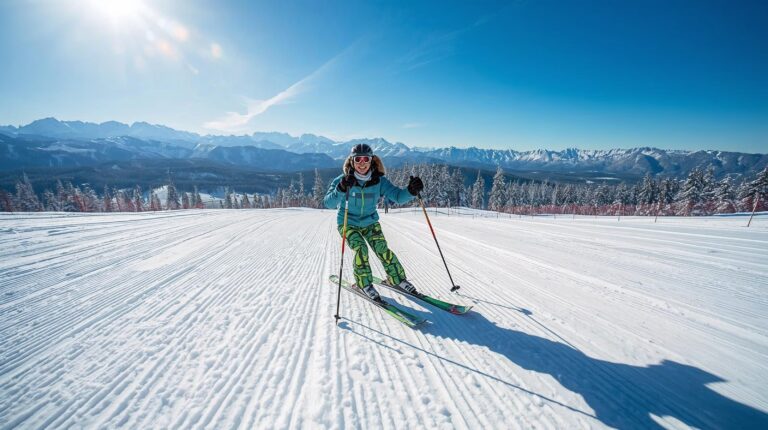
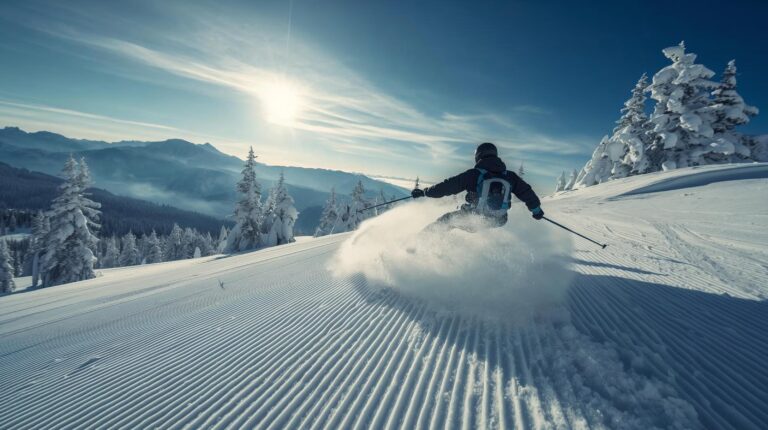
The development of the Bansko ski area in 2014 was subject to constant monitoring and improvements, but also to serious discussions regarding environmental protection. Efforts were aimed at easing tourist traffic and improving conditions for professional sports.
Technical improvements and new routes
The investor Yulen AD continued work on optimizing the ski area on Mount Todorka. In 2014, plans for new facilities manufactured by the Austrian company Doppelmayer were finalized. The gondola lift with a capacity of 1,800 people per hour and a length of 6,300 m remained the main artery of the resort, but the need for a second such facility became the subject of national debate.
Main highlights in the ski area in 2014:
- Completion of new trails and tracks in the areas The hoe, Chalin Valog and Banderishka meadow.
- Construction of a terrain with a biathlon shooting range at Banderishka Polyana, which allows for holding international competitions at the highest level.
- Extending the children's slope by 670 meters and equipping it with a new lift to make it easier for beginners.
- Using helicopters to install lift poles in hard-to-reach areas, ensuring minimal impact on the terrain.
Challenges facing UNESCO World Heritage Sites
In 2014, the state of Pirin National Park was reviewed at the 38th session of the World Heritage Committee in Doha. The Committee adopted a decision welcoming Bulgaria's progress in implementing the recommendations of the 2011 mission, but also expressing concern.
UNESCO's main requirements included:
- Strategic Environmental Assessment (SEA): All changes to the Park Management Plan that provide for new construction in the buffer zone must necessarily go through SEA and Adequate Assessment procedures.
- Border demarcation: A call to the Bulgarian state to complete the process of clearly marking the boundaries of the site and its buffer zone.
- Prohibition of expansion: Reaffirmation of the position that no additional construction of ski facilities is permitted within the boundaries of the World Heritage site.
These decisions have put Bansko at the center of international focus, requiring the municipality and investors to seek sustainable development models that do not threaten Pirin's status as a world natural treasure.
Sports achievements: European Ski Cup 2014
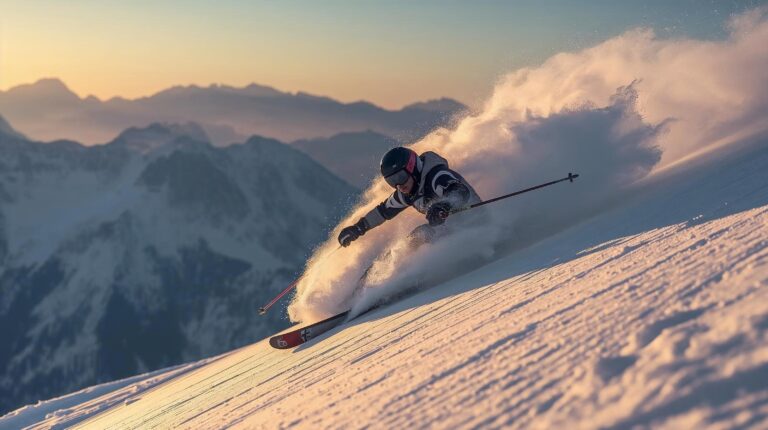
Bansko solidified its status as an elite sports center by hosting rounds of the European Alpine Cup for men in March 2014. This event was of critical importance for the resort's image as a reliable partner of the FIS.
Bansko slalom results (March 2014)
The competitions were held under excellent organization and high technical complexity. The track of Banderishka Polyana (start at 1830 m, finish at 1610 m, vertical drop of 220 m) offered challenging conditions for the best European talents.
| Rank | Name | Country | 1st run | 2nd run | Total time | Difference |
|---|---|---|---|---|---|---|
| 1 | Elias Colleague | Croatia | 57.47 | 58.99 | 1:56.46 | — |
| 2 | Matthew Falat | Slovakia | 57.90 | 59.02 | 1:56.92 | +0.46 |
| 3 | Nikola Chongarov | Bulgaria | 58.78 | 58.46 | 1:57.24 | +0.78 |
| 4 | Luka Krasmanovic | Croatia | 57.53 | 1:00.98 | 1:58.51 | +2.05 |
| 5 | Georgi Nushev | Bulgaria | 58.61 | 1:00.37 | 1:58.98 | +2.52 |
The success of Nikola Chongarov, who won third place, was a great joy for the local audience and proof of the growth of Bulgarian alpine athletes. A total of 76 athletes from over 10 countries, including Croatia, Slovakia, Bulgaria, Serbia, Greece and Turkey, took part in the competition.
Cultural Dynamics: Bansko's Music Festivals
The summer of 2014 was no less active than the winter season, thanks to the established international festivals that turned the central square into a world-class stage.
17th International Jazz Festival Bansko
Held in August 2014, the festival attracted thousands of music lovers with a diverse program ranging from classic jazz and swing to ethno and funk. The concerts at the central N. Vaptsarov Square were free for the public, turning the event into a true folk holiday.
Highlights from the program (Jazz Festival 2014):
| Date | Artist / Band | Country | Style / Accent |
|---|---|---|---|
| August 8 | Kamelia Todorova & Brass Association | Bulgaria | Vocal jazz and brass |
| August 8 | JeSante | USA | Modern jazz quintet |
| August 9 | China Moses & Raphael Lemonnier | USA/France | Blues and soul vocals |
| August 9 | Eight-Wheel Drive (8WD) | Germany | Funk and organ jazz |
| August 11 | Iyeoka | USA | Ethno-jazz and African drums |
| August 11 | Jive Aces | United Kingdom | Swing and rock and roll |
| August 12 | Tania Maria Viva Brazil Quartet | Brazil | Latin jazz and bossa nova |
| August 13 | CANDY DULFER & Band | Netherlands | World star, saxophone |
| August 13 | Hubert Tubbs & Band | USA/Austria | Soul and R&B |
Candy Dulfer's performance was the culmination of the festival, as her energetic music filled the square to capacity. Alongside the jazz, the third edition of the Beer Festival was also held on the territory of the Bansko Royal Towers, further stimulating summer tourism.
Bansko Opera Fest 2014
The fifth edition of the Bansko Opera Fest offered the audience classical masterpieces under the open sky on August 29 and 30, 2014. The event, organized by the municipality and the Sofia Opera and Ballet, presented high culture in the heart of the mountain.
- „"Don Carlo" and "Carmen": Performance of arias and duets from these great operas, as well as fragments from Wagner's "Parsifal".
- Gala concert: The program included popular works by Verdi, Puccini and Mascagni. Bellini's "Casta Diva" performed by Tsvetelina Maldzhanska made a special impression.
- Soloists: Participation of world-famous performers such as Bozhidar Nikolov, Nikola Isakov and young talents Atanas Mladenov and Neda Atanasova.
Regional funding and economic capacity
In 2014, Bansko demonstrated exceptionally high activity in the absorption of European funds compared to other Bulgarian municipalities. As of January 31, 2014, the municipality had absorbed a total of 35.5 million leva under contracts with the EU, and had signed new contracts for another 10 million leva.
This success is significant, considering that Bansko is a relatively small municipality. For comparison, the municipality of Kazanlak, which has a population seven times larger, has absorbed only 20.2 million leva over the same period. The high absorption of funds per capita (over 1000 leva/person) places Bansko among the leaders in the country, which is a guarantee for the future development of public infrastructure.
Conclusion: The Legacy of 2014
2014 was a period of consolidation and maturity for Bansko. The town managed to overcome the negative effects of the property bubble, transforming the real estate market into a more stable and accessible environment, attracting real residents and long-term investors. The completion of the Water Cycle project and the new treatment plant laid the foundations for the ecological future of the resort, ensuring the preservation of Pirin's resources.
The sporting and cultural successes of 2014 have established Bansko not only as a ski destination, but also as an important center for international diplomacy and art. The combination of high-quality hotel services, innovative culinary concepts and prestigious music festivals has made Bansko a model for sustainable mountain tourism in the Balkans. Overcoming the challenges associated with UNESCO requirements remains a strategic task, but what was achieved in 2014 has given the necessary impetus for the development of Bansko as a modern, European city with a unique spirit and hospitality.

 English (UK)