


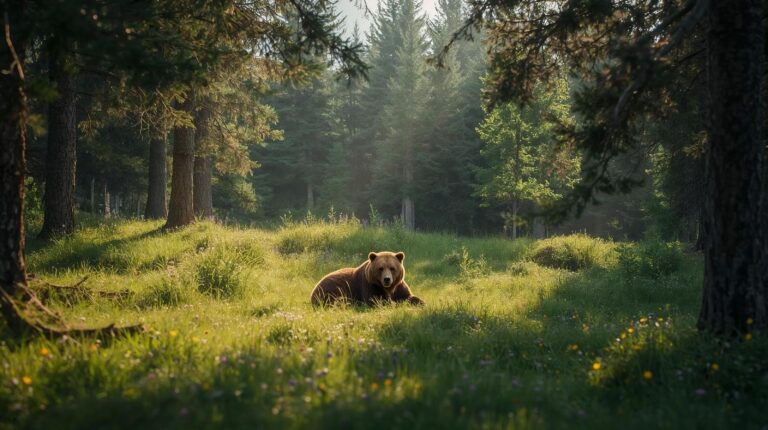
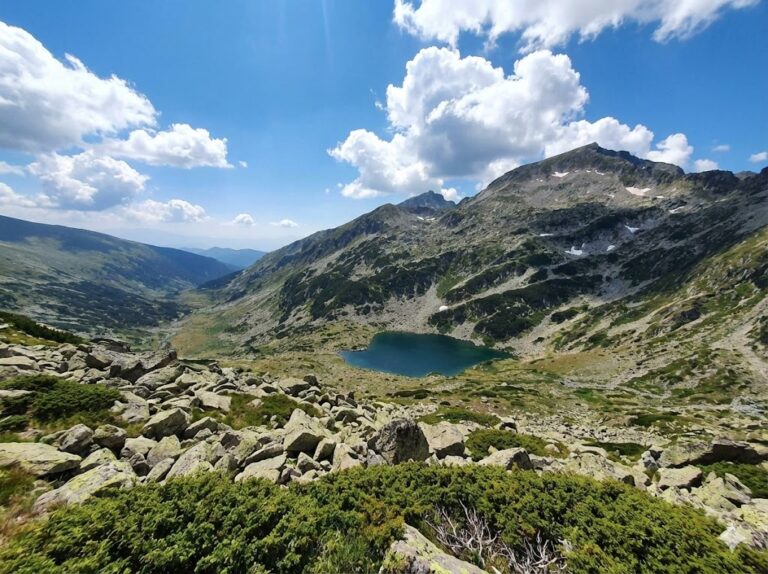
Imagine that you are deep in the heart of Pirin. The mountain has fallen silent under the weight of the centuries-old trees, and the fog slowly creeps along the steep slopes of the peaks of Vihren and Todorka. The silence is dense, almost physically tangible. And then, somewhere from the thicket of the grove, you hear the crack of a dry branch. It is not the wind. It is not a frightened deer. It is the heavy, imperious step of the Sovereign.
The brown bear (Ursus arctos) is the undisputed monarch of the Bulgarian forest and the largest predator that roams our lands. But despite its fearsome reputation, the life of this giant is filled with unsuspected secrets, tenderness and biological wonders that science is only now beginning to fully unravel. In the following lines, we will take a look into the beast's lair to understand how it survives, how it loves, what it eats and most importantly – how to stay alive if our paths cross.
I. Portrait of the Giant: Who is he really?
The bears in Pirin are of the species European brown bear. Although they are often compared in popular culture to the grizzlies of North America, our bears are more reserved, more hidden, but no less impressive. The Pirin bear is a biological machine, created for survival in harsh conditions.
Size and longevity
The numbers here are respectable and vary depending on the season.
| Characteristics | Data | Details |
|---|---|---|
| Weight (Male) | 250 – 350 kg | Average 200-250 kg. Varies drastically depending on the season. |
| Weight (Female) | 100 – 150 kg | Finer, but accumulate up to 40% more fat in the fall. |
| Height (Standing) | 1.80 – 2.20 m | A pose for inspection or intimidation. |
| Life expectancy | 20 – 25 years | Up to 30 years in dominant specimens. |
It is important to note that weight is dynamic – in the fall, before hibernation, they are up to 30-40% heavier than in the spring, accumulating vital fat.
How many are there and where are they hiding?
This is the difficult question for biologists. The bear is a “ghost”. It senses humans from miles away and does everything possible to avoid encountering them. According to monitoring data, the total population in Bulgaria is between 500 and 600 copies. The Pirin Mountains, together with the Rila and Rhodope Mountains, form the core of this population. Pirin is their natural castle – with its inaccessible juniper forests and rocky gullies, it provides them with the ideal refuge.
II. The Ruler's Menu: Vegetarian in Disguise
If you ask a child what a bear eats, they will probably answer, “Honey and people.” The truth is, the brown bear is an “opportunistic forager.” Its menu consists of 80% to 85% plant food.
Seasonal nutrition calendar:
- 🌱 Spring (The Famine): When she wakes up in April, the bear is on the verge of survival. Her first job is to cleanse her digestive system. She grazes on young grass, watercress, and wild garlic like a cow. She looks for carrion – animals that have died in avalanches.
- 🍓 Summer (Delicacies): This is the season of “forest candy.” Bears love raspberries and blueberries. A bear can spend the whole day sitting in the bushes, picking the small berries with incredible dexterity – using only its lips.
- 🐜 Secret passion: Bears are addicted to ants. Ants and their larvae are pure protein with a sour taste. The bear digs up an anthill, puts its paw inside, waits for the ants to climb it, and licks them like a lollipop.
- 🍂 Autumn (The Great Trampling): The period of the so-called. hyperphagia. The bear has to eat 20 hours a day. In Pirin, it looks for high-calorie “bombs” – acorns, beech nuts, wild pears.
Do they hunt? Yes, but rarely. They usually attack sick or young animals. The bear is “economical” – it prefers to find food, not chase it and waste energy.
III. The Big Dream and the Miracle of Birth
One of the biggest misconceptions is that bears “go into a deep sleep and don’t wake up until spring.” The truth is far more complicated. They go into a state of winter lethargy, not in a complete coma.
Sleep physiology
When the snow covers Pirin, the bear retreats to its den (often a cave or a hollow under roots).
- The heart: From the normal 40-50 beats per minute, the heart slows to just 8-10 beats.
- Metabolism: It operates in emergency mode. The bear does not eat, drink water, or defecate for 3 to 5 months. Its body processes fat into energy and water, a medical phenomenon that scientists are still studying.
Birth in the Dark (The Paradox of Size)
The most amazing moment comes in January, in the dead of winter. While the mother is sleeping, she gives birth.
- How small are they? Usually 1 to 3 bears.
- The size: Here is the shock. The mother weighs 150-200 kg, and the baby – only 350 to 500 grams! It is the size of a squirrel or a rat. Nature decided this way, because if the mother had to carry a large fetus, she would spend too much energy and would starve to death during sleep.
- Breastfeeding: Bear milk is “liquid gold” with up to 301% fat. Thanks to it, when the cubs emerge from the den in April, they already weigh 3-5 kg.
IV. Myths and Reality: Physical Capabilities
There are dozens of folk beliefs about how to escape a bear. The bad news is that most of them are deadly. The Pirin bear is a “biological tank” with a Ferrari engine.
⚠️ Warning: Deadly myths
Myth 1: “The bear is clumsy”
Reality: Over short distances, the bear can reach speeds of up to 50 km/h. The fastest man in the world (Usain Bolt) runs at about 44 km/h. You, with a backpack and shoes in the mountains, have no chance in a race.
Myth 2: “Run down the hill”
This is the most dangerous lie. The theory is that because her front legs are shorter, she will tip over.
Reality: The bear has a flexible spine and powerful muscles. When it runs downhill, it practically gallops, and gravity helps it. It goes down the steep slope faster than a horse and definitely faster than you.
Myth 3: “I’ll climb a tree”
Reality: Adult bears are heavy, but their claws are long hooks designed to dig into bark. If the bear is angry, it will climb after you with frightening speed. The tree is a trap, not a rescue.
V. Face to Face: When do they attack and how do we survive?
A bear does NOT see humans as food. To them, we are strange, smelly, and a threat. Attacks are almost always defensive.
When does it get scary?
- Mother with cubs: This is the number one reason for attacks. If you get between the mother and the cubs, she won't think, she'll attack.
- The surprise: Bears hate surprises. If the wind is blowing against you and the bear doesn't hear you until you are within 5 meters of it, it will attack out of fear.
- The sleeping bear: If you accidentally come across a den in winter (e.g. while freeride skiing) and wake the bear, the reaction is instant aggression.
🛡️ The most important tool: Bear spray
Forget guns and knives. The most effective means of protection in the world is specialized Bear Spray.
- What is it: This is a pressurized canister containing highly concentrated capsaicin (an extract from chili peppers) – much stronger than police sprays.
- How it works: The spray creates a thick, suffocating cloud 5 to 10 meters away. When a bear enters it, it causes temporary blindness, coughing, and disorientation. This stops the attack instantly and gives you time to retreat.
- Why is it better than a weapon? In a panic, it is almost impossible to fatally hit a bear running towards you with a bullet. The spray creates a “wall” that it cannot pass through.
- Attention: Never spray the spray on yourself, your clothes, or your tent for “prevention”! Its smell actually attracts bears when sprayed statically. Only use in the face of an aggressive animal.
The Golden Rules of Reaction
- Make noise: When you are in a dense forest or a clearing, speak loudly or sing. The goal is for the bear to hear you from a distance and retreat on its own.
- Don't run: If you encounter a bear, freeze. Running activates the predator's instinct to pursue prey.
- Back off slowly: Look at her, but don't stare her in the eye (that's a challenge). Speak to her in a monotone, calm voice. Back away, keeping the spray ready.
- If attacked:
- Defensive attack (mother): Drop to the ground on your stomach, put your hands on your neck (to protect your arteries), and play dead. Spread your legs so he can't turn you over.
- Predatory attack (very rare): If the bear follows you for a long time and attacks without provocation, fight it off with everything available - rocks, sticks, spray, kicks in the nose.
Conclusion
The bear is not an enemy. It is the architect of the forest – it spreads seeds, cleans up carrion and maintains balance. By protecting the bear in Pirin, we protect the wild spirit of the mountain. Meeting it is a privilege mixed with fear, which reminds us that in nature we are only guests. Tread carefully and respect the home of the Lord.
 English (UK)