


You can have the most modern skis, the most expensive jacket and the perfect ski mask, but if you neglect the bottom layer of clothing, your day on Banderishka Polyana can turn into a nightmare. The right choice of thermal underwear for skiing in Bansko is critical because the conditions here are specific: from freezing winds on Todorka Peak (-15°C in deep January) to sunny, warm afternoons on the Plateau in March.
This guide is not just about „underwear“, it is about your thermoregulation and safety in the mountains. Thermal underwear, often called a „base layer“, has one main task – not just to keep you warm, but to wick sweat away from your body to keep you dry. Because sweat is the biggest enemy of heat.
As a native Bulgarian SEO expert with 10 years of experience in WP and the regional context of Bansko, I know that many tourists make mistakes here. I have expanded this guide to „Pillar Content“ status (around 1200 words) to give you maximum expert value and guarantee a warm stay in Pirin.
The absolute biggest mistake you can make is wearing a cotton T-shirt or leggings under your ski gear. Cotton absorbs up to 27 times its weight in liquid (sweat). At the slightest stop (for example, in a lift queue or while drinking tea in the hut), the sweat in the cotton will cool down and your body will instantly cool down. In harsh conditions, this leads to hypothermia. Forget about cotton!
1. The science behind thermal underwear: Why is sweat wicking more important than warmth?
In Bansko, where you ski actively on the slopes, you sweat. This sweat, when it comes to the surface of the skin, begins to evaporate. The evaporation process requires energy, which is taken in the form of heat from your body. This is exactly how our body cools down in the summer. In the winter, if this moisture remains next to your skin (held by cotton), it will cool you down in a flash.
The qualitative thermal underwear for skiing in Bansko is made of materials that do not absorb sweat, but "wick" it to the next layers (an intermediate layer such as a fleece jacket and an outer jacket with a breathable membrane), from where it evaporates into the atmosphere. Your skin stays dry, and dry skin means warm skin.
2. Synthetics or Merino Wool: The Eternal Debate on Pirin
In 2026, thermal underwear materials are divided primarily into two categories, each with unique advantages and disadvantages specific to the conditions in Bansko:
Synthetic materials (Polyester, Polyamide)
This is the more budget-friendly and widely available option. In recent years, technology has developed brutally.
- ✅ Advantages: They wick moisture extremely quickly. They are more durable to wear and frequent washing. They are often more elastic, which gives complete freedom of movement during aggressive skiing. They are suitable for very active skiers and for warmer days at the end of the season.
- ❌ Disadvantages: They don't warm as well when you're stationary (on a lift). Their biggest problem is that they absorb and retain unpleasant odors. Even after one ride, synthetic thermal underwear can "smell".
Merino Wool
This is the gold standard for high-end thermal underwear for skiing in Bansko. The wool is grown naturally and has unique properties.
- ✅ Advantages: It has brutal thermoregulation - it warms you brutally on the coldest days, but does not scorch you in the spring sun. Most importantly: Merino is warm even when wet (it absorbs up to 30% of its weight in liquid before moisture is felt, and retains its insulating properties). It has natural antibacterial properties and DOES NOT retain odors. You can ride for 3-4 days in Bansko without needing to wash it.
- ❌ Disadvantages: It is more expensive. It is more delicate when washed (requires special detergents and low temperatures). It dries more slowly than synthetics.
3. Cut, weight and fabric weight: How to choose the right size?
The right thing thermal underwear for skiing in Bansko It should fit like a „second skin.“ It shouldn’t be too tight to cut off circulation, but there shouldn’t be any gaps between the fabric and your skin. These gaps will trap moist air, which will cool you down.
Look for models that are explicitly marked as ski cut – they often have flat seams so they don't rub under the straps of your backpack or jacket.
Division by fabric weight (GSM):
- Lightweight (~100-150 gsm): For spring skiing or very active skiers who overheat easily.
- Midweight (~200-250 gsm): The most versatile choice for Bansko. It will work for you throughout the 80% season.
- Heavyweight (~300+ gsm): For the coldest days, static riding on the Plateau or if you are very chilly.
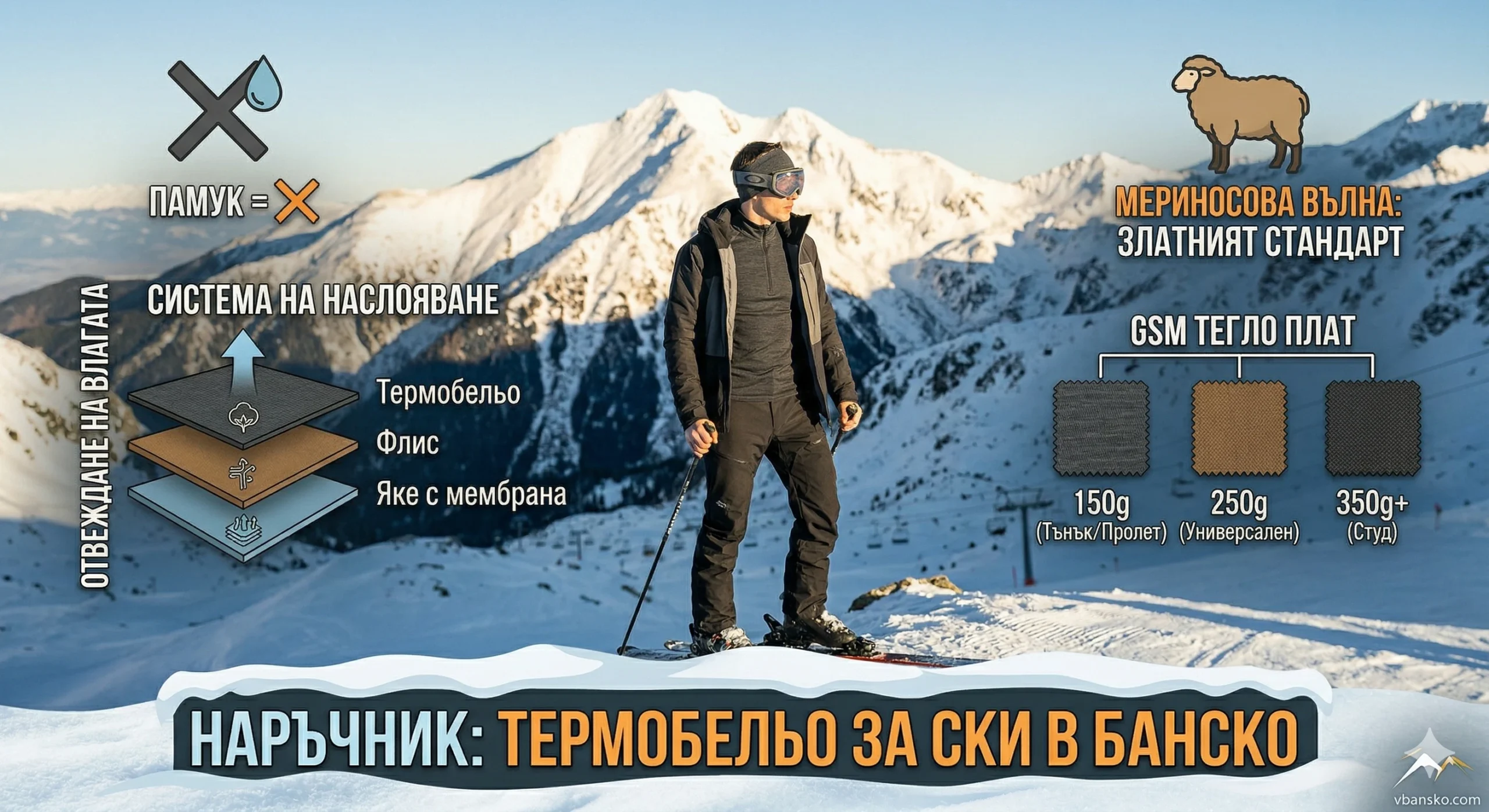
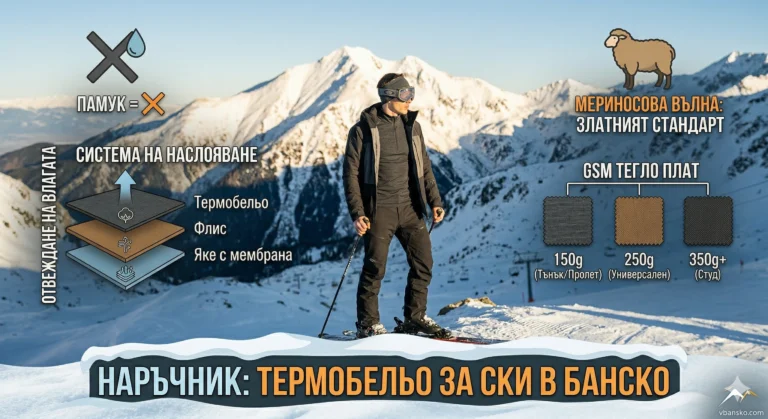
This expert visual guide explains the critical importance of base layers (thermal underwear) for ski gear in Bansko. Illustrated with the backdrop of Mount Todorka, the image shows why cotton is banned, the moisture-wicking layering system, the benefits of merino wool as the gold standard, and how to choose the right GSM weight fabric for mountain comfort, regardless of the weather conditions.
4. The layering system: Where does thermal underwear fit?
In Bansko the weather is dynamic. The correct thermal underwear for skiing in Bansko only works if the other layers are synchronized:
- 1. Base layer (Thermal underwear): It wicks away moisture. (What we're talking about now).
- 2. Midlayer (Fleece jacket): It insulates heat and continues to wick moisture away. Look for synthetic fleeces.
- 3. Outer layer (Membrane jacket): Protects from wind and snow. It must have high breathability so that moisture from the lower layers can escape.
5. Care and maintenance: How to extend the life of thermal underwear?
Don't make the mistake of washing your quality thermal underwear for skiing in Bansko with regular laundry detergent or fabric softener! Fabric softener is fatal to synthetics (clogs pores) and quickly destroys fine merino fibers.
Washing Merino Wool:
- Use only a liquid, non-aggressive detergent specifically marked for wool or merino (e.g. Nikwax Wool Wash).
- Wash at low temperature (30°C) on a delicate cycle.
- NEVER use bleach or fabric softener.
- NEVER tumble dry. Let it air dry, away from direct heat.
Washing Synthetic Thermal Underwear:
- Wash at 30-40°C with liquid detergent.
- DO NOT use fabric softener.
- Tumble dry on low heat only if allowed on the label, but it's best to air dry – they dry very quickly.
Conclusion
Don't underestimate the importance of your thermal underwear for skiing in Bansko. Investing in a quality set of merino wool or high-end synthetics is an investment in your comfort, confidence on the slopes and ultimately – enjoyment of the entire vacation. Forget about cotton, invest in a „base layer“ and enjoy the white slopes of Pirin without freezing.



 English (UK)