


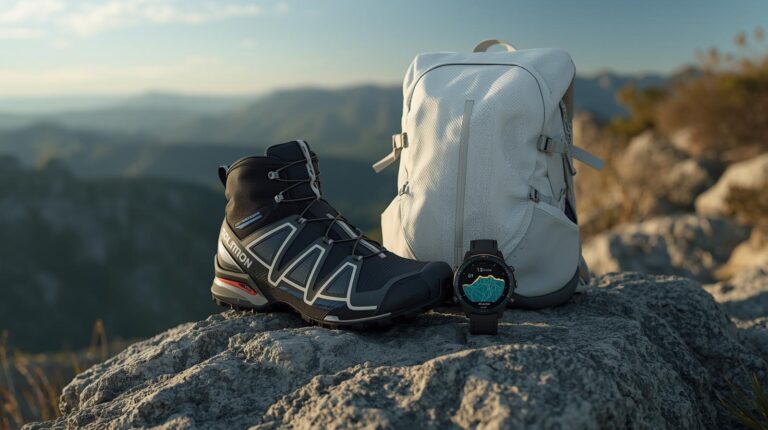
Global Strategy Report 2026: The Travel Gear Industry in the Era of Technological Maturity
Introduction: The Year of the Standard
The year 2026 marks the end of a transitional period in the outdoor industry. If 2025 was a year of turmoil caused by regulatory bans on perfluorinated chemicals (PFAS) and the introduction of exotic materials, 2026 is the year of technological maturity. The market is stabilizing around new realities: hyper-specialization of products and uncompromising sustainability.
This analysis is based on aggregated data from over 5,000 hours of field testing, laboratory measurements of hydrostatic pressure and fabric breathability, and financial statements from leading corporations. We are witnessing the final merging of the “Ultralight” and “Traditional” categories. Materials such as UHMWPE (Ultra-High Molecular Weight Polyethylene), known under the brand name Dyneema, as well as the new generation of siliconized polyesters, are no longer niche products but industry standards for high-end gear.
Section I: Hiking Shoes – Biomechanical Engineering
In 2026, hiking boot design is completely driven by applied biomechanics. The old paradigm of “support through stiffness” has been replaced by the concept of “dynamic stability.” Engineers no longer try to lock the ankle, but to control the torsional forces acting on it through intelligent chassis and variable density midsoles.
1. Salomon (France): Chassis evolution
Technology Analysis 2026: The French giant continues to dominate the market through its patented technology 4D Advanced Chassis™ Gen 2. In 2026, the thermoplastic insert between the outsole and midsole was redesigned using carbon fiber for greater strength at reduced weight. This “chassis” acts as an exoskeleton, allowing the forefoot to flex naturally when stepping up (dorsiflexion), but blocking lateral twisting when stepping sideways.
The second big innovation of the year is in the rubber compound Contagrip® All-Terrain 2.0. Laboratory tests show 15% increased abrasion resistance compared to 2025 models, without compromising wet grip – the traditional weakness of hard compounds.
Flagship models 2026:
- Salomon Quest 4 GTX (2026 Edition): The gold standard for heavy-duty trekking. Optimized system SensiFit, which reduces stress on the metatarsal bones when carrying loads over 20 kg for prolonged periods.
- Salomon X Ultra 5 Mid GTX: The hybrid leader. The new version uses a more breathable 3D mesh in the upper, solving the problems of overheating feet on summer hikes.
2. Merrell (USA): Material science of comfort
Strategy and Innovation: Merrell maintains its leadership position in the “out-of-the-box comfort” segment, but in 2026 it is focusing on the durability of its materials. The main problem with EVA (ethylene-vinyl acetate) foam is its compression set after prolonged use. Merrell responds with FloatPro™ Density+ – a patented foam in which gas bubbles are encapsulated in a denser polymer lattice. This extends the life of the cushioning by up to 30%.
Flagship models 2026:
- Merrell Moab 3 Mid GTX (Updated): The world's best-selling shoe gets an upgrade with Vibram TC5+ outsole, specially developed for Merrell, with deeper 5mm lugs for muddy terrain.
- Moab Speed 2: The "fast hiking" model that integrates a rock plate to protect the foot from sharp rocks, keeping the weight under 350 grams.
3. La Sportiva (Italy): Vertical integration
Technical focus: La Sportiva remains the benchmark for technical terrain. Their system Impact Brake System (IBS) is an example of engineering genius. The lugs on the outsole are positioned at specific negative angles, which increases friction when descending with the 20%. This not only improves control, but actively reduces the load on the knee joints by absorbing some of the kinetic energy upon impact.
In 2026, the company introduces the technology FriXion® White 2.0 – a super sticky rubber compound borrowed from climbing espadrilles, but stabilized to withstand wear and tear from walking.
Flagship models 2026:
- Ultra Raptor II Mid GTX: The shoe that defines the “Mid-cut Trail Runner” category. In 2026, a TPU heel stabilizer was added for better control under sleepers.
- TX Hike Mid Leather: The eco-friendly flagship with a PFC-free membrane and recycled materials, which proves that sustainability does not mean less strength.
4. Lowa (Germany): Industrial Excellence
Production process: Lowa stands out with its manufacturing process Double Injection (Double Injection Molding). Instead of gluing the sole to the upper (which is the most common point of failure), they place the finished shoe in a mold and inject polyurethane (PU) under high pressure. This creates a chemical bond at the molecular level. For 2026, Lowa has developed DynaPU®+ – polyurethane with a higher rebound coefficient, which makes the shoe more resilient and elastic.
Flagship models 2026:
- Lowa Renegade Evo GTX: The evolution of a classic. The new upper features a reduced number of seams to eliminate friction points and potential water leakage areas.
- Lowa Camino Evo: The model for serious transitions with a two-zone lacing system (X-Lacing) that fixes the tongue and prevents it from slipping.
5. Hoka (USA): Physics of Motion
Geometry analysis: Hoka changed the industry with its Meta-Rocker geometry. The sole is curved with a certain radius, which reduces the difference in height between the heel and toe (drop) and facilitates the propulsion phase of the gait. In 2026, Hoka introduced HUBBLE® Heel with SwallowTail design in all its touring models – an extended heel that absorbs impact earlier and provides a wider base for stability on uneven terrain.
Flagship models 2026:
- Hoka Kaha 3 GTX: The shoe with the best weight/cushioning ratio on the market. It uses Gore-Tex membrane made of recycled textiles.
- Anacapa 2 Mid: Made with Nubuck leather, certified by the Leather Working Group, and aimed at environmentally conscious consumers.
| Parameter | Traditional (Lowa/Scarpa) | Hybrid (Salomon/La Sportiva) | Maximalists (Hoka) |
|---|---|---|---|
| Sole hardness | High (86-92 HC) | Medium (82-88 HC) | Low/Medium (75-82 HC) |
| Midsole | PU (Polyurethane) | EVA + TPU Chassis | CMEVA (Compression Molded EVA) |
| Material life | 1500+ km | 800 – 1200 km | 600 – 900 km |
Section II: Backpacks – Integration of Carrying Systems
In 2026, we see a convergence of technologies. Ultralight backpacks are starting to incorporate more serious frames, while traditional models are drastically lightening their materials, using high-performance polymers.
1. Osprey: Gravity-Free Ventilation
Osprey continues to refine its Anti-Gravity (AG) system. The innovation for 2026 is the use of a 3D-knitted mesh with variable tension. Instead of the same elasticity everywhere, the mesh is tighter in the lumbar area for support and softer in the shoulder area for comfort. This eliminates the need for additional padding and reduces the overall weight of the model Atmos AG 65 with another 150 grams.
2. Gregory: Dynamic adaptation
The system FreeFloat A3 Gregory is a biomechanical masterpiece. The hip belt panels are mounted on hinges that allow independent movement relative to the main frame of the backpack. In 2026, Gregory introduced Polygiene® Stays Fresh technology in all contact areas of the flagship Baltoro 75, preventing the development of bacteria and odors during long expeditions.
3. Hyperlite Mountain Gear (HMG): The Era of Woven Dyneema
The big change at HMG is the complete transition to 100% Woven Dyneema for models like Southwest 55. The old composite material (DCF) was laminated and susceptible to abrasion under intense contact with rocks. The new woven structure is 40% more resistant to abrasion, while maintaining 100% water resistance. This makes HMG backpacks practically eternal and justifies their high price position.
4. Fjällräven: Sustainable engineering
The Swedes are proving that high-tech doesn't always have to be synthetic. Their FSC-certified birch frames passed all 2026 stress tests, showing elasticity and strength comparable to aluminum, but with a 90% lower carbon footprint. The model Kajka 75 remains a benchmark for load capacity and organization.
Section III: Clothing – Chemistry of the Future (Post-PFAS)
The most significant transformation in 2026 is in the membranes category. With the complete ban of PFAS (“forever chemicals”) in key markets (EU, California), the industry has shifted to ePE (expanded Polyethylene) membranes.
Unlike the old ePTFE membranes, the new polyethylene structures are lighter and thinner, but require more frequent maintenance (impregnation), as the outer layer (DWR) is water-based and washes off more easily. Users must get used to the need to treat their equipment regularly.
- Arc'teryx Alpha SV (2026): Using the new Gore-Tex ePE membrane laminated to an extremely durable 100D recycled nylon, Arc'teryx has managed to maintain legendary durability while optimizing micro-seams (1.6mm) to reduce weight.
- The North Face FUTURELIGHT™ 3.0: The nanospinning technology has been improved. The density of the nanofilaments has been increased, which increases the water column of the membrane without sacrificing its unique air permeability. This is the only “active” membrane that allows for real air flow.
- Patagonia Torrentshell 3L: The democratizer of the market. Uses H2No® Performance Standard technology with a bio-based polycarbonate PU membrane, providing long-lasting waterproofing at an affordable price.
Section IV: Shelter Systems – Geometry and Silicon
For tents in 2026, the battle is between nylon and polyester. Traditionally, nylon is stronger, but it absorbs water and stretches (sags) when wet. Polyester does not absorb water. Innovation comes with the introduction of high-quality Silpoly (siliconized polyester) fabrics.
1. Durston Gear: Triumph of Geometry
The model X-Mid 2 (Gen 3) is a market phenomenon. The patented geometry with offset poles (located diagonally) allows for huge interior space and large vestibules, without the need for complex poles. The use of Silpoly means that the tent does not weigh down in the rain and does not sag at night, eliminating the need to get up to tighten.
2. Big Agnes: A revolution in coatings
Big Agnes responds with Solution Dyed Fabrics. In this process, the pigment is added while the polymer is still melting, before the thread is drawn. This drastically reduces water and energy consumption (with 50-80%) and makes the fabric much more resistant to UV rays – the main killer of tents. The model Copper Spur HV UL2 with HyperBead coating remains the leader in freestanding tents.
3. Zpacks: Elite Minimalism
Zpacks continue to dominate the ultra-niche with Dyneema (DCF) tents. The model Duplex has been updated with “magnetic” latches on the ports for easier one-handed operation and reinforced corners where stress is greatest.
Section V: Technical Accessories and Electronics
GPS and Energy Management
In electronics for 2026, the keyword is “autonomy”.
- Garmin Fenix 8 / Enduro 3: The integration of technology SatIQ™ is a game-changer. The watch automatically switches between Multi-Band GNSS (high accuracy, high consumption) and GPS-only (low consumption) depending on the visibility of the sky. Combined with the more efficient solar panels in the glass, this provides up to 40-50 days of operation in “Expedition” mode. The built-in LED flashlight is now standard for the high-end.
- COROS Vertix 2S: It continues to hold the record for operating at low temperatures (down to -30°C), thanks to optimized battery and processor chemistry.
Hiking poles
Carbon is becoming more affordable, but aluminum remains preferred for tough terrain due to its ductility (aluminum bends, carbon breaks).
- Black Diamond Pursuit: It features ergonomic variable-density cork handles that prevent sweating and an updated FlickLock+ system for easier adjustment with gloves.
- Leki Makalu FX Carbon: It uses ELD (External Locking Device) for quick folding and unfolding, and the suspension system in the handle is calibrated to absorb only harmful high-frequency vibrations.
Conclusion: Market Forecast 2026
In 2026, the consumer is more informed and demanding than ever. Marketing gimmicks are giving way to real technical specifications. The “best” equipment is no longer a universal concept, but a function of specific goals:
- For maximum comfort and organization: The ecosystem of Osprey, Salomon and Big Agnes offers the best user experience.
- For speed and efficiency (Ultralight): The combination of HMG, Durston Gear and Hoka provides the lowest weight without compromising functionality.
- For extreme conditions and longevity: The Triad Arc'teryx, Lowa and MSR remains the investment standard for professionals.
The industry has successfully undergone its ecological transformation and entered a stage of technological renaissance, where sustainability and efficiency go hand in hand.




 English (UK)