


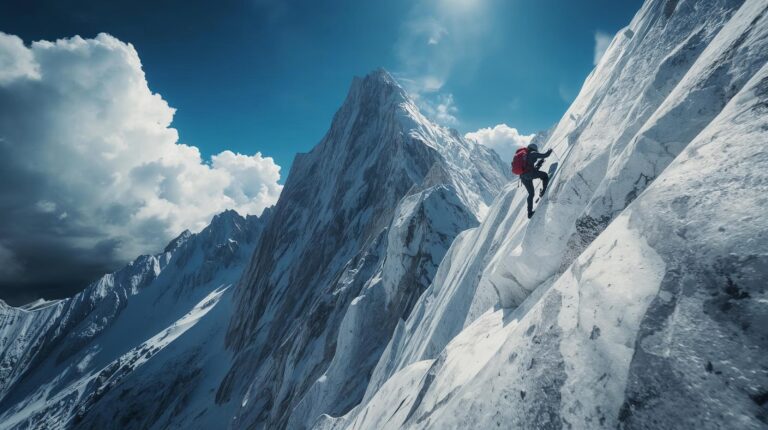
From hiking trails to technical alpine traverses: everything you need to know about difficulty categories I, II and III in the Vihren and Strazhite area.
Part 1: The UIAA Scale – What do the numbers mean?
Before you embark on a climb on a non-standard route, you need to clearly understand what awaits you. Here is how the difficulty levels are defined:
| Category | Level | Description of the terrain | Requirements |
|---|---|---|---|
| I | Easy | The easiest form of climbing. The hands are used primarily for balance. | Suitable for experienced hikers. A rope is only necessary for beginners or those with a strong fear of heights. |
| II | Moderately difficult | Real climbing (so-called “scrambling”). The “three-point rule” applies (two feet and an arm or two arms and an arm). | Border zone. Beginners are required to have insurance. Experienced people often go “solo”, but with increased caution. |
| III | Difficult | The rock becomes steep or vertical. It requires strength in the hands and an active search for grips. | Mountaineering area. Belaying is absolutely mandatory. A fall here could be fatal. |
Part 2: Routes and areas above Bansko by category
Level 1: Category I (UIAA I) – Air trails
Characteristics: Very rugged terrain, requiring periodic use of hands for support.
- The Marble Edge"“The horse” (Summer version): The classic route is secured with a metal rope (parapet). If you hold on to it, the technical difficulty is low. However, if you move along the edge without using the rope for support (clean passage), this is a classic category I / I+.
- Vihren Peak through "“The Kazanites“": The final attack on the summit from the Kutelo Peak junction involves light climbing on inclined marble slabs.
- The Watchers (The Interception): The summer trail, which cuts through the rock gendarmes (does not go over them), requires climbing and careful treading in places.
Level 2: Category II (UIAA II) – Classic Alpine Traverses
Characteristics: This is the “Golden Mean” for thrill seekers. It requires a healthy psyche and good stepping technique.
- Jamdzhiev ridge (Vihren):The route: It separates the Kazanite circus from the Vihren hut valley. It starts out relatively easy, but becomes increasingly narrow and steep.
Key points: There are several passages with category II, where error is unacceptable. The rock is crumbly in places. Going down it is significantly more difficult and dangerous than going up.
- The edge of Donchovi Karauli: A rocky ridge connecting Banderishki Chukar with Muratov Vrah. Often underestimated, but has sharp and technical sections.
Level 3: Category III (UIAA III) – Technical Mountaineering
Features: Vertical world requiring specialized skills and inventory.
- The traverse of the “Guards” (Full Edge): If you decide to go along the very edge of all the gendarmes (from Polezhan Peak to Gazey Peak), you will encounter serious passages of Category II and III. This is one of the most technical edges in Pirin. It requires excellent rope handling and rappelling skills.
- The North Face of Vihren (Couloirs – summer time): The Left and Right Chutes (Funnels), although primarily winter sites, in the summer represent steep rock climbing with a high risk of rockfalls.
Part 3: Equipment by category
Equipment in Pirin must be adapted to the fact that marble is extremely slippery and the stones are often unstable.
For Category I (Tourist Climbing)
Purpose: Protection against slipping and falling stones.
- Shoes: High mountain shoes with a hard sole (type Vibram). Sneakers are absolutely unacceptable.
- Helmet: Highly recommended, especially in the Kazanite area, where wild goats or tourists above you can throw stones.
- Gloves: Thin leather or work gloves (to protect your hands from sharp rocks).
For Category II (Scrambling / Jamdjiev Ruff)
Purpose: Safety when crossing dangerous passages.
- Shoes: Approach shoes (with a climbing zone on the sole) or light alpine shoes. They give a better feel for the rock.
- Helmet: Mandatory.
- Seat (Harness): Even for experienced people, it's good to have it in your backpack.
- Rope: 30-40 meters of single rope (or half rope). Used to secure a weaker participant or for an emergency rappel.
- Inventory: 2-3 long slings for belaying around rock pinnacles ("cockpits"), 3-4 carabiners with a sleeve, a belay device.
For Category III (Mountaineering)
Purpose: Full technical support.
- Rope: Dynamic double rope (50-60m) – mandatory, due to the sharp edges of the limestone, which can cut a single rope under load.
- Shoes: Climbing espadrilles (for the leader) and comfortable alpine shoes for the second.
- Mobile protection: Set of clamps and friends (Pirin marble is compact, but has cracks).
- Wedges and hammer: For classic tours in Pirin, “soft” rock wedges are often needed, as modern gadgets do not always “fit” well.
- Loops: 6-10 pieces.
Important warnings for the Bansko area
- ⚠️ WATER: On the edges (Dzhamdzhiev, Strazhiget, Koncheto) no water sources. Bring at least 2-3 liters of water per person.
- ⚠️ SCALE SPECIFICATIONS: Pirin marble becomes slippery like ice when wet. When rain is forecast, routes of category II and above become deadly dangerous. Don't set off if there is a risk of precipitation!
- ⚠️ THE WEATHER: Summer storms develop rapidly in the afternoon. Plan an early departure (5:00 AM – 6:00 AM).
- ⚠️ DOWNLOAD: The descent is often technically more difficult than the ascent. Always research the emergency exit route from the edge in advance.
*This article is for informational purposes only. If you are not experienced with rope handling and belaying, hire a professional mountain guide for category II and III routes.*


 English (UK)