


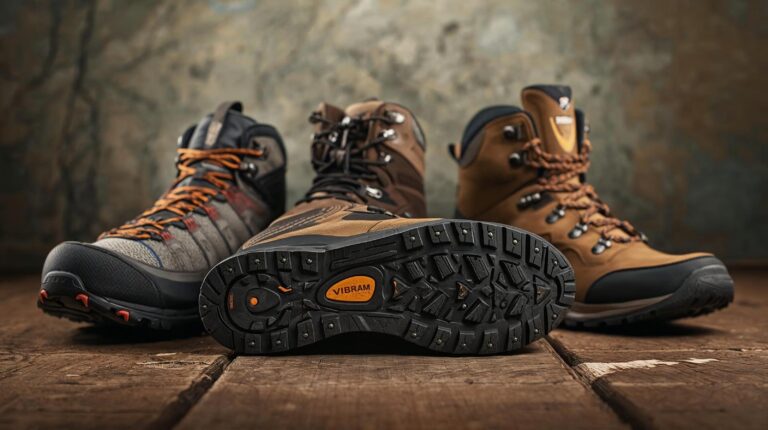
Both options have their definite advantages, but if you are hesitating about what to invest in for your next hike in Pirin, you should know that the answer is not clear-cut. It depends on many factors – from temperature and humidity to the specifics of the rocky Pirin terrain and your personal preferences.
How do waterproof hiking boots actually work?
To understand when we need them, we first need to know how they work. Most quality waterproof hiking boots on the market rely on two main components to keep your feet dry during rain or when crossing mountain streams:
1. Breathable waterproof membrane
This is the unseen hero in your gear. The membrane (the most famous are Gore-Tex, eVent or various proprietary developments of the brands themselves) is an ultra-thin layer located between the outer part of the shoe and the inner lining. It contains millions of microscopic pores per square centimeter. These pores are small enough to block the entry of water droplets from the outside, but at the same time large enough to allow water vapor (sweat) to escape from the inside to the outside.
2. DWR coating (Durable Water Repellent)
This is a chemical treatment applied to the outer layer of the shoe (leather or synthetic). The DWR coating is the first line of defense – it causes water to bead up and run off the surface, preventing the outer fabric from soaking through. It is important to know that this coating wears off with the weather and friction on stones, and requires periodic renewal with special sprays.
Where's the catch? (Or why your feet are sometimes wet despite the membrane)
Here comes the harsh reality of physics that many equipment dealers in Bansko will save you. Waterproof hiking boots have one serious drawback – internal moisture management. Although your sweat starts out as warm vapor, in the enclosed space of the shoe it very quickly condenses upon contact with the cooler outside environment and turns into a liquid.
And the membranes they can't to bring liquid water from the inside out. They only let steam through.
Foot health care: If you are doing a tough summer hike to Vihren Peak at 25°C with heavy waterproof shoes, your feet will sweat profusely. The moisture will stay inside, creating a “greenhouse” effect. This not only leads to discomfort, but also sharply increases the risk of painful calluses and pimples that can ruin your entire vacation.
Additionally, if water gets into the shoe from above (for example, if you step in a deep puddle, cross the Demyanitsa River, or it just rains heavily and the water runs down your feet), the membrane starts working against you. It doesn't allow the water to drain, and the shoe dries extremely slowly, sometimes for days.
What to choose for your hikes in Pirin?
Mountain equipment experts are categorical: your choice should be dictated entirely by the conditions you expect in the mountain. Pirin is a harsh mountain with an alpine character, where the weather changes quickly.
When you MUST choose waterproof shoes:
- The spring “muddy” season: When the snow around Bansko melts and the paths are covered with mud and slush (usually May and early June).
- Late fall and winter: In sub-zero temperatures, the membrane not only protects against external moisture from the snow, but also adds an additional layer of insulation against the cold wind.
- Dewy mornings: If you like to set off early in the morning when the tall alpine grass is soaked with abundant dew, waterproof shoes will keep your socks dry during the first critical hours of the hike.
When are NON-waterproof (breathable) shoes the better choice:
- Hot summer hikes (July and August): For classic hikes like Vihren Hut – The horse, where the terrain is mostly dry rock, lightweight and breathable shoes will keep your feet from overheating.
- Routes with many river crossings: Paradoxically, if you know you'll be wading in water, breathable mesh shoes are preferable.
- People with profuse sweating: If your feet sweat easily, avoid membranes in the summer at all costs.
Advice from local mountain guides: Even if you completely soak your lightweight, breathable hiking boots in a mountain stream, if you continue to walk briskly in the summer, your body heat and the airflow through the mesh will dry them almost completely within an hour or two. Waterproof boots in the same situation will remain wet all day.
The mountaineer's golden rule
To paraphrase the gear experts: Would you wrap your feet in plastic bags all day? Probably not. Membranes are a lifesaver when they solve a specific problem (cold, snow, mud), but they can be a burden on warm, dry days.
Regardless of what type of footwear you choose for your adventure around Bansko, don't forget the most important rule for preventing corns: invest in quality hiking socks (preferably made of merino wool, which regulates temperature and retains its properties even when wet) and always carry at least one spare pair in your backpack!
Pirin awaits you. Prepare properly, respect the mountain and enjoy the incredible views that the Bansko region offers.


 English (UK)