

Situated in a unique valley, embraced by three mountains – the majestic Pirin, the Rila Lakes and the gentle ridges of the Rhodopes, Bansko has a microclimate that often surpasses the conditions in the large administrative centers of Bulgaria. It is not just about clean air. It is about specific temperature amplitudes and humidity levels that make the environment far more gentle on the human body.
Summer: Salvation from the "concrete oven" through the weather in Bansko
This is the season in which Bansko gains a definite advantage over the lowlands. In large cities, the „heat island“ phenomenon is observed. Concrete and asphalt accumulate heat throughout the day and radiate it back at night, making vacationing almost impossible without air conditioning.
A brief comparison:
- Plovdiv and Sandanski: Temperatures regularly exceed 35-38°C. The heat is oppressive, and the „tropical nights“ (above 20°C) exhaust the cardiovascular system.
- Sofia: The city heats up instantly, and the lack of sufficient air currents turns the center into a dusty area with heavy air.
- Varna and Burgas: High humidity makes 30 degrees feel like 38. The body has difficulty cooling due to the delayed evaporation of sweat.
How is it in Bansko? The average daily temperature here rarely exceeds a pleasant 26-28°C. But the real magic happens after sunset. Thanks to the mountain-valley circulation, a cool breeze starts to descend from Pirin. Temperatures drop to a comfortable 12-15°C. This means quality and deep sleep with the window open – something that is unthinkable in Plovdiv or Sofia in August.
Autumn: Why is the weather in Bansko a treat for the senses?
Autumn is the region's "hidden trump card." When the lowlands sink into grayness, Bansko often enjoys the so-called "gypsy summer" with crystal clear visibility. The main reason is the altitude of 925 meters.
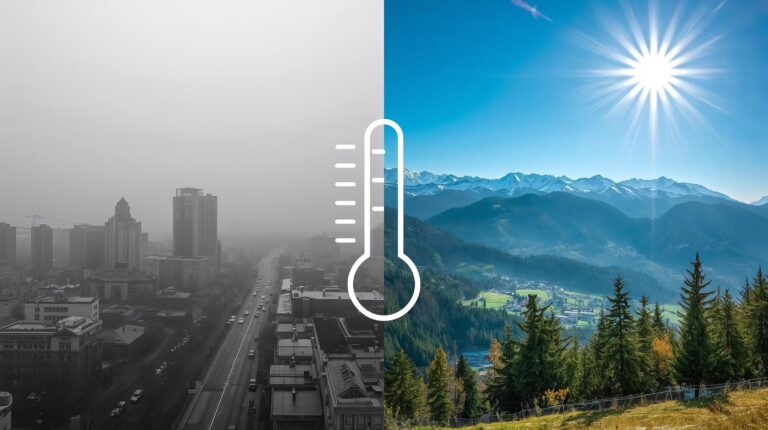
While Sofia and Plovdiv suffer from temperature inversions – a condition in which cold, polluted air remains „trapped“ low in the field – Bansko remains above this layer. The result? While in the capital you breathe smog and move around in fog, in Bansko you enjoy deep blue skies and sunshine that still feels warm. This period is ideal for hiking, as the risk of sudden summer storms is minimal, and weather in Bansko is stable.
Winter: A snowy fairy tale versus urban slush
Many people are worried about the low temperatures in the mountains, but here we need to understand the difference between "dry" and "wet" cold. Weather in Bansko Winter is characterized by lower air humidity. This means that -5°C in the mountains feels much more pleasant than +2°C in humid and windy Varna.
Furthermore, the snow cover in Bansko remains clean. In big cities, snow turns to slush within hours, while here it creates natural insulation and a healthy environment. The sunny days in January and February are significantly more than in the Danube Plain, which is critical for Vitamin D levels in the body.
Climate comfort comparison table
| Season | Big city (Sofia/Plovdiv) | Bansko | Health effect |
|---|---|---|---|
| Summer | Heat, smog, insomnia | Cool, fresh breeze | Heart recovery |
| Autumn | Inversions, fog, grayness | Sun, clear horizon | More Vitamin D |
| Winter | Sleet, salt, icy wind | Pure snow, dry cold | Hardening, clean lungs |
| Spring | Allergens, sudden change | Ionized air | Detox the body |
Spring and the influence of negative ions
Spring comes to the foothills of Pirin a little later, which is a real blessing for those suffering from spring allergies in the plains. When everything in the lowlands blooms at once, in Bansko the process is smooth. But the most important thing is the quality of the air.
During the melting of snow and due to the vast expanses of coniferous forests, the air becomes saturated with negative ions. They are known as the „air vitamins.“ Negative ionization accelerates the delivery of oxygen to cells and the brain, improves concentration and reduces stress levels. That’s why digital nomads and people working remotely find their time in Bansko so productive.
Advice from local experts:
If you are planning a visit in the summer, always bring a coat for evening walks. Even in the hottest July, weather in Bansko after 9pm requires a light jacket. That's the price of the best sleep you'll have all year!
Conclusion: Bansko is a long-term investment in health
Of course, Bansko is not protected from storms or winds. The mountain is a dynamic system. But in the context of global warming and the deteriorating urban environment, weather in Bansko offers a sustainable balance. It works actively for your health – from cooling in August to fresh air „therapy“ in November.
The next time you feel suffocated by the city smog or heat, don't wait for the ski season. Check the forecast and head to Pirin. Here, weather is not just a number on the thermometer, but a way of life.
 English (UK)