

Wine is much more than a drink – it is geography, history, climate and human labor, all rolled into one bottle. Whether you are in a cozy tavern in Bansko after a long day on the ski slopes, or choosing a bottle for a special dinner at home, the world of wine can seem vast and sometimes confusing.
What is the difference between Shiraz and Syrah? Why is one Chardonnay buttery and the other sour? Which types of wines Do they go with the bathing suit?
In this comprehensive guide, we will take an in-depth look at the most popular varieties, analyze the global wine map (Old vs. New World), and pay special attention to local Bulgarian treasures from the Struma Valley.
🍷 Basics: The Three Big Families
Before we dive into the varieties, we need to understand the technology. The color of wine comes not only from the color of the grapes, but from the contact with the skins during fermentation (maceration).
I. White wines: From freshness to buttery density
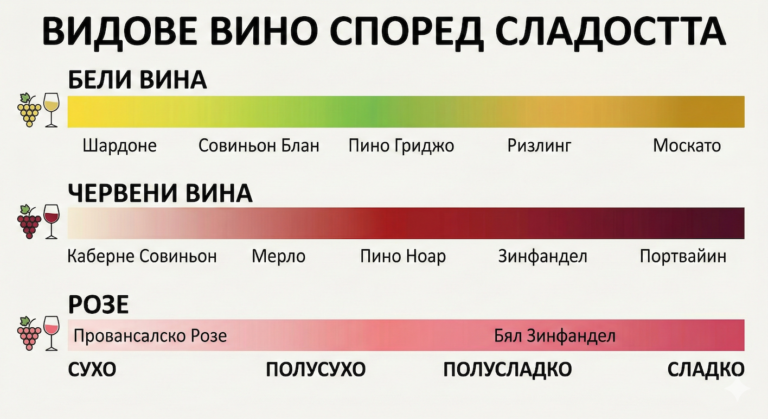
White wines range from light and “crisp” to full-bodied, heavy and complex. They are mainly made from light-skinned grape varieties (greenish or yellow), but can also be made from red grapes (so-called “Blanc de Noirs”) if the juice is separated from the skins immediately. The lack of tannins makes them lighter and focused on acidity.
1. Chardonnay – The Chameleon
It is the most popular white grape in the world because it grows everywhere. Its taste depends entirely on the climate and the winemaker.
- Chablis style (France): When not aged in oak, it is sharp, mineral, with a taste of green apple and lemon.
- New World Style (California/Australia): When aged in oak barrels, the wine becomes golden, full-bodied, with notes of vanilla, butter, cream, and ripe pineapple.
- Food combination: Chicken with cream sauce, salmon, mushroom risotto.
2. Sauvignon Blanc – The Aroma Bomb
It is instantly recognizable. This wine has high acidity that makes your mouth water.
- Feature: Extremely fresh and "green".
- Flavors: Mowed grass, green pepper, lime, grapefruit. In New Zealand they also add tropical notes of passion fruit.
- Food combination: Goat cheese (classic!), salads with citrus dressing, asparagus, fried fish.
3. Riesling – The Noble and Misunderstood
Many people think of Riesling as just a sweet wine, but the best examples from Germany and Alsace are dry and punchy.
- Feature: Very high acidity and low alcohol. Has enormous aging potential.
- Flavors: Lime, green apple, beeswax, jasmine. A specific petroleum aroma appears in old Rieslings (which connoisseurs adore).
- Food combination: Spicy Asian cuisine (Thai, Indian), duck meat.
4. Pinot Grigio / Pinot Grigio
One grape – two styles. Like “Pinot Grigio” (Italy) it is light, watery and neutral – perfect for the beach. Like “Pinot Gris” (France) it is denser and buttery.
II. Rosé: The Subtleties of Pink
Rosé is not just a “ladies” drink,” but a serious category of wine. It is made from red grapes, with the skins remaining in the must for a very short time (from 2 to 24 hours). The longer the skins remain, the darker the color and the richer the flavor.
- Provence (Provence Style): The world standard. Pale “onion skin” or salmon color. Very dry, mineral, with subtle notes of strawberry and watermelon. Perfect for summer.
- Tavel: A unique French rosé that is dark red in color. It is powerful, with a high alcohol content, and can be drunk instead of red wine with meat.
- Syrah/Cabernet Rosé: Common in Bulgaria and the New World. They are more saturated in color (raspberry) and have a more pronounced fruity flavor of cherry and raspberry.
III. Red Wines: Tannins, Body and Character
Red wines owe their structure to tannins – the substances found in the skins and seeds that create the sensation of astringency and dryness in the mouth (like strong black tea). Tannins are the “backbone” of wine and allow it to age for decades.
1. Cabernet Sauvignon – The King
The most recognizable red wine in the world. It is native to Bordeaux, but thrives anywhere it is warm.
- Body: Full-bodied.
- Flavors: Blackcurrant, black cherry, green pepper (if not well ripe), cedar, tobacco and vanilla (from the oak).
- Food: Steaks, beef, lamb, hard cheeses. The fat in the meat softens the tannins.
2. Merlot – The velvety alternative
It is often blended with Cabernet to soften it. On its own, Merlot is juicy and approachable.
- Body: Medium to dense.
- Flavors: Blue plum, chocolate, sour cherry, herbs. Less tannins than Cabernet.
- Food: Pasta with meat sauce, pork, pizza.
3. Pinot Noir – Elegance and whimsy
The thin-skinned grape that hates heat. The most expensive wines in the world (from Burgundy) are Pinot Noir.
- Body: Light to medium. Light ruby color.
- Flavors: Cranberry, raspberry, hibiscus. With aging it develops aromas of “forest after rain”, mushrooms and autumn leaves.
- Food: Duck, grilled salmon, mushroom dishes, risotto.
4. Syrah/Shiraz
The same grape with two names. In Europe (France) it is called Syrah and it's elegant, smoky and meaty. In Australia it's Shiraz – a powerful fruit bomb with a blackberry jam flavor.
IV. The World's Wine Map: Who Produces What?
Geography is fate in wine. The main division is between the “Old World” (Europe, where tradition and terroir dictate the rules) and the “New World” (former colonies, where innovation and technology lead the way). Here’s a detailed breakdown of the key regions:
| Country | Key regions | Style and iconic wines |
|---|---|---|
| 🌍 Old World (Traditions & Elegance) | ||
| France 🇫🇷 | Bordeaux, Burgundy, Rhone, Champagne, Provence | The absolute leader. Bordeaux is the home of Cabernet and Merlot. Burgundy is the pinnacle for Pinot Noir and Chardonnay. Provence is the kingdom of Rosé. |
| Italy 🇮🇹 | Tuscany, Piedmont, Veneto, Sicily | Huge variety. Tuscany is famous for Chianti (Sangiovese), Piedmont for the “King” Barolo (Nebbiolo). Veneto gives the world Prosecco and Amarone. |
| Spain 🇪🇸 | Rioja, Ribera del Duero, Priorat | Excellent wines at good prices. Tempranillo is the national treasure – with a taste of leather, tobacco and cherry. Cava is the Spanish champagne. |
| Germany 🇩🇪 | Moselle, Rheingau | The kingdom of white wines. The best and longest-lasting Riesling in the world comes from the steep slopes of the Moselle River. |
| 🌎 New World (Innovation & Fruit) | ||
| USA 🇺🇸 | Napa Valley, Sonoma (California), Oregon | The wines are powerful, full-bodied and oaky. Iconic Cabernet Sauvignons and buttery Chardonnays. Oregon is known for its Pinot Noir. |
| Argentina 🇦🇷 | Mendoza, Salta | Malbec: A French variety that found its new home in the Andes. A very dark, full-bodied wine with flavors of prunes and sweet cocoa. |
| Chile 🇨🇱 | Maipo, Casablanca, Colchagua | Carmenere: A unique variety with spicy notes of pepper and spices. Chile is also known for having the best price-quality ratio for Cabernet. |
| Australia 🇦🇺 | Barossa Valley, McLaren Vale | Shiraz: Thick, powerful wines with flavors of chocolate and eucalyptus. |
| New Zealand 🇳🇿 | Marlborough, Central Otago | World leader in aromatic, grassy Sauvignon Blanc and very high-quality Pinot Noir. |
V. Bulgarian wines and the hidden treasures of Bansko
Bulgaria is not just a consumer, but an ancient producer with millennial traditions. If you are staying in Bansko, you are in the heart of Struma Valley – the warmest and sunniest wine region in the country. The climate here is strongly influenced by the Aegean Sea, which allows the cultivation of varieties that do not grow anywhere else.
🏔️ Local guide: What to order at the tavern?
Don't limit yourself to international varieties. Ask the sommelier about:
An endemic variety that grows only in this region. The wine is not very dark, but has an incredible aroma of tobacco, leather, dried cherries and pepper. It gets better with age.
Crossed with Shiroka Melnishka and French varieties. The result is a modern, full-bodied, juicy wine with a taste of ripe fruit and vanilla. A crowd favorite.
The symbol of Bulgarian winemaking. A powerful wine with lots of tannins and acids, making it ideal for heavy winter dishes and long aging.
For white wine lovers – these are the local varieties from the Kresna and Sandanski regions. Light, floral and unpretentious.
💡 Did you know that? Many of the wineries are only a 40-50 minute drive from Bansko (around Harsovo and Melnik), making them a perfect day trip if the ski slopes are closed.
VI. Expert Tips: Temperature, Glasses and Decanting
Even the most expensive wine can be ruined if served incorrectly. Here are three golden rules:
1. Temperature is everything
The “room temperature” myth is red wine’s biggest enemy. It comes from the weather, when the rooms in the castles were 16-17 degrees. Today, at 24 degrees in the living room, red wine becomes bland and alcoholic.
- Sparkling: 6-8°C (from the fridge straight into the glass).
- White and Rosé: 8-12°C.
- Red: 16-18°C. Put the bottle in the refrigerator for 20 minutes before serving – you will feel a huge difference in the focus of the flavor.
2. Why does the shape of the cup matter?
- For red (Big balloon): The wide glass allows the wine to "breathe" and develop its aromas.
- For white (Tulip): A narrower glass keeps the temperature low and concentrates the more delicate aromas towards the nose.
3. When to use a decanter?
Decanting (decanting) works wonders with young, powerful red wines (like Cabernet or Mavrud). The contact with air “opens” the wine, softens the tannins and enhances the fruity aroma. For older wines, decanting serves to separate the sediment.
Combining with traditional Bansko cuisine
- Banska Kapama & Chomlek: These dishes are rich in fat and flavor. You need a wine that will “wash” the palate. Bet on Mavrud or Cabernet Sauvignon.
- Old man from Bansko and appetizers: Dry appetizers love Wide Melnik vine because of the spicy notes.
- Trout in a pan: Must be chilled Chardonnay (without oak) or Sauvignon Blanc.
Would you like us to organize a wine tour for you to the best wineries around Bansko? Contact us or check out our events section!


 English (UK)