


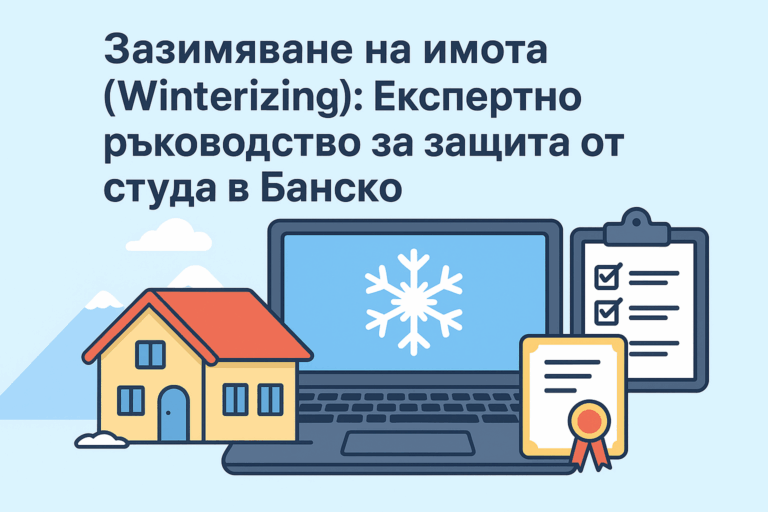
In this comprehensive guide, we will cover all the critical steps and technical protocols for effectively protecting your investment in Bansko.
1. Plumbing system: Prevention of freezing and burst pipes
Water is the biggest enemy of uninhabited property in winter. The law of physics is inexorable – when freezing, the volume of water increases by about 9%. This tension is quite enough to split copper, polypropylene pipes, water heaters, expensive mixers and water meters. The approach here depends entirely on the mode of use of the property.
Protocol A: In case of long-term absence (Full conservation)
This is the most reliable and secure method if the property will not be used for months and you do not want to pay electricity bills for maintenance heating:
- Stopping the water supply: Close the main water shut-off valve tightly. It is usually located in the common water meter shaft on the floor or directly next to the water meter in your apartment.
- Draining the installation: After turning off the water, open all faucets (sinks, showers, bathtubs) simultaneously at the lowest and highest points in the home. This ensures gravity drainage and introduces air into the system, pushing any remaining water out of the plumbing.
- Securing siphons (Water plugs): There is always water left in floor drains, sink U-bends and toilet bowls, which is intended to stop sewer odors. To prevent it from freezing and cracking ceramics and faience, pour a concentrate of propylene glycol (environmentally friendly, harmless antifreeze) or a saturated solution of coarse sea salt.
WARNING – CRITICAL STEP WITH THE BOILER:
Draining the water heater is a must! Many owners make the mistake of relying on the factory insulation of the unit. If the electricity is cut off due to a storm, the insulation will not protect it from freezing after 48 hours. The water heater must be drained completely through the safety (return) valve or specialized drain.
Protocol B: When a property is in use (Between leases)
If you are renting out your property through platforms like Airbnb or Booking and are expecting guests in a few days, a complete drain is impractical. In that case, apply the following measures:
- On-duty (maintenance) heating: Set your radiator or air conditioner thermostats to “frost protection” mode (usually marked with an Anti-frost or snowflake symbol). This mode is extremely economical and maintains a safe room temperature of around 5°C – 8°C.
- Isolation of vulnerable areas: Conduct a property survey. Make sure that all pipes passing through unheated areas such as basements, underground garages or external shafts are perfectly insulated with quality microporous rubber (type K-Flex) or thick polyethylene insulation.
2. Prevention of HVAC installations (Heating and Air Conditioning)
The specifics of the climate in the Bansko region require uncompromising maintenance of heating systems. If you rely on systems with a liquid heat carrier (local heating, air-to-water heat pumps or fireplaces with a water jacket), pay special attention to the liquid in the system.
Heat transfer fluid protection: It is absolutely forbidden to leave the system filled with only tap water if there is even a minimal risk of a power outage or boiler/pellet burner failure. The installation must be filled with a quality antifreeze solution for heating systems (again based on propylene glycol). It not only does not freeze in extreme minus temperatures, but also protects radiators and pipes from internal corrosion. Do not forget to check the pressure gauge - the operating pressure in a cold system should be between 1.2 and 1.5 bar.
Preparation of air conditioners and heat pumps:
- Make sure that the outdoor unit is installed at a sufficient height above the ground (at least 50-60 cm) or is protected with a special visor so that it is not buried by accumulating snow.
- Check the drain. The condensate pipe and the bottom tray should not be clogged with autumn leaves. For heat pumps, it is highly recommended to install a heater in the drain tray to avoid dangerous icing of the fins, which can burn out the compressor.
3. Roof, gutters and exterior elements
Snowfall in Bansko is often composed of heavy and wet snow, which subsequently freezes. This creates a huge mechanical load on the building structures of all complexes and chalets.
Before the first serious snowfall (usually October-November), the gutter system should be inspected. Gutters are cleaned of leaves, pine needles and mud. A clogged gutter retains water, which when frozen forms ice plugs. These plugs overflow and create huge icicles – they can not only deform the metal profiles of the gutter, but also compromise the facade plaster, causing moisture in the walls.
Inspect the presence and strength of snow retainers on the roof. In mountainous areas, they are mandatory by law and common sense. Their role is to prevent avalanches of huge masses of snow that could fatally injure passersby or crush cars parked under the eaves.
4. Organization of snow removal and provision of access
Whether you use the property for personal needs or rent it out to tourists, ensuring trouble-free and safe access is your responsibility.
ADVICE FOR APARTMENT OWNERS:
If you own an apartment in a gated complex in Bansko, the maintenance fee usually covers snow removal from the common areas, parking lot, and building entrances. However, always ask your property manager for an up-to-date schedule and guarantees of timely response after heavy snowfall.
For owners of detached houses or cottages, the situation requires more proactivity. It is necessary to engage a local company or subcontractor in advance to clear the paths and parking spaces. Always keep a sturdy snow shovel and ice melter on the property. Forget about regular salt, as it corrodes concrete and tiles - invest in specialized granules or calcium chloride, which are gentle on the pavement and more effective in extremely low temperatures.
5. Energy efficiency, compaction and smart control
The strong winter winds in the Pirin Mountains very quickly reveal any weak points in the insulation of the home. Inspect the window frames. Carefully check the rubber seals on the windows and balcony doors. If they are deformed, flattened or cracked, the heat loss will be enormous, and your electricity bills will be astronomical. Replace them in time.
A useful secret is that modern PVC and aluminum joinery has a specific „"winter mode"“ of adjusting the hardware. Using a simple hexagon, you can turn the eccentrics (the knobs on the edge of the sash) so that the sash presses much more tightly against the frame. This completely eliminates annoying drafts.
Smart technologies and emergency monitoring plan
Even with impeccable winterization of a property in Bansko, force majeure circumstances are always possible. The investment in Smart Home technologies is worth every leva spent. The installation of Wi-Fi thermostat allows you to monitor the temperature in real time directly from your smartphone, even if you are thousands of kilometers away. You can set alarms (push notifications) if the room temperature drops below the critical 3°C.
Another invaluable tool is The Wi-Fi flood sensor. Placed on the bathroom floor or next to the water heater, it will alert you the moment water appears, giving you a chance to react before the damage becomes catastrophic.
For this purpose, it is vital that your property manager, maintenance company or trusted person in Bansko has a spare key. The reaction in the first hours of an emergency is the difference between a wet floor and destroyed flooring, furniture and flooded neighbors downstairs.
Conclusion
Successful winterization of a property in Bansko is not a one-time act that you cross off in a notebook, but an important systematic process of prevention. The mountain is unpredictable and does not forgive negligence. Professional and timely preparation of the plumbing and HVAC installations, insulation and provision of monitoring guarantee that your home will retain its value and will function without failure.
This way, you not only ensure complete peace of mind, but also save yourself unnecessary nerves and serious unforeseen expenses for emergency repairs in the midst of the winter season.

 English (UK)