


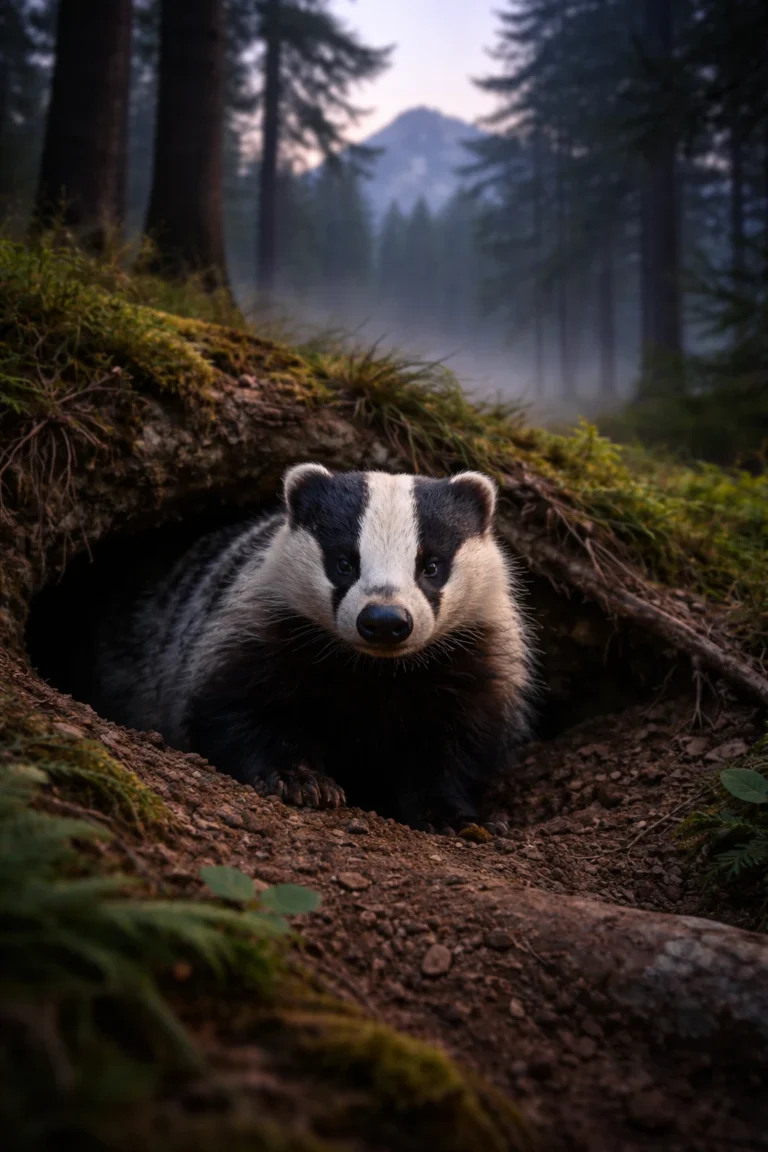
Anatomy and appearance of the European badger
The European badger is the largest representative of the Weasel family (Mustelidae) in Bulgaria. It has a very characteristic and easily recognizable appearance, although few have been lucky enough to see it live in the wild near Bansko. Its body is massive, stocky and wedge-shaped, reaching a length of up to 90 centimeters. Its weight usually varies between 10 and 15 kilograms, but in the fall, when it prepares for the winter in Pirin, it can exceed 20 kilograms.
Its most distinctive feature is its head – a white muzzle with two broad, striking black stripes that run through the eyes and ears. The fur on its back is silver-gray and rough to the touch, while its belly and paws are dark, almost black. The badger is armed with short but extremely strong legs and long, strong claws on its front paws, which make it the perfect digger of the animal world.
Dams: The Underground Palaces in the Forests Near Bansko
As you stroll through the cool pine and mixed forests above Bansko and Dobrinishte, a true architectural masterpiece may be hidden deep beneath your feet. Badgers don't just dig holes - they create large-scale underground complexes called dams. These complex tunnel systems are built primarily in dry, sandy or soft forest soils, where the roots of ancient trees provide strength to the “roof”.
An old dam, passed down from generation to generation (sometimes for decades), can attain impressive proportions. It usually has:
- Dozens of entrances and exits for quick escape in case of danger.
- Specialized ventilation shafts that provide fresh air flow.
- Several "sleeping chambers", carefully lined with dry grass, moss and leaves, which the animals regularly change before the onset of winter.
- A network of tunnels with a total length often exceeding 30-40 meters.
Nutrition and Habits: The Menu of an Omnivorous Gourmet
Although biologically classified as a predator, the Pirin badger is a typical omnivorous mammal. Its diet is extremely diverse and changes dynamically according to the season in the mountains. Since its eyesight is relatively poor, it relies mainly on its perfect sense of smell and hearing to find food in the dark.
Its favorite delicacy is earthworms. During a damp summer night in the forests around the ski area or on the road to the Demyanitsa hut, a badger can eat hundreds of them. In addition, its menu includes snails, various insects, small rodents, frogs and even bird eggs. In late summer and autumn, badgers switch to a predominantly plant-based diet – they literally adore berries (blueberries, raspberries, blackberries), acorns, roots, wild mushrooms and fallen fruit from trees. This rich, high-calorie diet is critically important for accumulating the necessary subcutaneous fat for the winter, when they fall into a state of lethargy (reduced activity, not a true hibernation).
How to recognize badger tracks on eco-trails?
Since the badger is active only after sunset and is very wary of humans, the chances of meeting it face to face during a hike are minimal. However, an observant hiker can easily “read” the traces of its nocturnal activity.
Look for the following signs in the forest:
- Paw prints in the mud: Badger prints are very distinctive and resemble those of a small bear. They clearly show five toes, a large pad, and long claws (especially on the front paws). Look for them near mountain streams or puddles after heavy rain.
- “Pig” diggings: In search of roots or tasty larvae, the badger digs small, cone-shaped holes in the soil or forest litter. They look a lot like wild boar burrows, but are significantly smaller and more precise.
- Worn highways: Badgers are creatures of habit. They use the same routes every night, creating narrow, well-trodden paths in the grass and bushes leading directly to their dens.
Important for your safety and the protection of nature!
The badger is a peaceful animal that always prefers to run away from conflict. However, it can become aggressive if cornered, injured or protecting its young. Its jaws are extremely strong. If you are walking your dog on the mountain trails around Bansko, always keep him on a leash. The dog's hunting instincts can lead him to the entrance of a dam, which will inevitably lead to a violent and very dangerous confrontation. Also, if you accidentally find a dam, be respectful - do not throw objects inside, do not make unnecessary noise and under no circumstances try to dig up the entrances.
The ecological importance of the badger for the region
This secretive mammal is an indispensable element of the rich fauna of Pirin. With its continuous burrowing activity, the badger practically aerates the forest soil, supporting plant growth. It plays the role of a seed disperser (through the consumption of fruits) and a natural regulator, controlling the population of some species of insects, snails and small rodents.
Knowing that beneath the centuries-old pine trees near Bansko, a hidden, nocturnal life pulsates, filled with architectural genius and care for the family, makes mountain walks even more exciting. The next time you walk the eco-trails in Pirin, look around carefully – you might spot the secret signs of this amazing forest dweller.
 English (UK)