


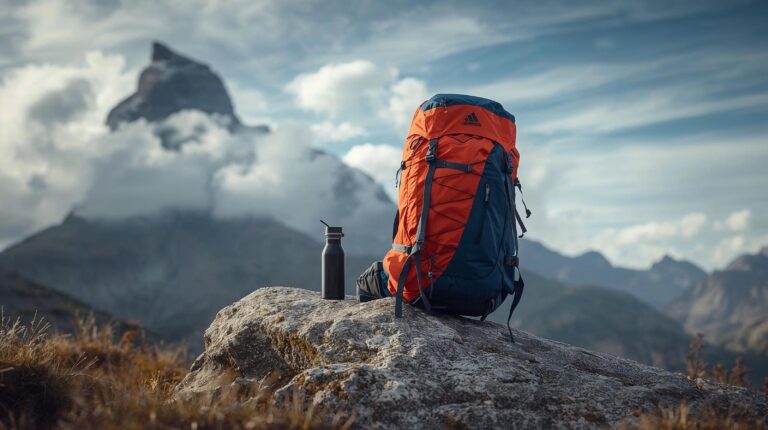
A common sight on the trails above Bansko are tourists with expensive backpacks who walk hunched over, struggling with neck and shoulder pain. The reason is almost always the same: wrong size or incorrect setting. This fundamental guide will help you make the right choice of a hiking backpack that becomes part of your body.
1. Volume: How many liters do I need for Pirin?
In mountaineering, the iron principle applies: “The bigger your backpack, the more unnecessary things you will take”. For the steep and rocky trails of Pirin, minimalism is not just a fashion, but a survival strategy.
| Litre capacity | Purpose | Sample routes |
|---|---|---|
| 20 – 30 liters | Daypack. Water, food, jacket and first aid kit. | Vihren Hut – Vihren Peak; Banderishki Lakes. |
| 35 – 45 liters | Weekend hikes with overnight stay in a hut. More clothes and a light bag. | The transition "“The horse”"with overnight stay at the shelter or Yavorov hut. |
| 55+ liters | Multi-day autonomous treks with tent and camping equipment. | Complete tour of Pirin along the international route E4. |
2. Anatomy and Ventilation: Why is the back everything?
When considering your choice of a hiking backpack, don't look at the colors, but at the carrying system. It is the "engine" that distributes the load.
Carrying system (Cross belt)
This is the most important component. The belt should fit snugly around your hip bones (pelvis), not your waist. Look for a heavy, padded belt with high-density foam. In the Pirin Mountains, where balance is critical, the belt stabilizes the pack during any sudden movement.
Ventilation: Mesh or Foam?
- Net (Trampoline style): Your back doesn't directly touch the backpack. Perfect for hot summer days above Bansko. Disadvantage: moves the center of gravity slightly back, which can be uncomfortable on technical descents.
- Foam (Contact style): The backpack fits snugly. You sweat more, but you get maximum control and stability. This is the preferred choice for climbers and people going through the “Horse” or “Guards”.
3. Comparison of the top brands in Bulgaria
The market in Bulgaria offers a huge variety, but several brands have proven themselves in the harsh conditions of the native mountains:
Tashev (Bulgaria) – The Unkillable Tanks
The Plovdiv brand is a legend. They use original material Cordura, which withstands the brutal friction in the Pirin granite.
Pros: Exceptional strength, long life (10+ years), excellent price for this quality.
Cons: Higher curb weight and more conservative design compared to Western competitors.
Osprey (USA) – The Technology Leader
If your budget allows, Osprey offers the best ergonomics in the world. The system Anti-Gravity literally makes the load "disappear".
Models: The series Talon (male) and Tempest (women's) are the benchmark for lightness and comfort.
Deuter (Germany) – German precision
Deuter is the “golden mean”. The models in the series Futura They probably have the best ventilation system with a mesh that prevents your back from overheating under the hot Pirin sun.
4. How to adjust the backpack correctly? (5 steps)
The setting is made at full backpack. Follow this sequence every time:
- Loosen everything: Before putting on the backpack, loosen all straps.
- Cross belt: Lean forward slightly, position the belt over your pelvic bones and tighten firmly. You should feel the weight “stepping” there.
- Straps: Pull them down and back. They should curve around your shoulders without pressing them vertically.
- Chest strap: Fasten it at armpit level. It stabilizes the backpack and frees up arm movement.
- Load lifters: The small straps over the shoulders. Pull them to bring the top of the backpack closer to your head. This prevents the load from “swaying”.
5. Stacking Strategy: Center of Gravity
In Pirin, you often walk on narrow ledges and scree. A poorly organized backpack can literally knock you over.
- Bottom: Light and bulky items (sleeping bag, spare clothes).
- To the back (Middle): The heaviest objects (water, canned goods, appliances). This keeps the center of gravity close to the spine.
- Exterior: Lighter gear and jackets.
- Cover: Essential items – headlamp, knife, map, sunscreen.
Are you ready for the next adventure?
You already have the right backpack and know how to set it up. But do you know how to dress to survive a sudden storm in the mountains?
Frequently Asked Questions (FAQ)
Do I need a raincoat for my backpack?
Absolutely! Summer storms in Pirin are sudden and fierce. Look for a backpack with a built-in Raincover. Even “waterproof” fabrics leak through the seams during prolonged rain.
Does it matter whether the backpack is for women or men?
Yes. Women's models (often marked SL on Deuter or specific names on Osprey) have a shorter back and S-shaped straps that don't pinch the chest. The anatomy of the hip belt is also tailored to the female pelvis.
How do I maintain my backpack?
Never wash it in a washing machine! Use cool water, a soft sponge and neutral soap. Dry in the shade, as UV rays damage the structure of artificial fabrics.

 English (UK)