

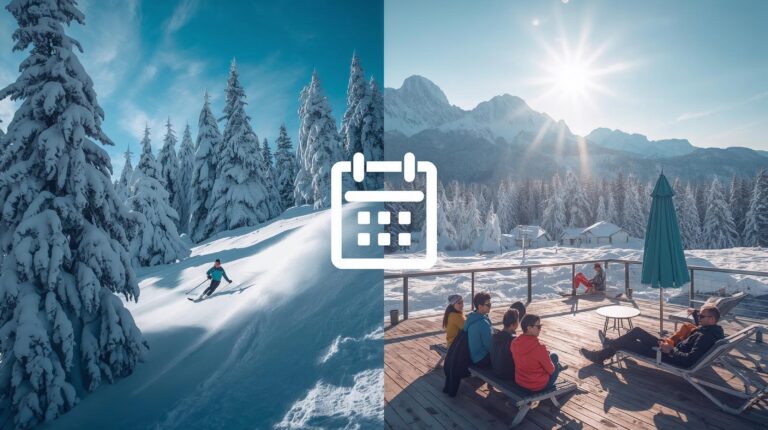
Bansko has long established itself as a true winter capital of the Balkans. The unique symbiosis between steep slopes, modern ski infrastructure and the authentic spirit of the city attracts thousands. But many tourists remain disappointed because they come with the wrong expectations at the wrong time. Therefore, based on historical data from the last 15 years and personal experience on the ground, we have compiled this realistic, unbiased and detailed guide.
When does the ski season start and end in Bansko?
The dynamics of climate change have an impact, but thanks to its high location, Bansko offers one of the longest and most reliable seasons in Eastern Europe - usually around 4 full months.
The official opening traditionally takes place in mid-December (between the 12th and 17th). It is a grand celebration of Banderishka Polyana., often featuring guest stars from the world's ski elite (such as Alberto Tomba or Marc Girardelli), music and the legendary game “Treasure Hunters.
The end of the season It usually occurs in mid-April (between April 10th and 15th), when the spring sun finally takes over and riding becomes more of a social event.
Snow Calendar: What to Expect Month by Month
December: The Month of Uncertainty and Technological Magic
December is perhaps the most misunderstood month. It's a climatic clash between late fall and winter. The resort relies critically on its arsenal of over 400 technical snow guns.
- Weeks 1 and 2 (Preseason Fever): The town is quiet (except on December 8th). The slopes are mostly empty and the snow is almost 90% technical. The focus is on the „backbone“ of the area – the „Kolariski Put“ and „Platoto“ slopes. Forget about off-piste skiing (freeride) – the snow base is thin and hides dangerous rocks. This is a time for SPA and relaxation.
- Week 3 (Discovery): Hard, fast, aggressive artificial snow. Usually operates between 40% and 50% from the slopes. The ski road to the town is often closed.
- Week 4 (Holiday Peak): Christmas and New Year. This is the most expensive, noisiest and busiest period.
💡 Warning: The December Time Trap
Historically, the end of December often sees the passage of a so-called "Mediterranean cyclone." It can bring the first serious snow, but often also brings rain in the lower reaches. If natural snow is late, thousands of tourists head to the few open slopes, leading to icing and baboons as early as 11:00 in the morning.
January: The Deep Freeze and the Powder
January is the time when winter settles permanently in Pirin. The sun is low, the days are short, and the temperatures drop sharply. For purists, this is the best part of the season.
- Weeks 1 and 2: The resort remains busy due to the Balkan vacations. The base becomes solid, and temperatures at the summit (2600 m) can drop to -15°C or -20°C.
- Weeks 3 and 4 ("The Siberian Express"): Statistically the best time for freeride enthusiasts. The coldest weeks guarantee „dry“ and light snow (Champagne powder). The holiday tourists have left, and the February holidays have not started. The golden Wednesday!
February: Peak season (and legendary queues)
February is the best bet for a solid snowpack. The accumulated base from January, combined with new precipitation, creates peak conditions. But it comes at a price.
The British Invasion (Half-Term): In the second half of the month, British schools go on vacation. Bansko is a top destination for them, which means the queue for Gondola becomes legendary and can take up to 2 hours to wait.
March: The Connoisseur's Choice (Sun and Snow)
Many locals consider March to be the “hidden treasure.” The bitter cold is gone, and the base is at its maximum (often over 2 meters at the top).
- Weeks 1 and 2: The perfect balance. The crowds disappear. In the morning the slopes are perfectly hard and in the afternoon the sun allows Après-ski on a t-shirt. The prices for overnight stays are starting to drop.
- Weeks 3 and 4 (Spring Riding): The freeze-thaw cycle begins. From 08:30 to 11:00 it is icy and fast; from 11:00 to 13:30 it is perfect „frozen“ snow for carving; after 13:30 it becomes a heavy, wet mess – perfect time for a long lunch at the tavern.
April: The Grand Finale
This is no longer a sports ride, but a pleasure and relaxation. Riding is possible exclusively in the high area ("Platoto" and under Todorka peak). The lower part and the ski path are usually closed. The atmosphere is calm, there are no queues, and the tickets are often discounted.
Trails, snow guns and equipment: Quality guarantee
With its 75 kilometers of marked trails, the ski area is logically structured. Beginners can use the 14-kilometer ski road or the blue runs around "“Shiligarnika. Advanced skiers have a huge choice of red runs such as "Balkaniada" and "Todorka", while experts must definitely try their hand at the black run "Alberto Tomba", certified for World Cup starts.
Daily grooming of the slopes with modern snow machines and round-the-clock operation of the snow guns guarantee that famous “ribbed” snow early in the morning. If you don’t have your own equipment, the town is dotted with ski lockers and schools for every level and budget.
Secrets from the locals: Queues, wind and hidden traps
⚠️ How to “survive” the Gondola queue in February?
- Be at the starting station no later than 07:45 a.m.
- If your hotel offers it, purchase it. VIP ski pass for priority access.
- Take a car or taxi directly to Shiligarnika or Banderishka Polyana (parking lots are filled by 09:00 and are paid).
- Use the shuttle buses that run when there is a high load.
⚠️ Warning: The “Wind” factor in Pirin
Even if you choose the perfect date, Bansko has one main enemy: the wind. Pirin is an alpine mountain. The highest lifts (“Platoto” and “Banderitsa 2”) are very exposed. If the wind speed exceeds 15-20 m/s, the facilities stop automatically for safety. This happens most often in January and February. Always check the live webcams in the morning before you go!
Events, festivals and Apres-Ski culture
The ski season in Bansko has long outgrown the boundaries of pure sport. The resort is a pulsating center of entertainment. It regularly hosts World and European Ski and Snowboard Cups. Stages are built on Banderishka Polyana for huge music events (such as the EXE Winter Festival), and the bars at the end of the ski slope (Apres-Ski) offer noisy parties from early afternoon. In the evening, the authentic taverns in the old town await you with a capama, a ruino mulled wine and live music and live music.
Summary: When to book your ski vacation?
| Purpose of visit | Ideal period | A note from the locals |
|---|---|---|
| Powder and Freeride | January 20 – February 10 | Keep an eye on the "Siberian Cold" forecast“ |
| Safe riding (Guaranteed snow) | The whole month of February | Warning: Big queues in the morning! |
| Sun and Relax (Best Mix) | March 1 – March 15 | The perfect time for families and Après-ski |
| Budget vacation | December 10-20 / All of April | Risk of fewer open runways |
Follow our site for daily updates on snow cover and facility operations throughout the season. Prepare your gear, choose the month that suits you best and enjoy the magic of Pirin!