


Why are alpine rock edges not for dogs?
Taking the dog in the mountains on routes with metal ropes, precipices and sheer cliffs dramatically increases the risk of a fatal accident for both the animal and the person. The mountain requires zero external intervention in the most critical sections.
The "two hands free" rule on extreme routes
The basic law of survival on narrow rock ledges (like the iconic Кончето in Пирин or Трапето in the Balkan Mountains) is that the tourist needs complete freedom of movement. In these areas, human life depends entirely on stability and the correct assessment of the situation.
- Need for a strong grip: Every step requires complete concentration, and your hands are vital for keeping your balance, gripping metal ropes, or supporting yourself on the rock itself.
- Loss of control: If one of your hands is constantly busy holding a leash, you automatically deprive yourself of a critical part of your ability to react adequately.
- External factors: In the event of a slip, crumbling rock beneath your feet, or a sudden powerful gust of wind, not having a free hand can be disastrous.
Additionally, climbing on secured routes often requires the use of specialized equipment. Working with carabiners and belay devices is absolutely impossible if you have to control a frightened animal at the same time.
Instincts, panic and unpredictability in animals
No matter how obedient your dog is in the city park or on the lawn in front of the block, the harsh alpine environment triggers deep primal reactions. As a result, the animal's behavior becomes completely unpredictable.
Animals have an extremely strong and acute sense of height, as well as the lack of stable ground beneath their paws. Even the most confident and trained dog can suddenly freeze in fear on exposed terrain with cliffs on both sides. A sharp tug on the leash – caused by stress, panic, or a chamois passing nearby – can instantly throw you off balance. On the edge of a cliff, this tug often proves fatal.
The most fatal mistake: Carrying a dog in your arms in the mountains
The most critical scenario is when the pet refuses to move forward, and the owner, driven by love, panic and compassion, decides to carry it in his arms through the difficult section. Experts from [ADD: link to the website of the Mountain Rescue Service] are categorical that this is a decision that literally kills.
How does shifting the center of gravity lead to accidents?
Carrying an animal under your arm or in your hands on a narrow cliff edge completely disrupts human balance. The center of gravity shifts unnaturally, and your attention is no longer focused on your own steps and safety, but entirely on the animal.
Pressed to the edge of a precipice and sensing its owner's insecurity, a dog may start pulling, scratching, and writhing. It's virtually impossible to compensate for another creature's erratic movements while struggling to keep your own weight on a few inches of slippery rock.
Where is it safe to be with a dog in the mountains?
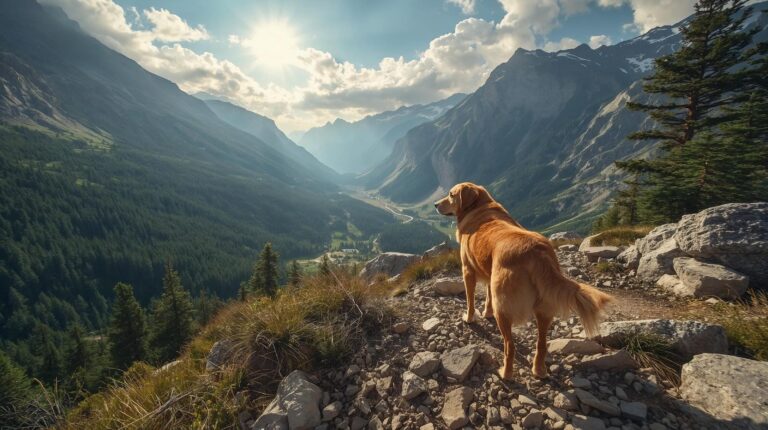
The lesson from dozens of incidents is clear: the mountains demand deep respect and proper route assessment. Divide your hikes according to the company. For dogs, wide forest paths, gentle ridges without precipices and green valleys (such as the routes around Бъндеришка поляна or the path to the hut Демяница). Leave the alpine edges for the days when you are alone or with experienced partners.
FAQs
Can I take my dog to a difficult rock ledge like The Horse?
No, extreme rock edges like Koncheto in Pirin are extremely dangerous for animals. Crossing them requires two free hands to maintain balance and hold onto metal ropes, which is impossible if you are holding a leash.
What should I do if my dog is blocked out of fear on a steep section?
If your dog is blocked in fear, never try to carry him over a cliff edge, as this shifts your center of gravity and could cause him to fall. The only correct solution is to slowly and carefully return to a safe path.
Where around Bansko is it safe to walk a dog?
Safe alternatives for dogs in the mountains are wide forest paths, gentle ridges and valleys. Good examples are the paths to Demyanitsa hut or walks in the lower and flatter parts of Pirin National Park.