

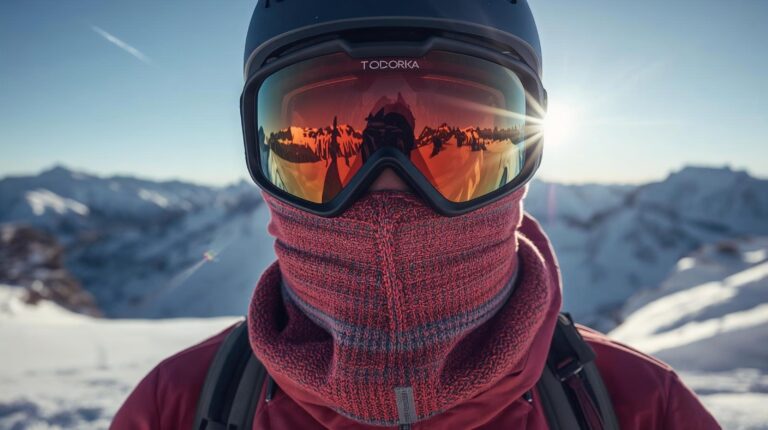
If there's one piece of gear that's absolutely essential for anyone heading to the slopes of Bansko or the alpine peaks of Pirin, it's not the most expensive jacket or the latest model of rifles. It's the humble ski and mountain buff.
This multifunctional scarf (often also called a "bandana", "tube" or "tube scarf") is the real salvation against the merciless Pirin wind, the deceptively strong high mountain sun and the icy cold of the open chairlift to Todorka Peak. In Bansko The weather can change dramatically in less than 15 minutes. A buff is the only accessory that adapts so quickly to your body's needs without taking up any space in your pocket or backpack.
Never use a classic long knitted scarf on the slopes. In addition to retaining moisture and snow, it is extremely dangerous on the lift - its ends can get tangled in the seat mechanism. For skiing and snowboarding, only a closed, seamless tubular scarf (buff) is used.
1. What is the legendary "Buff" really like?
Although Buff® is the name of a specific brand (created by Spaniard Joan Rojas in 1992 specifically for motorcyclists), the word has long become a byword for all seamless cylindrical towels.
In essence, it is a high-tech piece of fabric in the form of a tube that has no seams, does not cause skin irritation and has incredible elasticity. Unlike standard fabrics, modern ski and mountain buff is designed to actively „breathe.“ It wicks sweat away from the skin while creating a micro-insulating layer of warm air right around your neck and face.
2. Why does Pirin require special attention to equipment?
Bansko ski area and the high parts of Pirin (Vihren hut area, Koncheto Ridge and the Plateau) are known for their specific, often harsh microclimate. Here, tourists regularly encounter two extremes:
- Hurricane Winds: Pirin is one of the windiest mountains in the Balkans. The wind on the "Plateau" can lower the perceived temperature (windchill factor) by over 10-15 degrees in seconds.
- Aggressive UV radiation: The white snow cover reflects up to 80% of the sun's rays. Without physical protection of the face, severe burns are guaranteed even at temperatures of -10°C in February.
The buff solves these problems with ease. It is the first „shield“ that stands between your delicate skin and the harsh nature.
3. Fabric Choice: The Key to Comfort in Bansko
When choosing your ski and mountain buff, the material is the most important factor. Not all bandanas are created equal. In 2026, the market offers high-tech solutions for all weathers.
Merino Wool – The Gold Standard
This is the absolute preferred choice for serious mountaineers and freeriders in Pirin in winter. Merino is a natural fiber with unique properties:
- Perfect thermoregulation: Keeps you warm in the bitter cold and cool when you sweat during active climbing (panting).
- Antibacterial properties: You can wear a merino buff for a whole week on the slopes in Bansko without it acquiring an unpleasant odor from your breath.
- Warm even wet: Unlike cotton, merino retains its insulating properties even when it is completely damp from the condensation of your breath.
Synthetic microfibers (CoolNet UV+) – For sunny days
If you plan to ride mostly in March or April, when the sun is above Shiligarnika When it's hot, thin synthetics are your friend. Models with UV protection (UPF 50+) block harmful rays, are extremely elastic, and dry in literally minutes in the air.
Polar and Windstopper (Windproof) – For bitter cold
For the days when the thermometer Banderishka Polyana. shows below -15°C, choose a buff with added PrimaLoft, polar or Gore-Tex Infinium (Windstopper) membrane. These hybrid models have two zones – a thin breathable part in front of the mouth and a thick, windproof panel for the neck and chest.
| Matter | Best for… | Main advantage |
|---|---|---|
| Merino wool | Long ski holidays, Freeride | Does not retain odors, warms wet |
| Synthetics (UV+) | Spring skiing (March/April) | Sun protection, dries quickly |
| Polar fleece / Windstopper | January frosts and storms | Maximum insulation and wind stopping |
When you pull the buff over your nose like a mask, the warm air from your breath rises straight up. If you tuck the fabric tightly under the bottom edge of your goggles, your goggles will fog up instantly. The trick: Always leave at least 1 centimeter of space (bare skin) between the top edge of the buff and the foam of the mask so that air can ventilate freely!
4. Top 5 ways to wear a buff in the ski area
One of the biggest advantages of this accessory is its versatility. Here's how to use it most effectively on the track:
- As a face mask: Pull it high over your nose and ears. Protects against frostbite in strong winds on an open lift.
- Double neck protection: Fold it in half inwards, creating a double layer of fabric. This provides powerful insulation for the carotid artery, helping the entire body stay warm.
- Under the helmet (Balaclava): Thin merino beanies can be slipped over the head, leaving only an opening for the eyes. They keep the skull warm without changing the size and fit of your ski helmet.
- Headband: Ideal for hiking (ski touring) to Bezbog Peak. Protects ears from wind, but allows excess heat to evaporate from the top of the head.
- On the wrist: When you enter the cozy tavern for lunch, just wrap it around your wrist. That way, you won't lose it on the tables and it will always be at hand (and will absorb sweat).
5. Leading brands and manufacturers: What to invest in?
If you have forgotten your ski and mountain buff, along the main Pirin Street in Bansko you will find numerous specialized stores. Here are the world's top brands you can trust:
- Buff (Original): The absolute leader and creator of the concept. They offer the widest range from UV models to thick polar tubes with unique designs.
- Smartwool & Icebreaker: The two best brands in the world for merino wool products. Their buffs are more expensive, but their quality, softness, and durability are unrivaled.
- Black Diamond / Salomon: Focused on mountaineering and skiing, they offer excellent technical models with breathable vents and windproof panels for extreme conditions.
- HAD / PAC: German brands with exceptional tensile strength that often use 100% environmentally friendly and recycled materials (important for the protection of the Pirin National Park).
- Wedze (Decathlon): The best budget price-quality ratio for beginner skiers taking their first steps on the snow.
6. Maintaining your Buff
To keep your ski and mountain buff elastic for at least 5-6 seasons, follow these ironclad rules:
- Wash at 30°C with mild liquid detergent.
- NEVER use fabric softener! It leaves a film that clogs the pores of the microfiber and completely destroys the thermoregulating properties of merino wool.
- Always air dry. Don't throw it on a boiling radiator in your hotel room, as the elastane in the fabric will be damaged.
Conclusion: Why is the investment worth it?
A buff is probably the least expensive piece of professional winter gear, but its impact on your personal comfort in the mountains is enormous. Whether you're queuing for the gondola in the morning or conquering the Pirin peaks in the afternoon, the right choosing a buff for skiing and mountaineering will make your experience in Bansko safe, warm and unforgettable. Choose a high-tech model and enjoy the magic of winter Pirin!