



It is 6° in Bansko now. clear sky

Electric Heating in Bansko (2025): A Complete Guide for Property Owners

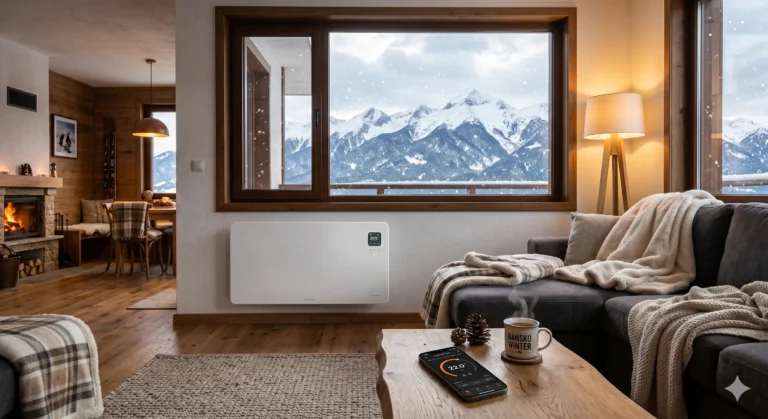
A modern glass Adax electric convector with a digital display showing 22 degrees, mounted on a brick wall in a luxury apartment in Bansko with a view of snow-capped mountains. In the foreground is a smartphone, suggesting smart control.

Bansko is a place with a strong character. The combination of harsh Pirin climate, cozy atmosphere and specific rhythm of life – balancing between busy ski weekends and peaceful weekdays – poses unique challenges for every property owner. Whether you own a holiday apartment in the complexes around the base station of the gondola lift that you rarely visit, or live year-round in the old part of town, the issue of heating is the foundation of comfort.

In 2025, against the backdrop of changing energy prices and strict European eco-design regulations, electric heating appliances are experiencing a true technological renaissance. Forget about the old, inefficient „blowers“ and the heavy oil radiators of the past that crackle and smell of burnt dust. Today's market offers solutions that are intelligent, economical and create a healthy environment.

In this in-depth analysis, the Vbansko team looks at everything you need to know about electric heating in mountain conditions – from new remote control technologies to the real bills you can expect in winter.


Part I: Why is electricity the smartest choice for Bansko?

In mountainous areas, gasification is still not widespread, and heating with solid fuel (wood and pellets), although traditional for local taverns, is becoming increasingly labor-intensive, expensive and environmentally unacceptable for apartments. Clean air in the valley is a priority, and carrying bags of pellets up to the fifth floor is not part of the idea of a full vacation.

Electricity remains the most affordable, clean and easy-to-manage alternative. Until recently, it was considered an "expensive pleasure", but this has changed dramatically with the advent of smart technologies and the directive Ecodesign Lot 20 of the EU.

The technological revolution in a single panel

The basic principle of heating (the Joule effect) is unchanged – 100% of current is converted into heat. The difference today is in management and distribution in this heat.

  1. End of temperature peaks: Old mechanical thermostats had a deviation (hysteresis) of 2-3 degrees. This meant that if you wanted 22°C, the room would heat up to 24°C (waste of energy) and cool down to 20°C (feeling cold). Modern electronic thermostats maintain the temperature with precision up to ±0.1°C, which according to tests saves up to 25% on the electricity bill.

  2. Healthy environment: Модерните нагреватели са капсуловани в алуминиеви моноблокове с Х-образна форма. Те имат огромна топлообменна площ, което им позволява да греят ефективно, без повърхността им да достига екстремни температури. Това предотвратява изгарянето на прах и кислород – огромен плюс за хората с алергии и семействата с деца, които идват в Bansko именно заради чистия планински въздух.

  3. Remote control (IoT): This is the most important feature for property owners in the region. The ability to turn on the heating via your smartphone while leaving Sofia, Plovdiv or Thessaloniki ensures that you will enter a warm home without wasting energy all week.


Part II: Market Overview 2025 – Leading Players in Convectors

The market is saturated, but not all brands offer the same quality and service support. Here is how the main brands that dominate in specialty stores are positioned:

1. TESY (The Bulgarian Technology Leader)

Tesy has long since transcended the role of a "budget choice" and has established itself as one of the innovators in Europe.

  • Strengths: Excellent service network and affordable spare parts. The application myTesy is one of the best-designed, providing real-time monitoring of energy consumption in kilowatt hours - an invaluable feature for cost control.

  • Recommended model: The series FinEco (CN 06) Cloud. It has an extremely slim profile, suitable for the narrow corridors of vacation homes, and a built-in Wi-Fi module.

  • Innovation: The technology AirSafe, available on some models, uses UV light to destroy 98% viruses and bacteria in the air passing through the convector – an excellent option for rental properties.

2. ADAX (The Norwegian Quality Standard)

Norway has a climate similar to the harsh winters in Pirin, so their devices are a benchmark for durability.

  • Strengths: Design and reliability. Norwegian heaters operate silently and have a long service life.

  • Recommended models:

    • Adax Neo: Iconic, award-winning design. Available in a variety of colors to match any interior.

    • Adax Clea: Premium series with a glass front panel. The glass gives a mirror effect that looks extremely luxurious in modern mountain chalets, and the lower surface temperature makes it safe for children.

  • Connectivity: Adax's second generation Wi-Fi thermostats use Bluetooth for easy connection and support integration with Google Home.

3. AIRELEC (The French philosophy of „soft warmth“)

The French school of heating emphasizes comfort.

  • Strengths: Their convectors (especially the Tactic and Basic Pro series) are known for not drying out the air. In Bansko, where winter air is naturally drier, this is an important advantage for sleep quality.

  • Reliability: Many users report trouble-free operation of Airelec appliances for over 15 years.

4. BOSCH (German engineering thought)

Bosch has aggressively entered this segment with solid and safe appliances.

  • Strengths: The model Heat Convector 4000 is a versatile fighter. It has a high class of moisture protection (IP24) and protection against tipping, making it the safest choice for bathrooms and wet rooms.


Part III: For connoisseurs – The effect of „real steam“

Many homeowners in Bansko are used to the comfort of district heating, but want to escape the commitment of pellets, wood or boiler maintenance. If you are looking for exactly this feeling – massive radiators that radiate heat long after they are turned off and do not create air drafts – standard convectors may not be enough.

Here they come to the rescue inertial (fluid) radiators. They are the best alternative to foreign brands like Rointe, which do not have an official representation and service in Bulgaria.

How do they work and why are they more comfortable?

Unlike a regular convector, which is a „hollow box with rheotan“, these devices are filled with a special thermal oil or fluid (glycol), and the more expensive models have ceramic or cast iron cores. They heat their casing (often aluminum) and it radiates heat in all directions – just like radiators in a thermal power plant.

The advantages of "soft heat":

  1. Thermal inertia: Even when the thermostat turns off, the radiator remains hot for another 20-40 minutes, keeping the temperature smooth, without sudden drops.

  2. Without drying: Since they do not rely on intense air circulation, they preserve the natural humidity in the room.

  3. Silence and comfort: The feeling is of solid, radiant warmth.

The best options on the Bulgarian market for 2025:

1. French Classics: Atlantic & Airelec

Instead of taking the risk of importing exotic brands for which spare parts are lacking, look for models with thermal fluid on Atlantic (like the series Galapagos or Nirvana) or radiant radiators of Airelec (series Aixance). They offer the same comfort as the Spanish analogues, but with guaranteed service and availability in specialized Bulgarian stores.

2. DIY Luxury: Aluminum Gliders + Electronics

This is a hit among interior designers and people looking for a unique look.

  • The solution: You purchase high-end Italian aluminum gliders (brands such as Global or Kaldo), which have an impeccable design. They are equipped with a specialized electric heater with a digital thermostat (e.g. Polish brands MOA or Terma).

  • The result: You get a designer radiator that looks and heats like a heater, but plugs directly into the outlet.

  • The plus: You choose the number of fins, the power and the color. Plus, if the heater breaks down after a few years, you only need to replace it (an investment of around 100-150 BGN), not the entire body.

Important for skiers: Keep in mind that inertia radiators heat the room slower (about 30-40 min to full power) compared to light convectors (5-10 min). They are perfect for permanent residents or if you use Wi-Fi control for pre-switching.


Part IV: The Mathematics of Heat – How to Size Appliances?

The most common mistake is buying a weak appliance for the purpose of initial savings.

The golden rule: A weak appliance runs continuously, cannot reach the set temperature and consumes more electricity. A powerful appliance reaches the temperature quickly, switches off and operates in maintenance mode.

In Bansko, winter temperatures often drop below -15°C. Standard formulas of „watts per square meter“ are risky here. A professional approach requires a calculation based on volume и insulation.

The formula for your mountain property:

Power (W) = Room volume (m³) x Loss coefficient

Loss coefficient (K):

  • 30 W/m³: For new buildings with excellent insulation (10cm+) and triple glazing.

  • 40-45 W/m³: Standard construction (brick, double glazing, partial insulation) – typical for most complexes in the Gramadeto area.

  • 50-60 W/m³: Old houses, ground floors with stone masonry or attic spaces.

Sample sizing table (for a ceiling height of 2.60 m):

Room Area (m²) Volume (m³) Power required (Good insulation) Power Required (Average/Poor Insulation) Recommendation
Small bedroom 10-12 m² ~30 m³ 1000W 1500 – 1800W Airelec Tactic 1500W
Large bedroom 15-18 m² ~45 m³ 1500W 2000 – 2500W Tesy CN05 2000W
Living room + Kitchen 25 m² ~65 m³ 2000W 3500 W (2 units recommended) 2x Adax Neo 1400W
Bathroom 4-5 m² ~12 m³ 400W 600 – 800W Bosch HC 4000 (IP24)

Part V: Economic Analysis – How much will winter cost?

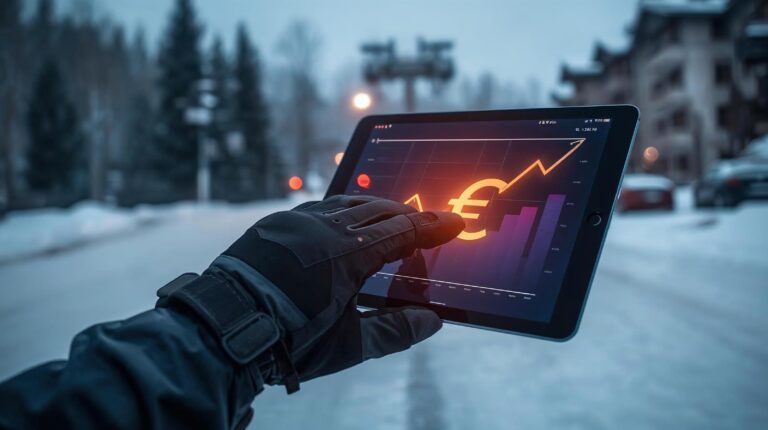
The question that worries everyone: "How much electricity does it consume?" The answer depends not on the power of the device, but on the heat loss of the room. The device simply compensates for the lost heat.

For a vacation property that is used intensively on weekends and holidays (30-40 days per season), electric radiators are more economically justified than heat pumps, whose high investment pays off too slowly with such operation.

Estimated accounts (based on 2025 prices):

For a 20 m² room maintained at 22°C during the day and 18°C at night:

  1. Scenario A (Perfect isolation): ~280-300 kWh/month. Estimated bill for the room: ~65-75 BGN.

  2. Scenario B (Standard Apartment): ~550-600 kWh/month. Estimated bill: ~120-130 BGN.

  3. Scenario B (No insulation/Stone house): ~1000+ kWh/month. Bill may exceed 220 BGN. just for this room.

How to reduce the bill by up to 30%?

  • Weekly schedule: Set the convectors to "Anti-freeze" mode (7-10°C) when the home is empty. This prevents moisture and mold, but consumption is minimal.

  • Adaptive start: The smart radiator "learns" how long it takes to warm up the room. It will decide when to turn on to welcome you warmly, without working unnecessarily for hours.

  • "Open Window" function: When you ventilate in the morning, the sensors detect a sharp drop in temperature and stop the unit. This way, you don't heat the street.


Part VI: Practical installation tips

  1. Location is key: The only correct installation location is under the window. The rising warm flow creates a „thermal curtain“ that neutralizes the cold coming down from the glass.

  2. Legs or wall? If you plan to move the appliances, make sure you purchase a set of feet (for Adax and Airelec, they are often sold separately).

  3. Safety: For the bathroom, be sure to look for an index IP24. Never cover electric radiators with clothing or ski equipment for drying – this leads to overheating and a risk of fire.

  4. Electric shocks: The network is sometimes unstable during busy periods. It is a good idea to invest in surge protection power strips to protect the electronics of smart convectors.


Conclusion

Investing in heating in 2025 is a matter of balance between speed of response and thermal comfort.

  • If you are visiting the property only for the weekend and want heat immediately upon arrival – opt for the fast convectors of Addax or Tesy.

  • If you live there long-term and are looking for the comfort of classic heating – invest in fluid radiators (Atlantic) or assemble your own system with aluminum gliders.

The key is in smart management – the ability to warm your home via your phone while traveling along the curves of the Borderlands is the greatest luxury that technology has given us.