



Based on a large-scale analysis of incidents over the past three decades (from 1994 to the end of 2025), this article reveals the anatomy of risk. Why, despite the evolution of equipment, GPS technology and the introduction of helicopter rescue, safety in Pirin remains a challenge? The answer lies at the intersection of unique geology and the psychology of modern man.
I. Pirin is different: Geology of the "marble slide"„
To understand why people die in Pirin, we must first understand the mountain itself. Unlike the rounded ridges of the Balkan Mountains or the forested labyrinths of the Rhodopes, Pirin has a distinctly alpine character. But it is not the height that is the main factor, but the structure of the rock.
The dominant peaks – Vihren, Kutelo, Banski Suhodol – are made up of marble. In summer, this stone is beautiful and shiny, but it has a treacherous smoothness. In winter, marble becomes a death trap due to its specific thermodynamics. Unlike granite, marble does not hold snow in the same way; it forms a surface with practically zero coefficient of adhesion.
II. Chronobiology of risk: When is the mountain most dangerous?
One of the most interesting conclusions from the 30-year analysis is that the risk is not distributed uniformly. There are "windows of death" directly related to the physics of snowpack and solar radiation.
1. The morning „concrete“ trap
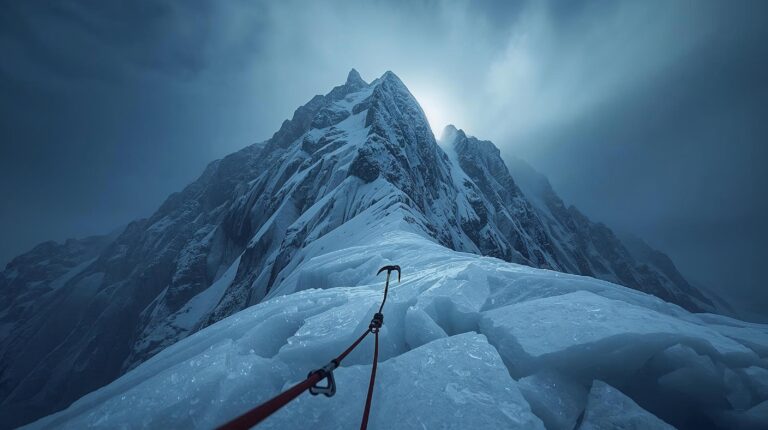
Early in the morning, before sunrise (between 05:00 and 08:00), the snowpack is in a state called "concrete". This is exactly what has proven fatal in a number of cases of Jamjiev's Edge. When the snow is frozen to the point of ice, a single misstep makes self-arrest with an ice axe nearly impossible, even for experienced climbers. The speed of a fall on such a slope is fatal within seconds.
2. The Afternoon Firn (The December 2025 Case)
The second critical peak is in the late afternoon. The incidents in December 2025 illustrate the insidiousness of temperature inversion. During the day, the sun softens the upper layer, creating an illusion of safety. But as soon as the sun hides behind the edge (around 3:30 p.m. in winter), this wet layer freezes instantly. The tourist, who until a few minutes ago had been walking confidently, suddenly finds himself on „glass.“.
III. The Paradox of Equipment: The False Sense of Invulnerability
The period 1994–2025 witnessed the so-called „Safety Paradox.“ With the introduction of better equipment – Gore-Tex membranes, carbon poles, ultralight crampons and avalanche backpacks (ABS) – the number of accidents did not decrease proportionally. Why?
Technology often creates a false sense of immortality. The modern mountaineer takes risks that exceed his technical skills, relying on equipment to „save“ him. Statistics show a change in the profile of victims:
- Before (90s): The victims are mainly people with poor equipment who underestimated the cold.
- Now (2015–2025): The victims are well-equipped men (25-45 years old) in good physical shape who enter extreme terrain without the necessary experience in assessing snow conditions.
IV. Avalanche Roulette and Freeride Culture in Bansko
Pirin is the mountain with the highest avalanche danger in Bulgaria. The steep gullies (couloirs) act as natural funnels. The wind carries the snow and piles it up in these gullies, creating tense "snowboards".
The area of Todorka Peak and "Cashite" is the epicenter of freeride culture. Here the conflict is between the desire for adrenaline and the laws of physics. The incidents of 2021 and 2024 show that even an avalanche device (Pips) does not guarantee survival if the snow mass is huge or if you are at the bottom of a closed chute.
V. The Battle for the Golden Hour: The Air Ambulance Revolution
For many years, mountain rescue in the region of Bansko relied entirely on ground operations. In Pirin, without a helicopter, transporting a casualty from the Kazanite to the nearest hospital takes between 6 and 10 hours of hard physical labor for the rescuers from MSS.
The term „"Golden Hour"“ is critical – this is the time, in which the chance of survival is highest. With the full implementation of the system HEMS (Helicopter Emergency Medical Service) By the end of 2025, the situation had changed dramatically. Helicopters had reduced response times to minutes, but they had their limitations – they could not operate in hurricane-force winds or zero visibility.
VI. Profile of the „Black Statistics“ (1994–2025)
The table below synthesizes the main risk factors derived from operational summaries for the last 30 years in the Pirin region.
| Indicator | Characteristics |
|---|---|
| Most at-risk group | Men, 25–45, from big cities or foreigners |
| Main reason | Slipping on a marble slope / Traumatism |
| Critical period | December – March (Winter) and July – August (Storms) |
| Location "Champion"„ | Jamdzhievi Rocks, Todorka Couloirs, Koncheto Ridge |
VII. How to survive: Expert safety tips in Pirin
Data analysis is not intended to discourage you from the mountain, but to prepare you. Here are three golden rules for anyone planning a hike above Bansko:
1. Skills precede inventory
Don't buy the most expensive crampons unless you've taken a course in self-holding with an ice axe. The technique of stepping on marble is specific – it requires precision and an understanding of the center of gravity.
2. Follow the Mountain's "Biological Clock"
In Pirin, an early departure is a must, but an afternoon return is even more critical. Plan your route so that you are below the forest belt before the sun sets and the temperatures drop sharply.
3. The psychological brake
The greatest skill is to give up. If the conditions on Jamdjiev's Edge seem "glassy," turn back. The mountain will be there tomorrow. Your ego is not worth the risk of filling the statistics.
In conclusion, safety in Pirin is a personal responsibility that no technology can fully replace. Helicopters are here, gear is lighter than ever, but common sense remains the most important tool in your backpack. Be sensible, respect the Marble Trap, and enjoy nature responsibly.
The article is based on a multidimensional analysis of archival data, operational summaries of the MEPS and media chronicles for the period 1994–2025. The information is provided for educational purposes.