



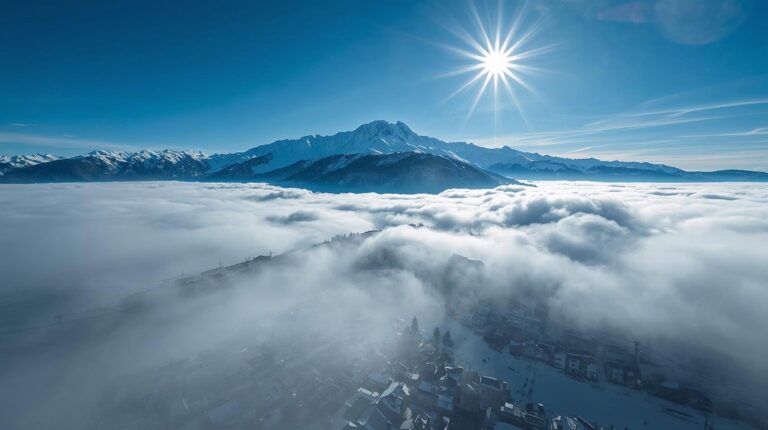
The analysis of the modern capacity of Bansko reveals one of the greatest paradoxes in Eastern European tourism. In just two decades, the quiet Renaissance town has transformed into a large-scale international resort, but this change has come at a high price. Today, the city is an arena of collision between the unlimited ambitions of the construction sector and the physical limitations of the mountain.
In this article, we will examine the “invisible” statistics, the problem of so-called ”ghost hotels” and seek an answer to the question: Is there a sustainable future for Bansko outside the winter ski season?
Bansko's Hidden Capacity: Statistics vs. Reality
How many tourists can the city actually accommodate? The answer depends entirely on which statistics you look at. The official NSI data and the reality of the property market diverge drastically, creating an illusion of control.
The main problem is not the categorized hotels, but the huge "gray zone" formed by the apartment complexes (aparthotels) built en masse between 2003 and 2008. Here's what the imbalance looks like in numbers:
| Indicator | Official data | Real picture |
|---|---|---|
| Bed base | ~25,000 beds | Over 60,000 beds |
| Ratio | Balanced | 4 beds per 1 local resident |
| Property prices | Stable | Collapse from €2100 to €350/sq.m. |
The Infrastructure “Thrombus”: The Funnel Effect
The imbalance in the capacity of Bansko is felt most strongly in the morning in front of the starting station of the lift. Here is a simple but inexorable math that is often ignored by investors:
- Search: On a peak day, there is a potential for over 25,000 active skiers.
- Offering: The cable car has a theoretical maximum of 2,400 people per hour.
- Result: It takes over 10 hours for everyone to get on, which in reality means queues of 2 to 3 hours.
The myth of the “Second Booth”
It is often said that a second gondola will solve the problems. However, experts warn that this will move the “plug” from the city to the mountains. The slopes have a total length of about 70 km and have their own safety limit. If we take 20,000 people up in one hour, the slopes will become overcrowded and dangerous to ride.
Chronicle of a foretold disaster
Back in 2010, when the construction bubble began to burst, architects and urban planners were warning that the urban capacity of Bansko has been exceeded. The sustainability formula, which was ignored at the time, was: an optimum of 3,000 skiers per day and 5,000 beds in the city. Today we have exceeded these figures by between 400% and 500%.
Concrete skeletons: What if they are finished?
The city is dotted with so-called “ghost hotels” – buildings in rough construction, abandoned after the withdrawal of British and Russian investors. The question is often asked: “Why don’t they finish them?” If hypothetically these buildings were put into operation, the consequences would be catastrophic:
- New pressure: Adding 20,000 to 40,000 new beds.
- Water collapse: The treatment plant will not withstand the load, which threatens the ecology of the Glazne and Mesta rivers.
- Energy crisis: The electrical grid will fail under a load it was never designed for.
The Future: Digital Nomads and 4 Seasons
Since the mountain cannot “grow”, the town must adapt. The salvation for Bansko’s economy is not in more ski tourists, but in diversifying the flow.
In recent years, Bansko has established itself as an unexpected European hub for digital nomads. This is a working model because these visitors stay for months, spend money in the local economy, but work during the day and do not load the lift during peak hours. The combination with summer festivals, the mineral springs in the village of Banya and mountain biking is the only way to utilize the huge building stock without destroying nature.