


Why do cows climb so high?
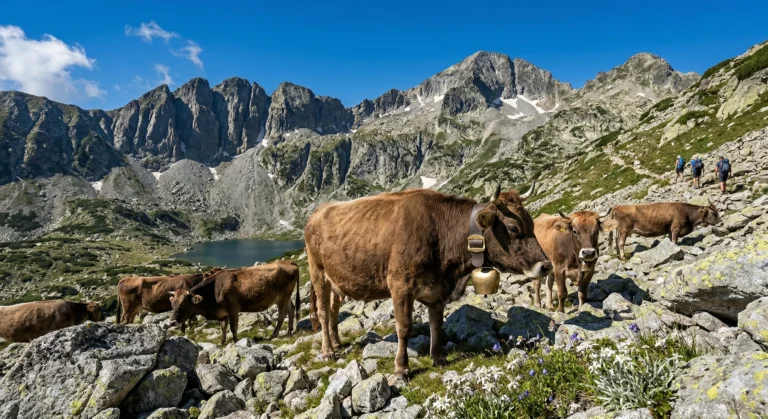
The presence of cows above 2000 meters is not a tourist attraction, but a centuries-old agricultural practice known as transhumance (mobile) livestock farming. During the long, hot and dry summer months, the pastures in the lowlands around Bansko, Razlog and Dobrinishte are scorched by the sun. The grass turns yellow and the food for the animals decreases dramatically.
To save their herds and provide them with high-quality food, local farmers take them high into the alpine zone. There, thanks to the melting of the last snowdrifts and the cooler climate, the grass remains juicy, green and exceptionally rich in herbs throughout August. The animals spend the hot summers in the coolness, enjoying crystal-clear glacial water and peace.
Who are the “Pirin” cows?
The animals you will encounter high in the mountains are not the usual farm breeds you are used to seeing on modern farms. They are usually crossbreds adapted to the harsh conditions – often with genes from Bulgarian Brown cattle or other autochthonous breeds.
These “Pirin Alpine Cows” are extremely tough. They are smaller in stature, with an exceptionally strong bone system and an incredible sense of balance. If you watch them moving along the steep, rocky scree around Todorka Peak or along the trails to Muratovo Lake, you will be amazed by their agility – they step on the rocks with the confidence of mountain goats.
Free grazing in the alpine zones plays a critical role for the biodiversity of Pirin National Park. Cows and horses act as natural „mowers“ that keep the alpine meadows open. Without their grazing, these open spaces would very quickly be taken over by the aggressive mountain juniper and squat, which would lead to the disappearance of dozens of species of rare alpine flowers and herbs. In addition, the animals fertilize the soil completely naturally.
Where around Bansko can you meet them?
The chances of encountering free-ranging flocks are high if you choose some of the classic summer routes over the city. They can most often be spotted in the following places:
- Around Vihren hut and Banderishka Polyana.: Often, herds graze literally meters from the marked trails, enjoying the grass by the Banderitsa River.
- The Murat Lakes Circus: The area is rich in water and is a favorite place for grazing during the hot August days.
- Demyanitsa River Valley: On the way to Demyanitsa hut and Tipitsi, the vast green spaces shelter numerous herds.
- Sleeping field: Although better known for its semi-wild horses, cows can often be seen there, taking advantage of the lush meadows.
Safety rules when meeting a herd
Although cows may seem calm and peaceful, the mountain is their home, and you are just a guest. To avoid unpleasant incidents during your holiday in Bansko, follow a few basic rules:
Caution: How to behave around animals:
- Don't approach the little calves: The maternal instinct in these animals is extremely strong. If a cow decides that you are threatening her calf, she may attack.
- Beware of guard dogs: The flocks are usually guarded by huge Karakachan dogs. If the dog barks at you, stop, do not wave your sticks and wait for the shepherd to call him back. If you have a pet, keep it on a short leash!
- Go around them calmly: Don't try to walk straight through the center of the herd. Make a slight arc, speak in a normal tone, and don't make sudden movements.
- Do not feed them: Human food is harmful to them. They have a whole mountain of fresh herbs at their disposal.
The taste of the mountains in local taverns
The result of this free grazing at over 2000 meters is not only a beautiful sight for tourists. The herbs and clean water are transformed into exceptionally high-quality, thick and aromatic milk. It is from this that the famous local cheeses, yellow cheeses and strained yogurt are made, which make the culinary experience in the taverns of Bansko so unique.
The next time you are climbing the peaks of Pirin and hear the clatter, stop for a moment. Enjoy the sight of these tough animals that have merged with the landscape. They are part of the soul of the mountain, a symbol of resilience and a reminder of the deep connection between man and nature in this harsh but beautiful region.