

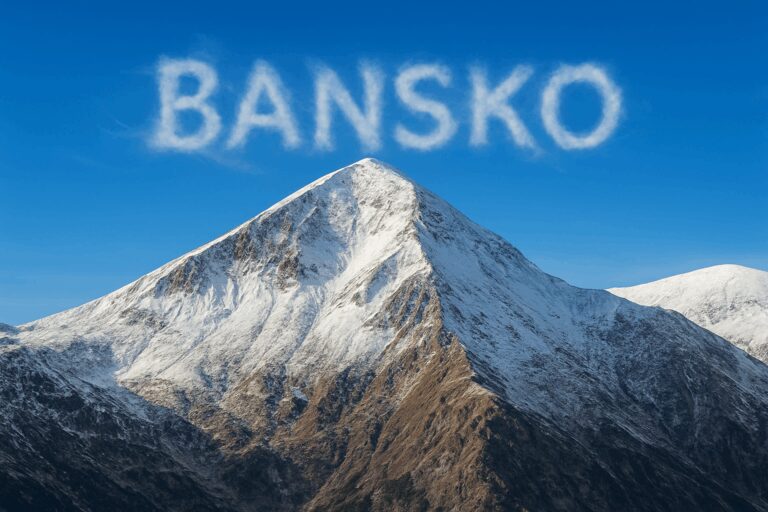
Pirin is not just a mountain, but a world of contrasts. For anyone who looks up from the streets of Bansko, the jagged horizon is an invitation to adventure. In this guide, we will explore the most iconic peaks in Pirin – from the marble throne of Vihren to the granite fortresses of Polezhan.
This material is a synthesized analysis of the high mountain relief, based on current geodetic data and tourist experience. Here you will find everything you need to know about the morphology, heights and character of these stone giants that make Pirin one of the most dramatic mountains on the Balkan Peninsula.
Introduction to Orography: Marble vs. Granite
When we talk about peaks in Pirin, we need to understand the basic division of the mountain. It is the scene of a geological battle between two materials:
- The Marble Section (Northern Pirin): Here are the highest and sharpest forms. The karst relief does not retain water, the rocks are white, and the edges are razor-sharp.
- The granite share: To the south and east, the peaks become massive, dark and rounded, often covered with moraines. This is the realm of lakes, as the granite holds water on the surface.
💡 Did you know that?
The names of many peaks in Pirin are the result of centuries of evolution. From Turkish names such as “Eltepe” (Vihren) and “Aygidik” (Kamenitsa) to descriptive Bulgarian names, the toponymy tells the history of the region.
The Marble Giant: Lords of the Northern Divide
The most dramatic landscapes visible from Bansko and the Razlog Plain belong to the Marble Plain. Here the altitude density is the greatest.
Vihren Peak – The emblem of Pirin (2914 m)
Vihren is the undisputed leader. With a height of 2914 meters, it is the third highest peak in the Balkans. Its structure is a classic pyramid, shaped by glaciers during the Pleistocene.
Its slopes are asymmetrical:
- The East Wall: A sheer marble abyss (300+ meters) towards the Great Kazan circus.
- Jamdzhievi Rocks: A sharp and technical edge from the north.
- The Kingdom of Edelweiss: The hard-to-reach crevices of Vihren are a refuge for this rare symbol of mountaineering.
Kutelo Peak – The Two-Headed Guardian (2908 m)
Just meters from Vihren, separated from it by the windy saddle The Sling, stands the second highest peak – Kutelo. It is not just a point, but an elongated horizontal ridge with two main elevations (Kutelo I and II). Kutelo serves as a gateway to the most extreme rock phenomenon in Bulgaria.
Banski Suhodol and the phenomenon “The Horse”
Continuing northwest, we reach peak Banski Suhodol (2884 m). Its name is a reference to the fact that the entire massif is “dry” – water instantly absorbs into the karst. Its northeastern wall is a formidable sight, descending to the circus of the same name.
Koncheto Ridge – although technically a saddle, this is the most famous site after Vihren. The rocky ledge connecting Kutelo and Banski Suhodol is only 40-50 cm wide in places, with chasms on both sides. This is the most exciting test for anyone who sets out to conquer the peaks of Pirin.
The Granite Lords: Polezanski and Kamenishki Divisions
The change in geology also changes the feeling. Here the peaks are heavier, more massive, and give a sense of eternity.
Polezhan Peak (2851 m)
This is the highest granite peak in the mountain. The name “Polejan” perfectly describes its shape – unlike the sharp marble needles, it has a wide, “recumbent” peak, covered with granite slabs. Its old name “Manger Tepe” (Coin Peak) comes from the specific ringing of the stones under the shoes, resembling the ringing of coins. From here you can discover the best 360-degree panorama in Pirin.
Kamenitsa and Jangal
- Kamenitsa Peak (2822 m): A true fortress in the southern part of the mountain. Massive, rocky and difficult to access, it is a challenge for experienced mountaineers.
- Jangal Peak (2730 m): The aesthetics of the shape. This peak, located next to Popovoto Lake, is one of the most photographed because of its sharp, pyramidal shape, resembling the tip of a spear.
Comparison table: Top 10 Peaks in Pirin
| Rank | Peak | Height (m) | Rock type | Location / Note |
|---|---|---|---|---|
| 1 | Vihren | 2914 | Marble | Firstborn of the mountain |
| 2 | Cutelo | 2908 | Marble | To the Horse |
| 3 | Banski Suhodol | 2884 | Marble | Visible from Bansko |
| 4 | Polezhan | 2851 | Granite | Highest granite |
| 5 | Kamenitsa | 2822 | Granite | South Pirin |
| 6 | Small Polezhan | 2822 | Granite | To Golyam Polezhan |
| 7 | Bayou holes | 2820 | Marble | Above the Koncheto shelter |
The Guards, Todorka and the Hidden Treasures
Besides the giants, there are peaks that are an integral part of the Bansko landscape:
- Todorin Peak (Todorka) – 2746 m: The symbol of ski Bansko. The only massive peak in its hill, offering a direct view of Vihren.
- Guards: A chain of sharp, jagged rocks (Big and Small Guard), which live up to their name, closing the cirque of the Gazeya Lakes.
- Sinanitsa (2516 m): Known as the “Cleft Peak” because of its characteristic ridge. Built of beautiful pink granite and located above the lake of the same name.
The Saddles: The Gates of the Mountain
The peaks do not exist in isolation. They are connected by saddles, which act as “gates”.
Demirkapiya (Iron Gate) is the most important of them. Located at 2480 m, it is a historical pass through which wine caravans from Melnik to Razlog once passed. Another important point is Begovishka Gate, connecting Begovitsa hut with Tevno Lake.
Are you ready to conquer the peaks?
Pirin offers routes for both beginners and experts. Prepare well, follow the forecast and respect the mountain.