

Ancient Roots: From Thracian Fortresses to Sheep Breeding
Before it became fashionable Bansko ski resort, the area was home to ancient civilizations. Archaeological excavations have revealed over 100 sites, most notably the Thracian fortress of Kali Sita. These early settlers recognized the strategic importance of the location, protected by the mountains and rich in resources.
The first official mention of the settlement in Ottoman records dates back to 1576, where the local inhabitants were recorded as "jelepkeshani" (large sheep breeders). During this period, Bansko's economy was based on three pillars:
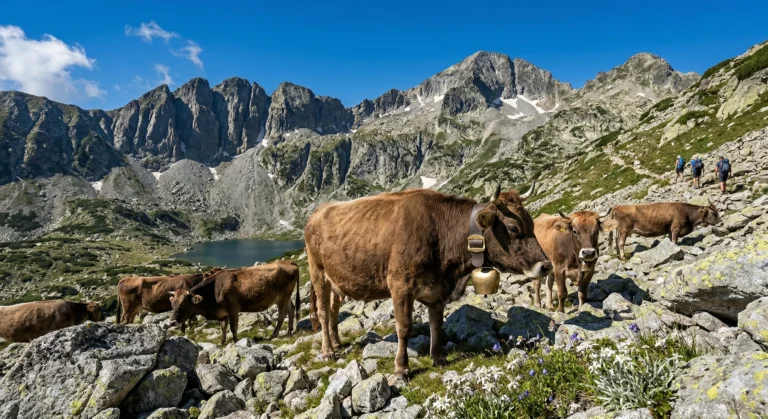
- Livestock: Thousands of sheep grazed on the alpine pastures of Pirin.
- Agriculture: Utilization of the fertile valley of the Mesta River.
- Craftsmanship: Development of specific local schools in woodcarving and blacksmithing.
The Cultural Flourish and the Bulgarian Renaissance
During the 18th and 19th centuries, Bansko not only developed, it flourished as an economic center. Local merchants, known for their enterprising spirit, organized caravans to Budapest, Vienna, Leipzig and London. This contact with Western Europe brought not only wealth but also new ideas to the city.
Bansko is the birthplace of personalities who changed the fate of Bulgaria. It was here that he was born Paisius of Hilendar, the author of "Slavic-Bulgarian History", laid the foundations of our national self-consciousness. The city gives the world and Neophyte Rilski — the patriarch of Bulgarian teachers, as well as the great poet Nikola Vaptsarov.
Did you know that?
The old bathhouses were built like real fortresses - with thick stone walls, heavy iron gates and secret entrances to protect the wealth of local merchants from robber attacks.
The transition to modern winter tourism (1950 – 2000)
Until the mid-20th century, skiing in Bansko was more of an exotic hobby for a few enthusiasts. In the 1980s, the town still retained its rustic appearance. The first organized attempts to develop the ski area in the area of Mount Todorka started timidly, but the true potential of the Pirin Mountain remained untapped until the end of the millennium.
The turning point came in 2000, when public discussions began on a large-scale ski area. Despite serious environmental debates and opposition from the NGO sector, in 2001 Minister Evdokia Maneva signed the key approval of the EIA. This marked the beginning of the concession granted to the company "Yulen" AD on an area of nearly 100 hectares.
The infrastructure boom (2001 – 2005)
The investment pressure during these years was unprecedented. In 2002, the Austrian giant Doppelmayr Construction of the gondola lift, which became the "heart" of the resort, began in February 2003. Its commissioning in February 2003 eliminated the need to transport tourists by minibuses and opened the doors to mass tourism.
| Infrastructure | Capacity / Length |
|---|---|
| Gondola | ~ 2000 people/hour |
| Total length of the tracks | ~ 75 – 100 km (incl. ski trails) |
| Area elevation | 1000 m – 2560 m |
The mysteries surrounding ownership and foreign investments
The question "Who owns Bansko ski resort? has been the subject of much discussion. Over the years, the name of Tseko Minev (president of the Bulgarian Ski Federation) has often been associated with the management of "Yulen". However, in 2018, the Austrian ski legend Mark Girardelli officially announced that it was the majority owner, purchasing the site from an international consortium.
In parallel with the ski area, the property market in Bansko experienced a veritable „Klondike“ between 2004 and 2006. Investments worth over 400 million euros poured into the town, mainly from British and Irish buyers. The municipality issued hundreds of building permits, transforming the meadows around the lift’s base station into densely built-up apart-hotels.
Bansko today: World capital of skiing
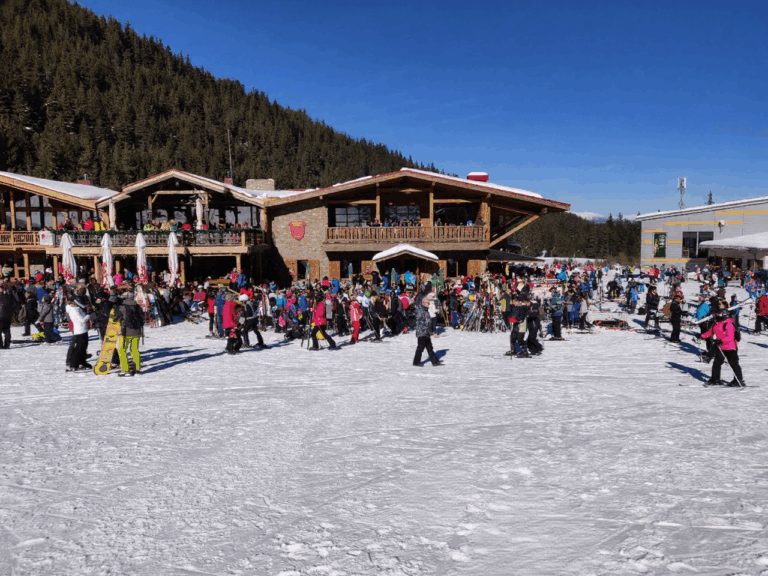
Today, Bansko regularly hosts rounds of the Alpine Skiing World Cup. With a capacity exceeding 70,000 beds in the town and up to 120,000 in the entire valley, the resort is an economic driver in Southwestern Bulgaria. The 2026 season continues to offer excellent conditions from December to mid-April, supported by a powerful artificial snow system.
Expert Council for 2026
If you are planning a visit to Bansko ski resort, use the resort's mobile app to track lift queues in real time. The best time to ride is between 08:30 and 11:00 in the morning.
Conclusion
The transformation of Bansko from a crafts village to a modern ski metropolis is the result of a unique combination of natural resources, political will and large-scale capital. Despite the challenges, Bansko manages to preserve its spirit, offering both five-star luxury and cozy taverns with a century-old history.

 English (UK)