

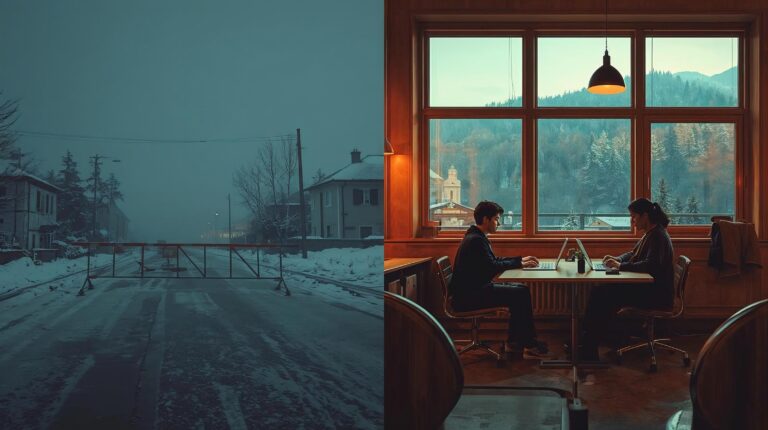
Analysis Summary: We investigate how a mono-structured tourism economy responded to the collapse of international markets and how the crisis accelerated the transformation of Bansko in a year-round remote work hub.
On the eve of the storm: Bansko in early 2020.
The city enters the year with the confidence of an established leader. Economic indicators for January point to record growth, supported by a steady flow of tourists from the UK, Russia and the Balkans. No one suspects that Bansko will become “patient zero” of the economic blockade in Bulgaria.
The World Cup Triumph (January 2020)
Between January 24 and 26, Bansko hosts the Audi FIS Ski World Cup. The event generated massive revenue and media coverage in front of more than 124 million viewers. The triumph of stars like Mikaela Shiffrin demonstrated the city's capacity for world-class logistics. This peak makes the subsequent collapse in March all the more dramatic.
The Epidemiological Crisis: “City Zero” and the Complete Blockade
On March 17, 2020, the government made an unprecedented decision: Bansko 2020 becomes the first and only city in Bulgaria under a full 14-day quarantine. The ski area is closed immediately, and the entry and exit arteries are blocked by checkpoints.
- Evacuation: Thousands of foreigners were transported via "green corridors" under police escort.
- Economic shock: The loss of the strongest weeks of the season leads to massive staff layoffs.
- Reputational risk: Labeling the city as a “hotbed” requires months of marketing efforts to rebuild trust.
Bansko Property Market 2020: The Bottom as a Golden Opportunity
The real estate sector is experiencing a catharsis. The combination of Brexit and COVID-19 is forcing British property owners to liquidate their assets, leading to historically low prices.
| Property type | Price range (2020) | Buyer profile |
|---|---|---|
| Studios | €8,000 – €12,000 | Bulgarian investors |
| Two-room apartments | €15,000 – €25,000 | Personal use (Second home) |
| Houses in the region | Varying | Seeking isolation and a yard |
In the second half of Bansko 2020 A new buyer profile is emerging – the Bulgarian seeking “refuge” from urban lockdowns. The focus is shifting to properties with low maintenance fees and the possibility of long-term residence.
The Pirin Court Decision: The End of an Investment Era
On April 29, 2020, the Supreme Administrative Court (SAC) issued a final decision (No. 4236). The court canceled the plans for a change in the management of Pirin National Park, which envisaged expanding the ski area without an environmental assessment.
This legal decision effectively “froze the excavators” and forced investors to redirect their capital towards renovating existing sites instead of extensive construction in the mountains.
Digital Nomads: The New Economic Force
Paradoxically, but Bansko 2020 has become a magnet for remote workers. While hotels were empty, coworking spaces were filling up with professionals from all over Europe fleeing the severe lockdowns in major metropolises.
Start of Bansko Nomad Fest
In June 2020, the first Bansko Nomad Fest. The event brought together over 100 digital nomads and laid the foundations of the city's international reputation as the "Nomad Capital of Europe.".
Cultural sustainability and new sites
Despite the crisis, 2020 marked the end of an era in culture with the death of Dr. Emil Iliev, the founder of the Jazz Festival. However, the 23rd edition took place under strict measures, proving the vitality of the local community.
Among the significant renovations during the year, the following stand out:
- Kempinski The Spa: Complete modernization of the thermal area.
- Coworking Bansko Lounge: Opening a new socializing space in December.
- Hotel Zara: Repositioning in the premium culinary segment.
Conclusion: Lessons from Bansko 2020
The 2020 crisis forced Bansko to free itself from the illusions of endless growth of mass tourism. The city discovered its new identity – more sustainable, technological and year-round. Today we look back at Bansko 2020 not as a year of losses, but as the moment when the mountain met the digital future.
 English (UK)