


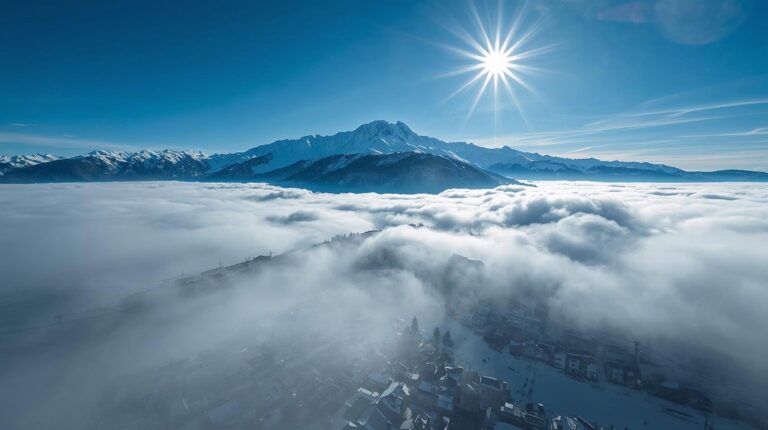
Many tourists make the mistake of checking the weather forecast for the city and thinking that the same thing awaits them up there. The truth is that the climate of ski area Bansko is a unique microworld, dictated by the harsh nature of Pirin and… the breeze of the White Sea.
To avoid ending up with a thick jacket in 10-degree heat or with frozen glasses in strong winds, it is important to understand the three main phenomena of local weather: Temperature inversion, "Todorka's Wind" and the shift of seasons.
Phenomenon #1: Temperature inversion
This is the most common surprise for beginners in Bansko. Pirin is a classic example of a mountain where in winter (especially January and February) the rule often applies: „"The higher, the warmer"“.
- What's happening? The city (900 m above sea level) is shrouded in thick fog and cold, and the thermometers show -5°C. Tourists hesitate whether to go up at all.
- Up on the track: After just one intermediate lift station, you break through the clouds. Banderishka meadow (1620 m) the sun is shining brightly and the temperature is +2°C. This is a classic inversion.
Phenomenon #2: Todorka's Wind
The biggest enemy of skiers in Bansko is not the lack of snow, but the wind. The specific relief of Pirin makes the higher parts (especially around Todorka Peak) extremely windy.
How does wind affect riding?
| Wind speed | Effect on the ski area |
|---|---|
| Up to 15 m/s | The elevators are operating normally. The feeling of cold (Windchill) is increasing. |
| 15 – 20 m/s | The "Platoto" chairlift and the "Kotvata" towpath stop. The chairlift to Todorka Peak also stops frequently. |
| Over 25 m/s | The cable car stops (The GondolaThe ski area may remain completely closed. |
When is the best snow? (Seasonality 2026)
Climate change has shifted the active winter season forward by about a month. If 20 years ago December was guaranteed to be snowy, today the statistics are different.
❄️ December (The Risky One)
The snow cover is often artificial. The temperatures are low, allowing the guns to work, but natural snow is unpredictable.
❄️ January & February (The Peaks)
This is the real winter. In February, the snow cover reaches its maximum (often over 200 cm at the top). That's when it's also the coldest.
☀️ March (Velvet)
Many locals consider March to be the best month. The days are long, the sun is shining, and the snow base is firm and stable. Ideal for "terrace tourism.".
Specifics of the terrain and sunshine
The slopes in Bansko have mainly north exposure. This is a huge climate advantage because:
- Snow is sticking around longer, even as temperatures rise.
- The slopes do not turn into "slush" as quickly as in resorts with a southern exposure (like Pamporovo).
- In the afternoon (after 3:00 PM), shadows fall quickly on the Tomba runway, which can reduce visibility and make the terrain icy. Be careful with your glasses (use low-light lenses).
Conclusion
The climate of the Bansko ski area is harsh but fair. If you respect the mountain and dress in layers (to react to inversions), you will have wonderful experiences. The most important rule remains: If it is gloomy in the city, there is probably sunshine waiting for you up there!
 English (UK)