


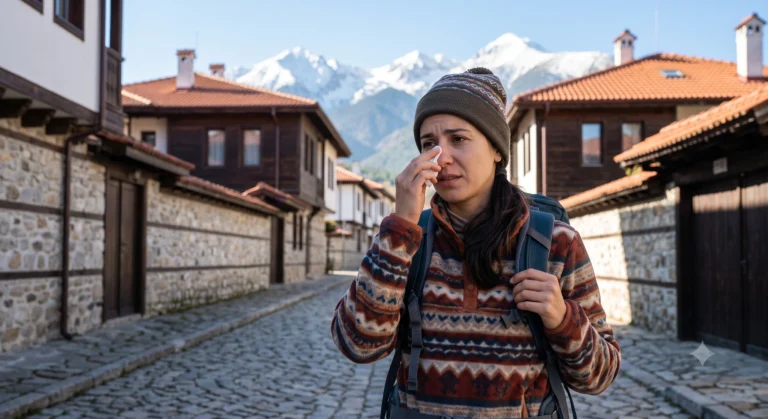
If you have traveled to Bansko from a destination with a warm and humid maritime climate (such as Malaga, Barcelona, Athens or even cities on the Island with high humidity), the chance of this happening to you is huge. Don't worry - you are not sick, it's just your body going through a completely natural climate acclimatization. In this article, we will take a detailed look at why the problem of dry nose in Bansko and how to deal with it quickly.
Mountain vs. Sea Climate: Culture Shock for Your Nose
The medical term for this condition is Rhinitis sicca (dry rhinitis). The nasal cavity and its mucous membrane have one basic, very important task – to filter, warm and humidify the air we breathe before it reaches the lungs.
When you live or spend a long time by the sea, the air is naturally saturated with a lot of moisture. Your mucous membrane quickly gets used to this “help” from nature and does not have to produce a large amount of secretion to humidify the air. However, when you arrive in Bansko, the environmental conditions change dramatically due to several main factors:
- Extremely dry air: The mountain air in Bansko is crystal clear, but significantly drier. Inhaling it literally draws the available moisture from your nasal mucosa.
- Altitude: The town of Bansko is located at an altitude of over 925 meters above sea level, and the ski area reaches over 2500 meters. The lower atmospheric pressure and thin mountain air further accelerate the drying process.
- The heating season: During the colder months, hotels and apartments use air conditioners, radiators, and fireplaces, which dry the air in enclosed spaces to critical levels.
- The stress of travel: Before you get to the mountain, you've probably spent hours on planes or cars with the air conditioning on, which sets the stage for dehydration.
Why do crusts and blood appear in the nose?
One of the most worrying symptoms for many tourists is the appearance of blood. To understand why this happens, we need to look at the anatomy of the nose. The nasal mucosa is extremely delicate and is covered with a dense network of microscopic blood vessels (capillaries) located very close to the surface.
When the mucous membrane dries out completely due to the mountain climate, hard crusts form on it, and the tissue itself loses its natural elasticity. In this state, even the slightest movement – such as a smile, a sneeze, a slight nose blow or an involuntary attempt to clean – is enough to “break” these dry, fragile capillaries. The result is slight but irritating bleeding.
5 easy steps to deal with a dry nose in the mountains
The good news is that you can relieve this discomfort very quickly. Any pharmacy in Bansko has the necessary funds, and some of the solutions don't even require purchases. Here's what local pharmacists advise:
1. Use an isotonic sea water spray
This is your best friend during the first days in the mountains. Isotonic sprays with sea water restore the natural moisture in the nasal cavity, without containing medicinal substances that could lead to addiction. Spray boldly several times a day, especially before going to bed and after waking up.
2. Get a moisturizing nasal ointment
If you already have crusts and slight bleeding, the spray alone will not be enough. In pharmacies in Bansko, look for special nasal ointments that contain hyaluronic acid, dexpanthenol or vitamin A (for example Nisita or Rhinopantheine). They create a fine protective film that stops bleeding, soothes tissue, and helps scabs heal quickly.
3. Hydrate effectively from within
The clean air in Bansko predisposes to long walks in the forest, skiing or hiking in Pirin. However, activity requires more fluids. Don't forget to drink more water (at least 2-2.5 liters per day) and warm herbal teas. Good hydration of the whole body automatically means a more moist nasal mucosa.
4. Humidify the air in your room
If you're staying in a hotel or apartment with intense heating or air conditioning, the air in your bedroom can become too dry at night. If you don't have a dedicated humidifier, an old tried-and-true trick works: simply place a clean, slightly damp cloth on a warm radiator before bed, or leave a container of water near the heat source.
5. The golden rule: Don't touch the crusts!
As irritating as the feeling of dryness and congestion may be, try not to forcefully remove the crusts with your fingers. This will only re-injure the capillaries, cause new, more profuse bleeding, and significantly slow down the healing process.
Although dry rhinitis is harmless, if the nosebleed becomes profuse and does not stop after 10-15 minutes of pressure, or if it is accompanied by other symptoms such as severe headache, high fever, and dizziness, you should definitely consult a medical professional in Bansko.
Additional tips for full adaptation in Bansko
In addition to the nasal mucosa, the dry mountain air and stronger UV rays at altitude also affect other parts of the body. To make your stay in Bansko as comfortable as possible, consider the following:
- Skin care: Use a richer moisturizing cream for your face and body than the one you used at the beach.
- Lip balm: Lips dry out and crack extremely quickly in the mountains. Always carry a lip balm with you, preferably with a sun protection factor (SPF).
- Eye drops: If you work long hours in front of a laptop (typical of digital nomads) in a heated room, hydrating eye drops (artificial tears) will prevent the feeling of "sand" in your eyes.
Give your body a few days to get used to our beautiful mountain. Once your body fully adapts to the new climate, all these minor ailments will disappear by themselves and you will be able to breathe deeply, enjoying the magic of Bansko!