


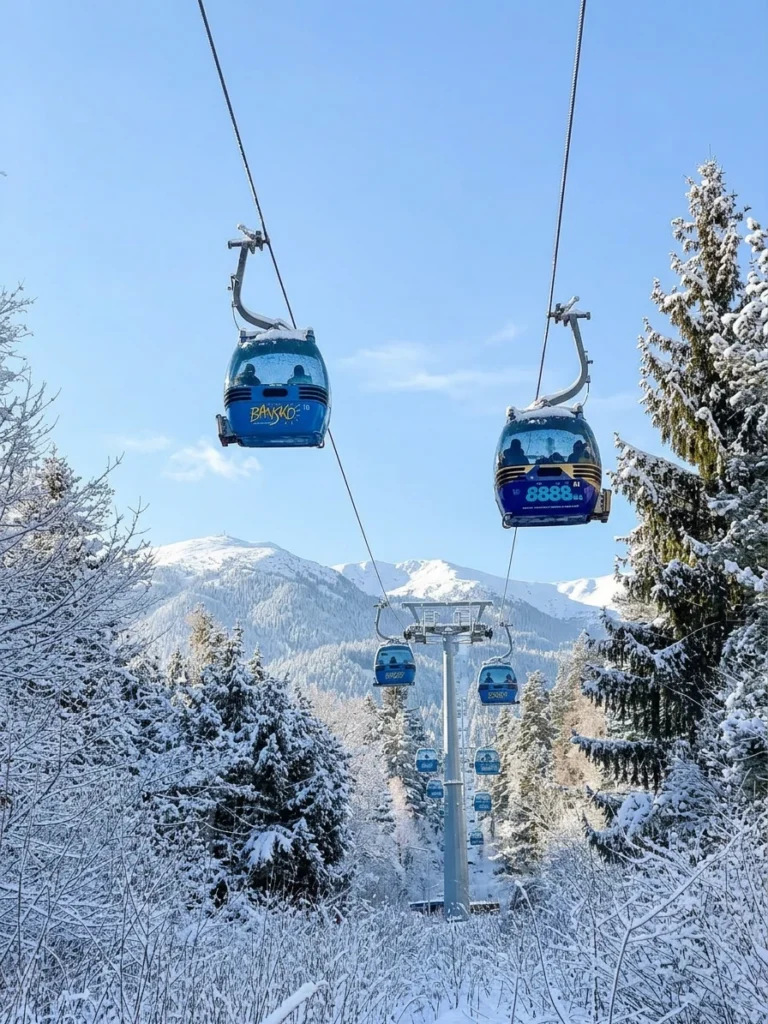
Today we will look in detail at how this is achieved. energy efficiency of the cable car in Bansko. We will understand how modern technologies balance raw power and responsible care for nature in the protected area of Pirin National Park.
Energy efficiency of the Bansko cable car: How much electricity does the main motor consume?
As we explained in our previous article about the technical “heart” of the gondola, the main electric motor in the engine room has a power of over 1000 kW (kilowatts). To give you an idea – if this huge motor were to run at full speed and at maximum load for the entire 8-hour working day, it would consume thousands of kilowatt-hours of energy, which is equivalent to the monthly electricity consumption of dozens of households.
However, the reality is quite different, thanks to intelligent computer control systems. Modern energy efficiency of the gondola lift in Bansko is due to the fact that the equipment does not consume a constant amount of current. The drive is equipped with high-tech frequency inverters (Variable Frequency Drives – VFD).
These smart computer systems act as a “brain” that analyzes the load on the steel cable in real time, millisecond by millisecond. If in the early afternoon the traffic up to the top is light and the cabins are half empty, the computer supplies drastically less electricity to the motor. The system optimizes consumption to the absolute minimum necessary only to overcome friction and maintain the set speed.
The magic of recuperation: The elevator as a power plant
One of the least known to the mass tourist, but most impressive aspects of modern cable cars is their ability not only to consume, but actually produce electricity. This ingenious physical process is called energy recovery and is a key pillar in the overall energy efficiency of the gondola lift in Bansko.
Imagine the classic situation at the end of a ski day, around 4:30 p.m. Thousands of tired tourists board the gondola at the same time from Banderishka meadow, to descend back into the city. At this peak moment, the weight of the full 8-seater gondolas descending is many times greater than that of the almost empty gondolas ascending. Gravity literally pulls the steel cable down the steep slope.
Instead of using classic mechanical brakes, the main electric motor automatically switches to generator mode. It starts acting as a huge magnetic brake-dynamo. The electricity generated in this way is definitely not wasted – it is returned back to the facility's electrical network or fed directly to the local network of the ski area to power the snow guns. During these hours the energy efficiency of the gondola lift in Bansko reaches its peak, turning the facility into a producer of 100% green energy.
The Ecological Footprint: Elevator vs. Cars
The alternative to the gondola is to drive up the 12-kilometer mountain road by private car. If 2,000 cars were to climb the steep section every morning, they would burn thousands of liters of fossil fuels. This would release tons of fine dust particles and CO2 directly into the heart of the protected mountain. Cable cars remain the most environmentally friendly method of mass transport, generating zero local emissions.
| Efficiency factor | Gondola | Personal cars |
|---|---|---|
| Local CO2 emissions | 0% | High |
| Energy recovery | Yes (when descending) | No (with ICE) |
| Noise pollution | Minimum | Significantly |
The future of sustainable tourism in Pirin
Investments in energy efficiency of the gondola lift in Bansko from manufacturers like Doppelmayr are only part of the complex environmental equation. Optimizing speed outside peak hours and regular technical maintenance to reduce mechanical friction are key steps towards sustainable winter tourism.
When you choose to leave your car in the parking lot next to the starting station and take the gondola, you are not only making a convenient but also a highly ecological choice. You become part of a highly efficient network that keeps the pristine nature of Pirin clean for future generations.


 English (UK)