



This comprehensive guide will turn you into a true fire master, while helping you optimize your heating costs and protect your home from fires.
The golden rule: Water doesn't burn!
Over 80% of fireplace problems in Bansko stem from the use of damp wood. The ideal fuel is hardwood (oak, beech, hornbeam) that has been dried for a minimum of 18 to 24 months. The moisture content should be below 20%.
Part 1: Why is dry wood critically important?
When you burn wet wood, a huge portion of the fire's energy is spent evaporating the water instead of generating heat. The result is:
- Creosote: A sticky and highly flammable substance that clogs the chimney.
- Low efficiency: You only get 40-50% of the heat capacity of wood.
- Pollution: More smoke and harmful emissions in the atmosphere of our mountain resort.
Part 2: How to light a fireplace using the “Swiss method”
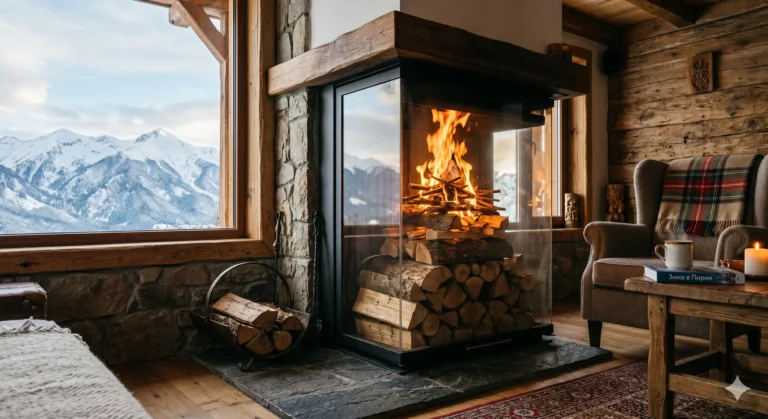
Forget the outdated methods of placing newspapers under the wood. The modern and most effective way is top-down ignition (so-called “reverse fire”). This method is environmentally friendly and prevents the formation of smoke in the first minutes.
Step by step to the perfect flame:
- The basis: Place the largest and most massive logs at the bottom, tightly next to each other.
- The middle layer: Arrange smaller pieces of wood crosswise on top of them.
- The top: Place fine kindling and eco-kindling on the top level.
- Start: Light the fire on top.
Why does this work? The warm air rises immediately up the chimney and creates the necessary draft. The gases from the lower wood pass through the flame above and burn completely, instead of exiting the chimney as black smoke.
Part 3: Airflow Management
Efficient combustion depends on precise valve adjustment. Use the following table for optimal results:
| Type Valve | Function | When is it used? |
|---|---|---|
| Primary air | Air at the base of fire. | Open when lit. Closed when the embers are stable. |
| Secondary air | It blows the glass and burns off the gases. | Permanently open (regulates flame strength). |
Part 4: The Art of “Night Fire”
To keep the heat until morning, use the technique of “Banking”. Before going to bed, gather the embers into a pile at the back of the fireplace and cover them with a thin layer of ash. This will limit the access of oxygen and keep the embers alive for up to 8-10 hours.
Professional trick for cleaning glass
Don't buy expensive chemicals! Take a damp rag, dip it in the white ash from the fireplace and rub the glass. The ash itself contains potassium carbonate (potash), which is a natural soot solvent. Wipe with a dry cloth for a crystal effect.
Part 5: Chimney safety and maintenance
Living in Bansko requires responsibility towards neighbors and nature. Clean the chimney mechanically at least once a year, preferably before the start of the season in October. Never close the flaps on the 100% while there are live coals to avoid the danger of carbon monoxide (CO).
Remember: The fireplace works best when there is a small layer of ash (2-3 cm) on the bottom. It acts as a thermal insulator and protects the combustion chamber.