

Bansko is not just a ski resort or a summer destination for digital nomads. It is a place where two eras collide: the ancient pastoral traditions of Pirin and the modern, cosmopolitan way of life. And nowhere is this contrast more visible than among the city's four-legged inhabitants.
If you are planning to move to Bansko Whether you're traveling with a dog, adopting one here, or just coming for a weekend hike, you should know that the mountains have their own rules. This guide will walk you through everything from local breeds and park dangers to the best places to walk and vet contacts.
1. Local Heroes: Who's Who in Bansko's Dog World?
In the Razlog Valley you will encounter three main types of dogs. Understanding the difference between them is a matter of safety and culture.
The Guardian of the Mountain: The Karakachan Dog
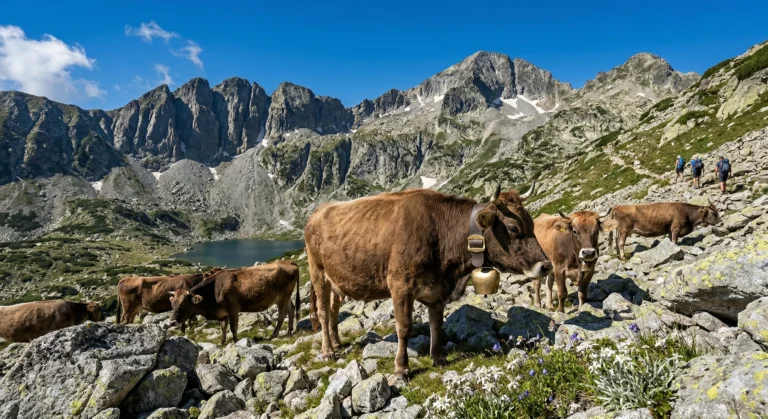
This is not a pet, but a living legend. The Karakachanka is a "bio-machine", selected for centuries for one thing only: to protect the herd from wolves and bears.
- Profile: Huge, independent and uncompromising. They can withstand sub-zero temperatures, sleep in the snow and are rarely interested in playing ball.
The Urban Survivor: “The Bathhouse Street”
These dogs are the unofficial mascot of the city. They often carry the genes of a Karakachanka (size and coat) or a hunting hound (brains and nose).
- Profile: Extremely intelligent and social, they have learned to cross the street correctly, know which tavern has the best food, and often become favorites of tourists.
- Status: Thanks to organizations like Bansko Street Dogs, the population is under control – many of them are neutered, vaccinated and ear-tagged.
The New Settlers: Breeds of Foreign Residents
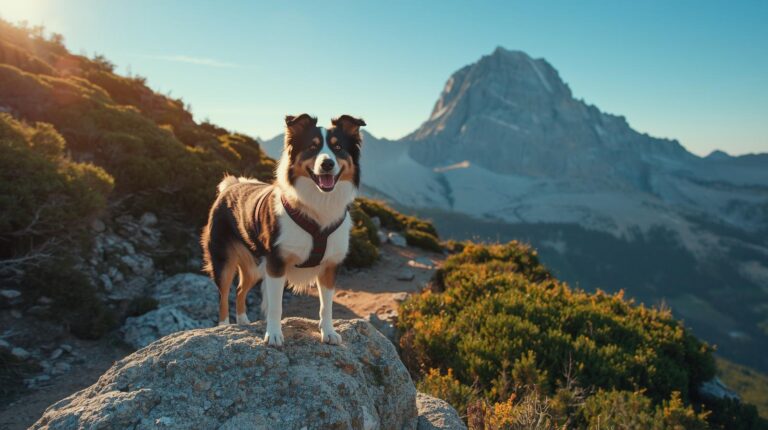
With the advent of digital nomads, Huskies, Border Collies and Jack Russells are increasingly seen on the streets of Bansko. These are active breeds that change the dynamics of the city, but require serious management in the mountains.
2. What is the best dog for Pirin?
If you live here and are wondering what kind of dog to get, forget about fashion. Look at the terrain. Pirin is steep, rocky, and has a harsh climate.
| Owner profile | Recommended breed | Justification |
|---|---|---|
| Serious mountaineer | Border Collie / Australian Shepherd | “Mountain goats” with inexhaustible energy. They are subject to impeccable training – vital in Pirin National Park. |
| Local resident / Digital Nomad | Adopted local dog | “Bio-hacks” for the climate. Healthy and sustainable. You save a life and gain a loyal friend. |
| Winter fan | Siberian Husky / Malamute | They feel at home in the snow. Note: They require a reason because of their strong hunting instinct. |
Avoid: Short-haired breeds (like Dobermans) suffer terribly in winter without thick gear. Heavy molossers (like St. Bernards) struggle on steep moraines.
3. The rules of the game: A walk in Pirin National Park“
This is where things get serious. Pirin is a UNESCO site, not an urban garden.
The Golden Rule: A REASON IS MANDATORY
Dogs must be leashed within the park boundaries. This is not a recommendation, but a law. Here's why:
- Wild animals: A loose dog stresses wild goats and deer, especially in winter.
- The bears: The dog can provoke a bear and bring it straight to you, seeking protection.
- Fines: Sanctions start at 300 leva and can reach thousands.
The “Taboo” Areas (Reserves)
There are two strict reserves in the park – “"“Yulen“"“ и “Bayuvi Dupki – Djinjiritsa”. Human interference is prohibited there. Entering these areas with a dog (even on a leash) is a serious violation. Find out where their boundaries are (usually marked with signs) before you go.
4. Where to go for a walk? (Map of locations)
Despite the restrictions, Bansko offers great places to walk. Here are the most popular and safe routes:
- 🟢 Belizmata Dam (The Social Hub)
Location: Above the St. George Palace Hotel, follow the dirt road west.
Why: Flat terrain, shade and picnic tables. There is also water for swimming. - 🟢 The Glazne River Valley (The Quick Walk)
Location: From the starting station of The Gondola upstream.
Why: A wide alley, cool in the summer. Attention: In winter it is a "Ski Road". - 🟢 Eco-trail “Dragostinov Chark” (Tranquility)
Location: 4 km above Bansko on the road to Vihren hut, turn right.
Why: A flat path with resting areas, ideal for adult dogs. - 🟡 St. Nicholas Waterfall (Adventure)
Location: Between Bansko and Dobrinishte.
Why: A picturesque forest trail, slightly steep, but beautiful.
5. Health and Useful Contacts
Bansko has competent veterinarians for daily care. For complex diagnostics (scanner) or heavy surgeries, a trip to Sofia or Blagoevgrad is required.
“Ogi Vet” Office (Dr. Ognian Kochukov)
Address: Bansko, 30 Todor Alexandrov Street
Phone: 0899 168 729 / 0749 82225
Popular choice, experienced specialist.
"Dara Vet" Clinic“
Address: Bansko, 22 "Ikonom K. Chuchulain" St
Phone: 088 803 3331
6. How to get a dog in Bansko?
You have two ethical paths. Buying from a “tailgate” or a random ad on the internet for a “purebred dog without a pedigree” is a recipe for disease and support for inhumane breeders.
Option 1: Adoption (Highly recommended)
The organization Bansko Street Dogs works wonders.
- Advantages: The dogs have a passport, vaccinations, a chip and are neutered (saving you hundreds of leva). You can take them for a trial period.
- For nomads: They assist with TRACES travel documents in the EU and the UK.
Option 2: Purebred dog
If you are looking for a specific breed, prepare to travel. There are no licensed pet kennels in Bansko.
- For Karakachanka: Go to the village of Vlachi (Semperviva center). The real, working lines are preserved there.
- For other breeds: Look for registered kennels in Sofia or Plovdiv that require testing for dysplasia (critically important for mountain dogs).
Living with a dog in Bansko is a privilege. Follow the park rules, respect local traditions and take care of the nature we share with our four-legged friends.

 English (UK)