



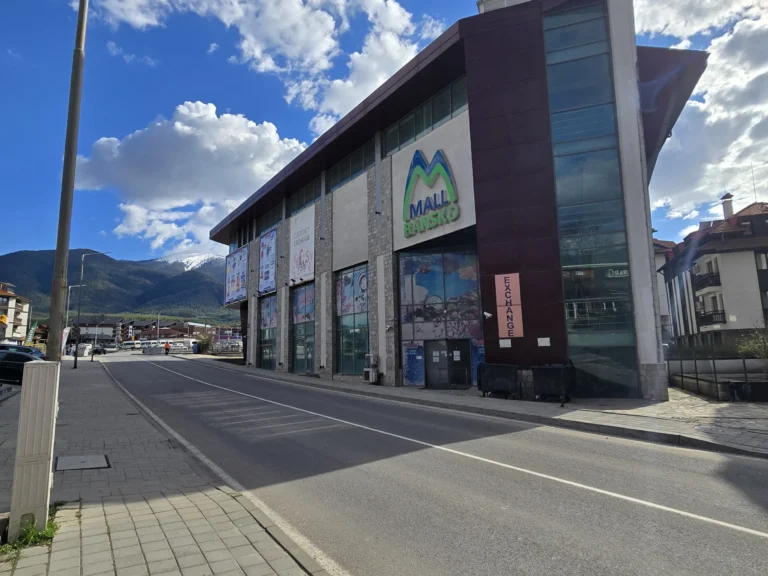
Located meters from the starting station of the cable car (Gondola) and the pulsating heart of the ski area, Bansko Mall Today it stands silent, empty and shrouded in mystery. Its closed doors and dark windows inevitably arouse curiosity in every passing tourist. A massive structure that contrasts with the lively taverns and crowded streets during the winter season.
How did it get here? What was hidden behind these walls in the years when the building was full of life, and most importantly – does this impressive complex have a future? In this article, we will trace the path of the most ambitious shopping center in the region and examine the potential opportunities for its revival.
The History of Bansko Mall: From the Glorious Beginning to Complete Silence
The project for the construction of the Mall Bansko started in the years of the biggest economic and construction boom before the global financial crisis. Construction began in 2007 by a large-scale Bulgarian-American company with a clear and bold ambition - to be the first modern shopping and entertainment center in a ski resort in our country. The initial investment in the project exceeds the impressive 5 million euros, which for the time It's an extremely serious investment for a mountain town.
The official opening took place in the midst of the winter season in January 2010. The building is truly impressive for the scale of the city – nearly 6000 sq. m of developed built-up area, intelligently distributed over several above-ground and spacious underground floors. Unfortunately, the harsh economic reality and the specifics of mountain tourism quickly caught up with the project.
Gradually, the tenants begin to withdraw. The floors are deserted one by one, until finally only the supermarket in the basement remains in operation. Eventually, it too closes its shutters, leaving the building completely closed.
What was inside the shopping mall?
In its heyday, Mall Bansko attempted to offer urban-style amenities right in the heart of the mountain. The concept included everything needed for a complete shopping and entertainment day:
- Shopping area (18 stores): This housed a large store of a popular hardware and appliance chain, specialty stores for premium ski and snowboard equipment, jewelry, sporting goods, and designer clothing boutiques.
- Large supermarket: Strategically located on the underground floor, it perfectly served both visiting tourists and locals from nearby neighborhoods.
- Entertainment and Culinary: The complex featured a spacious restaurant, a modern café, and a large bar, spread over an area of nearly 1,000 square meters, offering panoramic views.
- Children's paradise: This was the largest children's entertainment center of its time in the entire Blagoevgrad region, extending over 550 sq. m.
Why didn't the classic shopping center succeed in the ski resort?
Does Bansko need a classic Mall? The short and definitive answer from the experts is: No. The reasons for the failure of Mall Bansko are completely logical and are rooted in the very specifics of the resort and consumer behavior:
- Strong seasonality: Classic malls rely on a constant, year-round and predictable flow of people. In Bansko, there are two strong peaks (winter and summer) and several “dead” months (spring and late autumn). Retailers simply cannot afford to pay high rents for huge areas during periods when there are almost no tourists in the city.
- Specific user habits: People travel to Bansko for the crystal clear air, nature, ski slopes and authentic traditional taverns. No tourist travels hundreds of kilometers to spend their afternoon in a closed shopping mall that is identical to those in Sofia, Plovdiv or Bucharest.
- Outdoor competition: Pirin Street has practically functioned as a natural, open-air “mall” for decades. It is filled with small, charming shops selling equipment, souvenirs, and restaurants that bring the authentic spirit of the city and offer an experience that a closed glass building cannot provide.
What would be good to do with the building? (3 Ideas for the Future)
Despite the failure of the initial concept, the Bansko Mall building is massive, modern, has an absolutely uncompromising location and has an extremely valuable underground parking lot. However, in order to revive it, it needs a complete and radical change of purpose. Here are three realistic and potentially profitable project development scenarios:
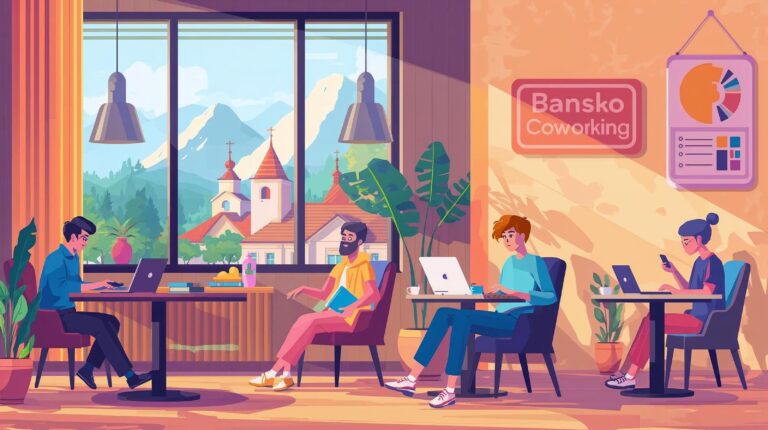
1. Mega-hub for digital nomads (Coworking & Coliving)
Bansko is already an established European capital of digital nomads, attracting thousands of professionals from all over the world. There is a huge hunger in the city for large-scale, modern spaces for remote work and socializing. The mall could be converted into a giant coworking center with dozens of meeting rooms, superfast internet, chill-out zones and even shared living spaces (coliving) on the upper floors. Such a project would guarantee year-round occupancy of the building.
2. Indoor entertainment and sports complex for bad weather
One of the main problems in Bansko is the question: “What should we do when it rains or there is a blizzard and the lifts are not working?” Thousands of tourists often get bored in their hotels. The building could become the perfect alternative for “bad weather”. Imagine indoor climbing walls, a huge trampoline park, professional bowling, modern escape rooms, VR (virtual reality) game rooms and even a large indoor urban SPA and aqua center. This would attract families with children from all over the resort.
3. Modern event and cultural center (Event Hub)
Bansko hosts the International Jazz Festival, film festivals, culinary exhibitions and various sporting events. The building has the capacity to be adapted as a state-of-the-art congress center. It can host large-scale IT conferences, indoor festivals, modern art exhibitions, corporate teambuildings and year-round exhibitions of local crafts and farm products from the Pirin Mountain region.
Conclusion
Today, Bansko Mall may seem like a ghostly monument to an outdated and ill-judged concept of mountain tourism. However, it definitely does not need to be demolished or left to decay forever. With a little vision, bold investments and the right adaptation to the modern needs of the resort, this iconic building has the full potential to reopen and become one of the most vibrant and useful places in Bansko.