

Historical Roots: From Renaissance Donors to Modern Entities
To fully understand the modern tradition of building fountains, we must look at the historical model of donation. In traditional Bulgarian culture, water is a sacred element. The most emblematic historical examples of this beneficence in Bansko are connected to the monumental Holy Trinity Church (completed in 1835).
This church has two historic fountains that set the high standard for all subsequent generations. In addition, one of them, located next to the side entrance of the courtyard, was built back in 1842. Its stone inscription calls on passersby to drink and bless the founder Nikolay Ikonov from neighboring Mehomiya (today's Razlog). The second fountain is located at the central entrance and complements the mystical atmosphere of the square in front of the church.
In modern times, the subject of donation has shifted. Today, the unwritten tradition dictates that everyone anniversary set (most often at the age of 50 or 60) to finance and build a massive stone fountain. This is the highest material manifestation of social maturity and solidarity in Bansko and the region.
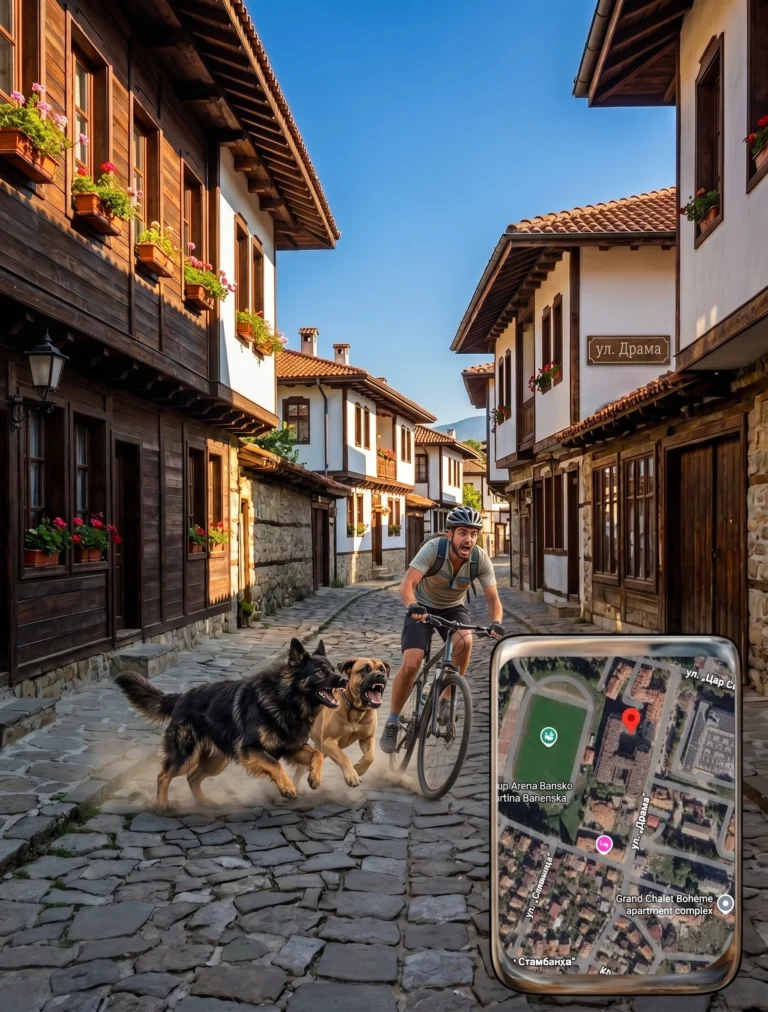
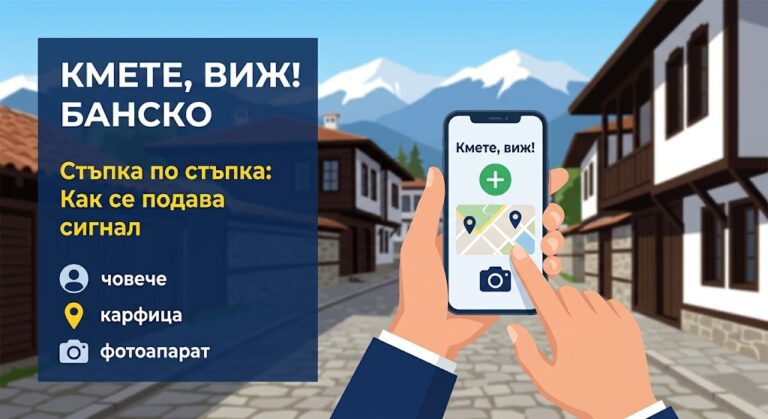
Map and register of popular fountains in Bansko
Through a thorough review of the infrastructure sites, we can locate several key memorial water points. On the other hand, each of them has its own unique architecture and urban planning significance.
The Fountain of Nabor 1964: A Synthesis between Debt and Tourism
This project was implemented with the own funds of those born in 1964 and was officially consecrated in 2024 (on the occasion of their 60th anniversary) by Father Georgi Kasapinov. Its location is strategic - on Radon Todev Street, close to various commercial establishments and a playground, guaranteeing a constant flow of people.
- Material: Massive carved stone.
- Message: „"Drink cold water, bless Bansko!".
- Initiators: Among the prominent representatives are Dimitar Ruskov and Kostadin Durchov.
Interestingly, the same team also built a mirror fountain on the outer church fence in the neighboring village of Dobarsko.
The Fountain of Nabor 1968: In the Heart of the City
Located at the junction between Gotse Delchev Street and Hadji Valcho Street, this fountain was inaugurated on August 15, 2018 (Golyama Bogoroditsa) for the 50th anniversary of the set. Its inauguration coincided with the inauguration of the renovated pedestrian zone along Gotse Delchev Street, implemented with municipal, state and European funds. As a result, the fountain became a focal visual point, although it also provoked local debates (e.g. comments from „Selska quota“) regarding the distribution of prestigious locations.
The Mountain Fountain of Nabor 1972: A Spiritual Connection
Those born in 1972 are choosing a different strategy for their half-century anniversary. In November 2022, they are consecrating a fountain in the picturesque area of Todorova Ornitsa, right next to the newly built chapel of St. St. Theodore Tiron and Theodore Stratilates. Built of massive granite blocks, it withstands the harsh mountain conditions and serves for ritual purification and quenching the thirst of tourists.
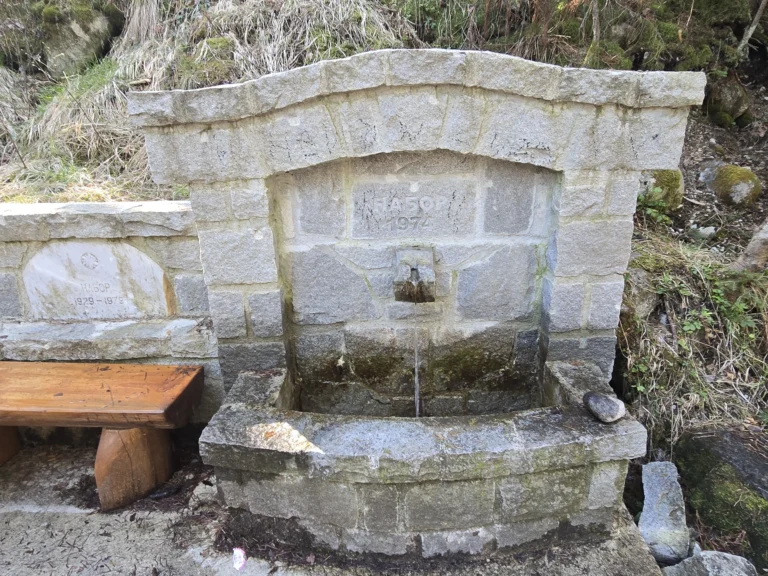
The barbecue area of Nabor 1974: The modern approach
Nabor 1974 builds on tradition by creating a complex recreation area. According to the vBansko platform database (expected launch in December 2026), the site is located at precise geographical coordinates (41.818232, 23.473368). This space includes running water, suitable for culinary tourism and picnics, becoming an attractive micro-social space.
Craftsmanship expertise and local stonemasons
The longevity of these stone fountains is due to the authentic stonework. Unlike modern concrete construction, hand-processed natural stone or granite is used here. In Bansko, this tradition is maintained by craftsmen such as Dimitar Zlatev, who also participated in the construction of the donation fountain next to the St. Peter stadium (an initiative of the residents of Bansko, led by Ivan Slavev).
The intricate process of hand-carving and precise engraving makes each facility a unique work of art. These motifs are even present in the Museum Complex's souvenir shop, where themed magnets and key chains featuring the local fountains are offered.
Ecology and municipal care for water resources
Today, these sites are an important part of the city's ecological infrastructure. Over 20 functioning water sources in Bansko have been digitally mapped by the environmental organization. The availability of free water for the thirsty dramatically reduces the use of single-use plastic bottles, supporting sustainable tourism.
In conclusion, the tradition of the fountains in Bansko is a beautiful example of decentralization, where citizens themselves improve the urban environment. This generational competition ensures continuous renewal of the micro-infrastructure, creating a true emotional geography for locals and unforgettable memories for tourists.
FAQs
What are the fountains in Bansko?
The Bansko set fountains are public water sources funded and built by local people born in the same year (set). They are most often built on the occasion of 50th or 60th anniversary celebrations as a gift to the community and tourists.
Where can I find the fountains of the anniversary sets?
The fountains are located both in the city center (for example, on Gotse Delchev Street and Radon Todev Street), and in suburban areas such as the Todorova Ornitsa area and specialized barbecue areas.
Who maintains these stone fountains?
The maintenance is carried out jointly by the donors themselves and the local administration through campaigns such as "Fountain Week", during which comprehensive cleaning and refreshment is carried out.
What is the role of the fountains for the ecology in Bansko?
They provide easy and free access to clean drinking water, dramatically reducing the need to buy plastic bottles. Many of them are mapped in environmental zero waste networks.