


Summary
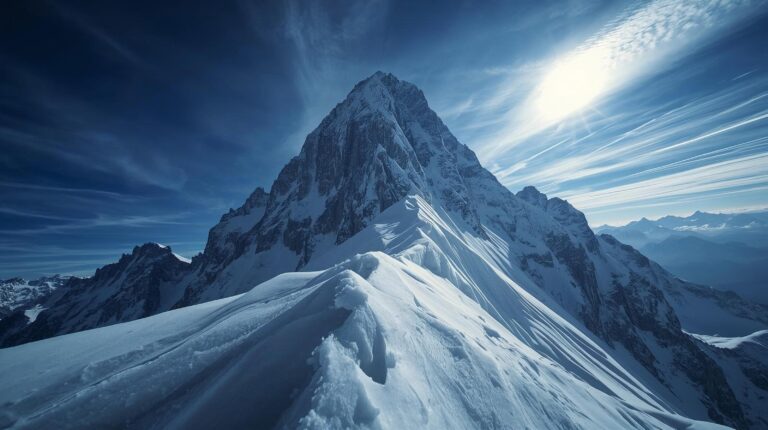
Pirin, often described as the most visually stunning yet technically uncompromising mountain in Bulgaria, has once again cemented its grim reputation as a “trap” for the unprepared. The tragic incident of December 20, 2025, in which a Polish tourist lost his life at the foot of Vihren Peak, served as a catalyst for a renewed, in-depth analysis of winter mountain safety. This report provides a comprehensive dissection of the factors contributing to high-risk scenarios in the Pirin Massif. The analysis goes beyond a simple chronological retelling of events to examine the geological, meteorological and psychological elements that converge to create the “black statistics.” Central to the thesis is that the hazard profile in Pirin is fundamentally different from that in Rila or the Rhodopes, mainly due to the metamorphic marble geology, which creates a unique risk of “slipping on thin firn” – a phenomenon that makes standard tourist protocols inadequate.
1. Anatomy of the Tragedy of December 20, 2025.
The events of late December 2025 stand as a grim “case study” in the dynamics of winter alpine incidents. While Pirin attracts thousands of visitors due to its proximity to ski area Bansko, the transition from controlled recreational areas to the harsh alpine character of the Vihren massif is abrupt and often fatally underestimated.
1.1. Chronology and mechanics of the incident
In the afternoon of December 20, the Mountain Rescue Service (MSS) – Bansko unit received a distress call regarding a fall in the area of Vihren Peak (2914 m). The victim was identified as a Polish tourist who had undertaken a climb in conditions that appeared to be favorable, but which hid deadly traps.
The incident took place in the area of Jamdzhiev Rocks – a rocky ledge that separates the Banderitsa Valley from the deep cirques of the north face. This place is known among climbers as the “no-error zone”.
Initial data points to the classic Pirin scenario: a slip followed by an inability to hold on. The mechanics of the fall are entirely consistent with the main hazard of the season: “thin firn” (a layer of hard, consolidated snow or ice) covering steep marble slopes. Unlike granite, which offers some friction even when icy, the metamorphic marble of Pirin creates a surface comparable to polished glass.
1.2. The Rescue Operation: A Race Against Time
The rescue operation was launched immediately, mobilizing the emergency response teams of the Bansko Emergency Medical Service. In the first phase, rescuers were activated by helicopter - a decision dictated by the critical "golden hour" for survival in the event of polytrauma.
Despite the availability of air support, the specifics of the terrain often necessitate complex ground extraction.
Later that day, it was confirmed that the hiker had died from the severe injuries sustained from the fall into the precipice. The recovery of the body required heavy manual transport (the so-called hand-pulling) down to the Banderitsa hut, illustrating the enormous physical and logistical strain that these incidents place on volunteer and professional rescue teams.
2. Geomorphological Determinism: The Marble Trap
To understand why Pirin is statistically and practically more dangerous than neighboring mountains like Rila, we need to analyze the lithology (rock composition) of the massif. The dangers in Pirin are not just meteorological; they are encoded in the rock itself.
- 2.1. Lithology of the risk: Proterozoic marble
Approximately 30% of the Pirin area, including its highest alpine part (Vihren, Kutelo, Banski Suhodol peaks), is made of metamorphic marble. This geological feature is the largest individual factor in winter mortality. - Friction coefficient:
Granite and gneiss (Rila, Rhodope) have a rough surface texture. Pirin marble is smooth and brittle. When the snow melts and refreezes, it forms a bond with the marble that is extremely difficult to penetrate with standard hiking crampons and impossible to hold with rubber soles. - Skating dynamics:
When slipping on a granite slope, the body may stop naturally due to the roughness. On a marble slope like Jamdjievi's Edge, the slip instantly accelerates the body to terminal velocity before the victim reaches the rock ledges.
2.2. Topography of the exposure
The topography of the Northern Pirin Mountains is defined by razor-sharp edges. In winter, this geometry leads to the formation of massive snow caps (cornices). Hikers, stepping on what appears to be solid ground, are often actually walking on compressed snow hanging over the abyss.
3. Disaster Meteorology: The “Thin Firn” Phenomenon”
The climate conditions in December 2025 provided a textbook example of the “Mediterranean Trap.” The mountain is in a transition zone, which leads to specific cycles of melting and freezing.
3.1. The Melt-Freeze Cycle
In the days before the incident, the weather was sunny with positive daytime temperatures. This is the most treacherous combination:
- Daytime (10:00 – 14:00): Solar radiation melts the surface layer of snow. A thin film of water forms on the marble.
- Afternoon (after 3:00 PM): As the sun sets or the sun enters the shade, this water freezes instantly. The snow turns into verglas (transparent ice).
A slope that was passable and gentle at 11:00 AM becomes a death slide by 3:00 PM. This transition is often invisible to the untrained eye.
3.2. The wind as a sculptor
The strong winds in Pirin literally “scrape” the snow from the edges, exposing the ice base. This makes the “self-hold with an ice axe” technique almost impossible, as the beak of the tool cannot penetrate the ice-cemented surface.
4. The human factor and the equipment crisis
Analysis of incidents reveals that while avalanches scare people the most, the real “silent killer” is slipping due to inadequate equipment.
4.1. The Microspikes Illusion
One of the biggest problems in modern tourism is the widespread use of lightweight shoe chains (so-called “urban crampons”) instead of real alpine crampons.
| Characteristics | Microspikes (Chains) | Alpine cats |
|---|---|---|
| Purpose | Flat, icy paths, urban environment | Steep firn, glaciers, mountaineering |
| Front teeth | They don't have | They have (2 or more, long and sharp) |
| Stability | Elastic rubber (moves on the shoe) | Fixed brackets (stable) |
| Risk of Vihren | EXTREME (Deadly) | Minimal (with proper technique) |
On the steep slopes of Vihren (over 40 degrees), the microspikes twist, lose grip and prevent fingers from getting stuck in the ice. It is likely that many accidents, including the one with the Polish tourist, are due to underestimating the need for serious equipment (crutches + ice axe).
4.2. The effect of social networks
Tourists often see summer photos or videos of successful climbs and take the summer route for granted. However, the winter route to Vihren is radically different – it follows the markers through “The Kazanites” or the edge, avoiding avalanche chutes but exposing the hiker to technical, icy terrain.
5. Comparative analysis: Why is Pirin different?
To contextualize the risk, it is useful to compare Pirin with other mountains.
| Factor | Pirin (Vihren) | Rila (Musala) | Vitosha (Black Peak) |
|---|---|---|---|
| Bedrock | Marble (slippery) | Granite (rough) | Syenite / Moraine |
| Main risk | Slipping into a chasm | Frostbite / Avalanche | Disorientation in fog |
| Relief | Sharp edges, verticals | Domes, wide billas | Plateau-shaped |
| Error | Unforgivable | Often fixable | Repairable |
This comparison shows that although Rila is higher, Pirin is more technical and punishes every wrong step with much more severe consequences.
6. Institutional response and status of the PESC
The tragedy of December 2025 also highlights the difficult task of the MSF - Bansko detachment.
- Load: The unit is one of the busiest in the Balkans, serving a huge ski resort and a wild alpine area at the same time.
- Resource: With only 8 full-time lifeguards and about 40 volunteers, the ratio of “lifeguards to tourists” is critically low.
- Infrastructure: The lack of a medical helicopter with a base in the mountain itself (Bansko/Razlog) often prolongs the weather for response, forcing rescuers to risk their lives in ground operations on icy chutes.
7. Conclusion and recommendations
The incident of December 20, 2025 is not an accident of chance, but a predictable result of the convergence of factors: Marble + Warm Day/Cold Night + Inadequate Assessment.
Main conclusions for every mountaineer:
- Pirin is not for beginners in winter: Even “tourist” routes require skills in using crampons and an ice axe.
- Forget microspikes: For peaks like Vihren, they are a dangerous illusion of security.
- Watch the clock: All descents must be completed before the slope freezes again (early afternoon).
- Respect for the MSS: The best way to help rescuers is to not become their "client.".
The tragedy of the Polish tourist is yet another cruel reminder: In Pirin, beauty and death dance on a thin blade of ice and marble. The mountain demands humility that does not allow for compromise.


 English (UK)